Key Takeaways
- •Gemma 4 (2 B‑parameter) runs locally on a laptop without GPU
- •Sandbox filesystem tool restricts paths to a safe base directory
- •Restricted Python interpreter uses a whitelisted built‑ins set for safety
- •Two‑pass loop processes both web APIs and local tools
- •Denied access or missing built‑ins return clear error messages
Pulse Analysis
Tool‑calling has become a cornerstone of modern language‑model applications, but most implementations stop at read‑only web APIs. When a model can only fetch external data, it remains a sophisticated retrieval system rather than an autonomous agent. Adding the ability to query its own operating environment—such as the local file system—or to execute deterministic code pushes the model into a genuinely agentic role. This shift allows the LLM to offload tasks it struggles with, like precise arithmetic or multi‑step logic, to reliable tools while retaining control over the overall workflow.
The technical heart of the tutorial lies in two carefully engineered tools. The filesystem explorer anchors all path requests to a predefined safe base directory, resolves absolute paths, and rejects any traversal that would escape the sandbox, preventing accidental exposure of sensitive files. The Python interpreter sandbox replaces the default __builtins__ with a minimal whitelist, pre‑imports safe modules like math and statistics, and captures stdout to return clean output. By handling errors—such as denied path access or missing built‑ins—as explicit messages, the orchestration loop can retry or adjust its strategy instead of fabricating answers. This disciplined approach demonstrates how even a 2‑billion‑parameter model can be trusted to interact with a host machine when proper guardrails are in place.
For businesses, this pattern opens a spectrum of on‑premise automation possibilities: automated data preprocessing, local log analysis, secure document parsing, and controlled system administration tasks—all without sending proprietary data to external APIs. The same JSON‑schema driven dispatch mechanism can be extended to database queries, container commands, or version‑control operations, provided each new tool is wrapped with appropriate safety checks. As organizations seek to balance AI capabilities with data privacy and compliance, building the perimeter first—then granting the model limited, auditable access—offers a pragmatic roadmap to deploying trustworthy, agentic AI solutions.
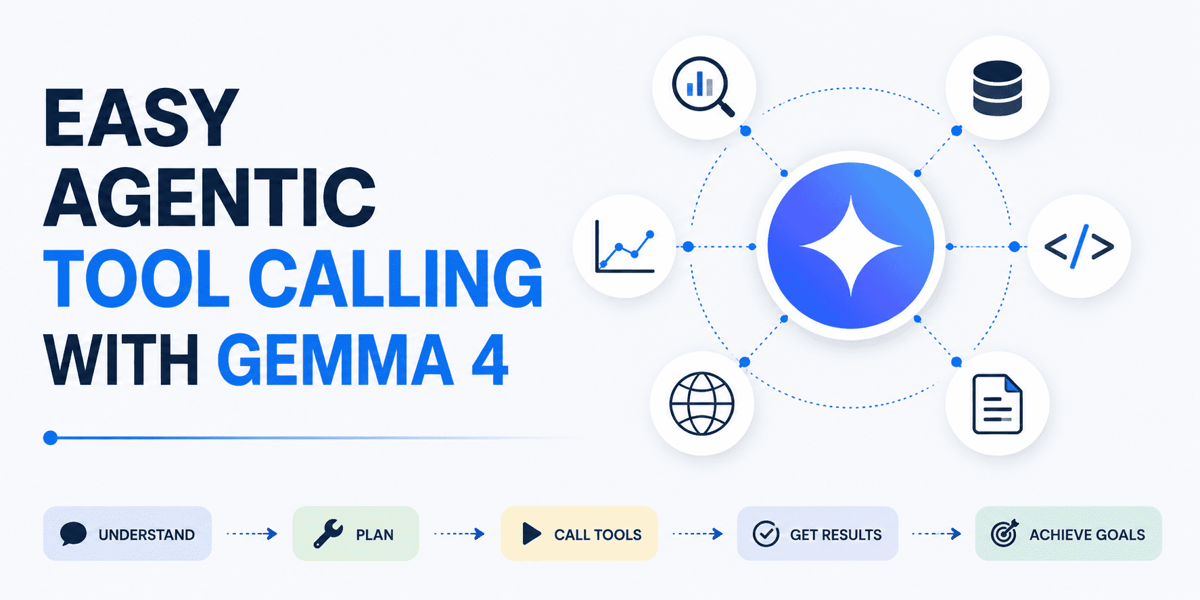
Easy Agentic Tool Calling with Gemma 4
Comments
Want to join the conversation?