Expanding the Circle of Opportunity: How AI Skills Unlock Local Impact
Companies Mentioned
Why It Matters
By democratizing AI expertise, Microsoft Elevate fuels inclusive growth and mitigates fears of technology‑driven job loss, setting a replicable model for emerging economies.
Key Takeaways
- •Microsoft Elevate trains 70,000 Thai nonprofit leaders in AI.
- •AI tools enable rural artisans to sell products online.
- •Partnerships with UNESCAP and local agencies expand digital inclusion.
- •Skills-focused approach counters AI job displacement fears.
- •Intergenerational collaboration preserves culture while creating income.
Pulse Analysis
The rise of AI as a general‑purpose technology has sparked a global race to upskill workforces, yet many emerging markets lack the training infrastructure to capitalize on its potential. Microsoft’s Elevate program addresses this gap by delivering free, localized curricula that combine technical instruction with real‑world project work. By focusing on skill acquisition rather than merely providing hardware, the initiative aligns with broader digital transformation strategies that prioritize human capital as the decisive factor for economic competitiveness.
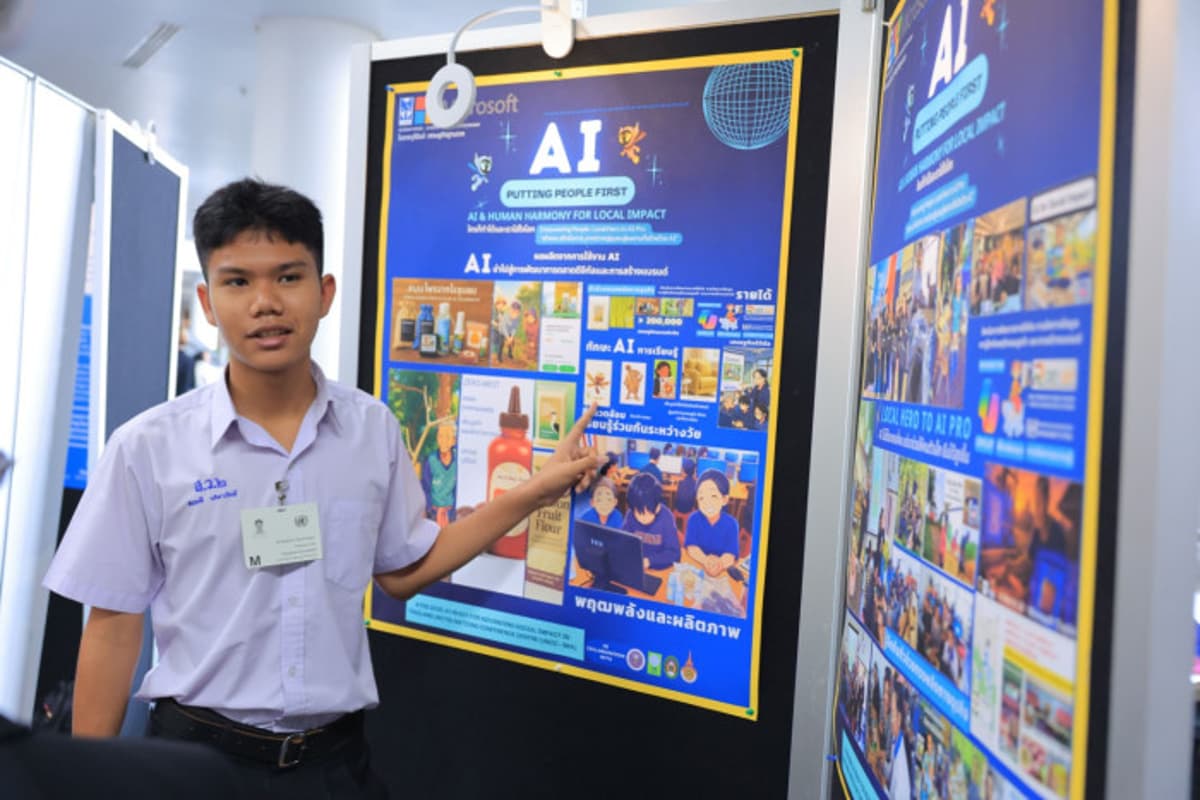
In Thailand, the program’s impact is tangible. Community members in Buriram have leveraged AI‑driven design tools to transform simple sketches into commercial products, linking traditional craftsmanship with e‑commerce platforms. Similar projects in the Mon community of Pathum Thani illustrate how AI can safeguard linguistic heritage while opening new creative markets. These case studies underscore a shift from viewing AI as a job‑threatening force to recognizing it as a catalyst for entrepreneurship, especially when older generations contribute cultural knowledge alongside younger digital natives.
The success of Elevate hinges on multi‑stakeholder collaboration. Government agencies, NGOs, and academic institutions provide policy support, outreach channels, and research expertise, ensuring that AI adoption remains responsible and inclusive. As more than 70,000 participants earn credentials, the model offers a scalable blueprint for other developing regions seeking to harness AI without exacerbating inequality. Continued investment in skill‑centric programs will be essential for translating AI’s theoretical productivity gains into concrete, community‑level prosperity.
Expanding the circle of opportunity: How AI skills unlock local impact
Comments
Want to join the conversation?
Loading comments...