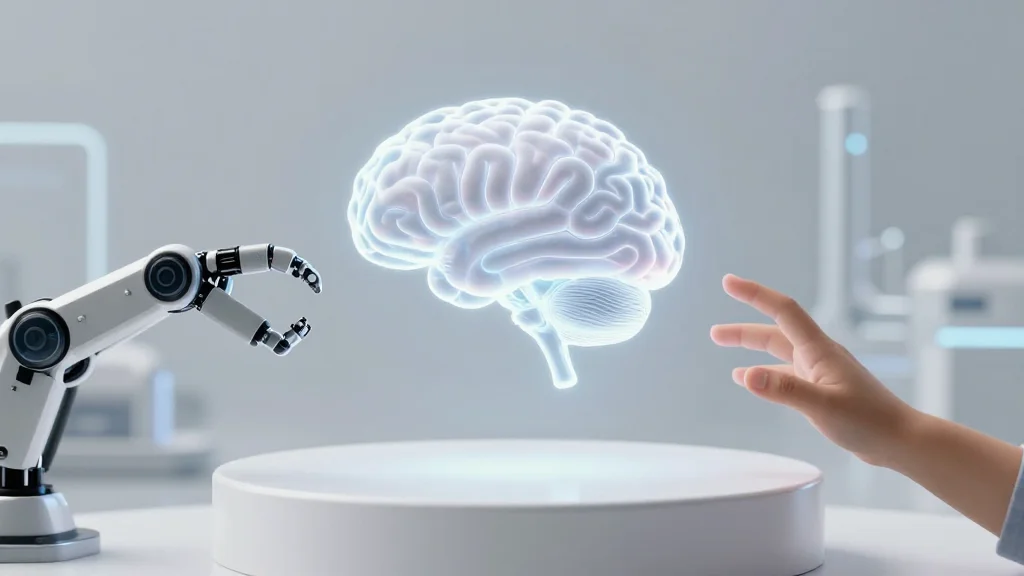
Faraday Future Strategically Launches Its Embodied AI Developer Platform Purpose-Built for AI Natives, Marking 2026 as the Inaugural Year of EAI Robotics Education
Companies Mentioned
Why It Matters
The initiative creates a unified, incentive‑driven ecosystem that lowers entry barriers for AI‑native talent, accelerating real‑world deployment of embodied‑AI robots and strengthening Faraday Future’s position in the emerging robotics market.
Key Takeaways
- •FF launches EAI Brain & Open Developer Platform for AI natives.
- •Platform offers six tools and four infrastructure layers for robot creation.
- •Recruitment opens for K‑12 students, scenario experts, and professional engineers.
- •Incentive program includes revenue sharing, grants, hackathons, and campus outreach.
- •2026 designated as inaugural year for embodied AI robotics education.
Pulse Analysis
Faraday Future’s entry into the embodied‑AI (EAI) space reflects a broader industry shift toward integrating intelligent robotics with consumer and enterprise applications. By bundling six developer tools—Brain Blocks, Create Studio, EAI Soul, Scribe, Studio, and an SDK/API—with four core infrastructure layers, the company aims to democratize robot programming. This approach mirrors software‑centric development models, reducing the technical friction that has traditionally limited robotics to specialist firms. The platform’s live showcase, featuring the humanoid FF Futurist and quadruped FX Aegis, underscores Faraday’s ambition to deliver versatile, task‑specific agents across home, security, hospitality, and pet‑care domains.
The recruitment strategy targets three distinct cohorts: K‑12 "Young Futurists," scenario experts dubbed "EAI Futurists," and seasoned "EAI Builders." By coupling a tiered progression system with revenue‑sharing, grant funding, hackathons, and a campus outreach program, Faraday creates a compelling value proposition for both budding talent and established engineers. This incentive architecture not only fuels a vibrant developer community but also generates a pipeline of proprietary Agent Skills that can be monetized across Faraday’s upcoming EAI‑MPV, the Super One, and future robot deployments. The educational focus aligns with growing demand for AI‑native curricula in schools, positioning the platform as a bridge between academic learning and commercial robotics.
In the competitive landscape, Faraday’s platform differentiates itself by linking robot development directly to its electric vehicle ecosystem, promising seamless integration of mobility and embodied intelligence. As enterprises seek scalable automation solutions, a unified developer portal and closed‑loop data engine could accelerate time‑to‑market for custom robotic applications. If adoption scales, Faraday may capture a significant share of the nascent EAI market, potentially adding multi‑digit billions in revenue over the next decade while cementing its reputation as a leader in both electric mobility and intelligent robotics.
Faraday Future Strategically Launches Its Embodied AI Developer Platform Purpose-Built for AI Natives, Marking 2026 as the Inaugural Year of EAI Robotics Education
Comments
Want to join the conversation?
Loading comments...