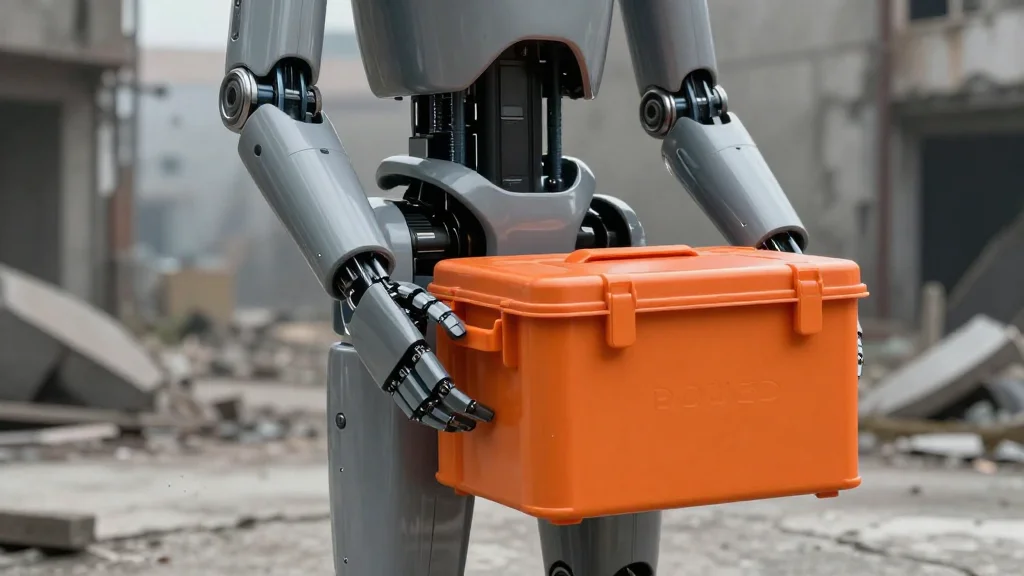
Foundation Tests Humanoid Robot Soldiers in Ukraine, Securing $24 Million Pentagon Contract

Companies Mentioned
Why It Matters
The demonstration signals that private AI‑driven robotics are moving from laboratory prototypes to operational testing in real combat environments. By proving that a bipedal robot can safely retrieve supplies under fire, Foundation challenges the conventional reliance on human soldiers for high‑risk logistics, potentially reshaping force‑structure calculations for militaries worldwide. At the same time, the test amplifies ethical concerns about autonomous weapons. As AI systems gain physical agency on the battlefield, questions about accountability, rules of engagement, and the risk of unintended escalation become more urgent. Policymakers will need to balance the humanitarian benefits of reducing soldier casualties against the danger of normalizing machines that can act with minimal human oversight.
Key Takeaways
- •Foundation sent two Phantom humanoid robots to Ukraine for a supply‑pickup test in February.
- •The startup secured a $24 million contract with the U.S. Pentagon to develop autonomous ground systems.
- •CEO Sankaet Pathak emphasized a "moral imperative" to replace human soldiers with robots in dangerous roles.
- •Key technical hurdles include battery life, ruggedization, and a reliable dextrous hand for manipulation.
- •Ethical debate centers on human‑in‑the‑loop requirements and the potential for fully autonomous lethal weapons.
Pulse Analysis
Foundation’s Ukraine pilot illustrates a tipping point where commercial AI robotics intersect with defense procurement. Historically, ground‑based autonomous systems have lagged behind aerial drones due to the complexity of locomotion and manipulation. By achieving a functional supply‑pickup under fire, Foundation narrows that gap, offering a proof‑of‑concept that could accelerate funding cycles and attract additional defense contracts. The Pentagon’s $24 million commitment suggests a strategic intent to diversify logistics solutions, especially as conventional supply chains face disruption in contested environments.
However, the technology’s trajectory is not purely technical. The involvement of high‑profile political figures, such as Eric Trump, adds a layer of public scrutiny that could influence regulatory outcomes. If lawmakers perceive a rapid militarization of AI as a threat to global stability, they may impose stricter export controls or demand transparent accountability frameworks. Conversely, allies facing similar logistical challenges may fast‑track adoption, creating a fragmented ecosystem of standards and capabilities.
In the next 12‑18 months, the decisive factor will be whether Foundation can demonstrate sustained operational reliability beyond a single demonstration. Successful iterations could trigger a cascade of contracts from NATO members, prompting a new class of AI‑enabled infantry support. Failure to overcome battery and durability constraints, however, may relegate humanoid robots to niche roles, keeping the broader debate about autonomous weapons largely theoretical. Either outcome will shape the strategic calculus of nations contemplating AI‑driven force multipliers.
Foundation tests humanoid robot soldiers in Ukraine, securing $24 million Pentagon contract
Comments
Want to join the conversation?
Loading comments...