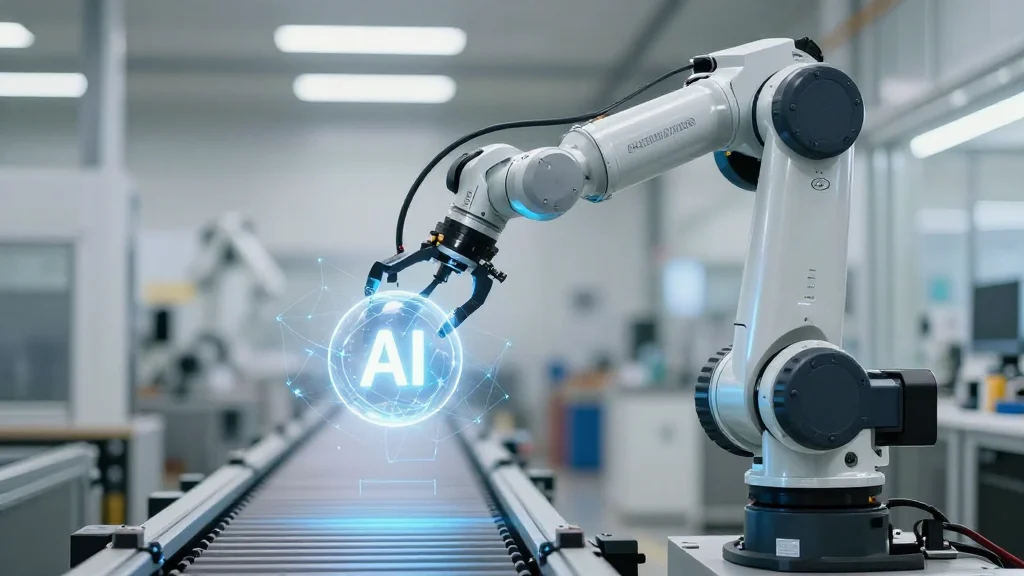
From AI Insights to AI Action: What’s Changing in Manufacturing
Why It Matters
Action‑oriented AI turns insights into automatic decisions, boosting efficiency and freeing workers for higher‑value tasks, which is vital for manufacturers seeking resilience and competitive advantage.
Key Takeaways
- •AI moves from pilot to core manufacturing operations.
- •Action‑oriented AI automates workflow decisions, reducing manual intervention.
- •Integrated data platforms are essential for scalable AI performance.
- •Predictive maintenance and quality monitoring cut downtime and defects.
- •Embedding AI into daily workflows drives measurable ROI.
Pulse Analysis
Manufacturers are accelerating AI adoption as persistent supply‑chain volatility, tightening labor markets, and pressure on margins demand faster, data‑driven decisions. Early experiments gave way to enterprise‑wide deployments that embed machine‑learning models into production scheduling, quality control, and demand forecasting. This shift reflects a broader industry trend: moving from insight‑only tools to systems that can act on those insights, delivering real‑time adjustments that keep factories running smoothly despite external shocks.
The emergence of action‑oriented AI marks a pivotal evolution. Modern platforms can trigger workflows, re‑route work orders, and even contact alternate suppliers automatically, all while keeping humans in the loop for oversight. By automating repetitive decisions, firms reduce operational friction, cut response times, and free skilled employees to focus on strategic initiatives. Early adopters report shorter cycle times, lower defect rates, and tangible cost savings, underscoring the competitive edge of proactive, rather than reactive, manufacturing.
However, the promise of AI hinges on data quality. Fragmented ERP systems, siloed operational data, and inconsistent standards impede model accuracy and scalability. To overcome this, manufacturers are investing in unified data architectures, rigorous governance, and seamless connectivity across the supply chain. Those that establish a robust data foundation can more effectively scale AI, translating investment into measurable ROI. As AI continues to mature, its role will expand from augmenting human insight to becoming an autonomous operational partner, reshaping the future of manufacturing.
From AI insights to AI action: What’s changing in manufacturing
Comments
Want to join the conversation?
Loading comments...