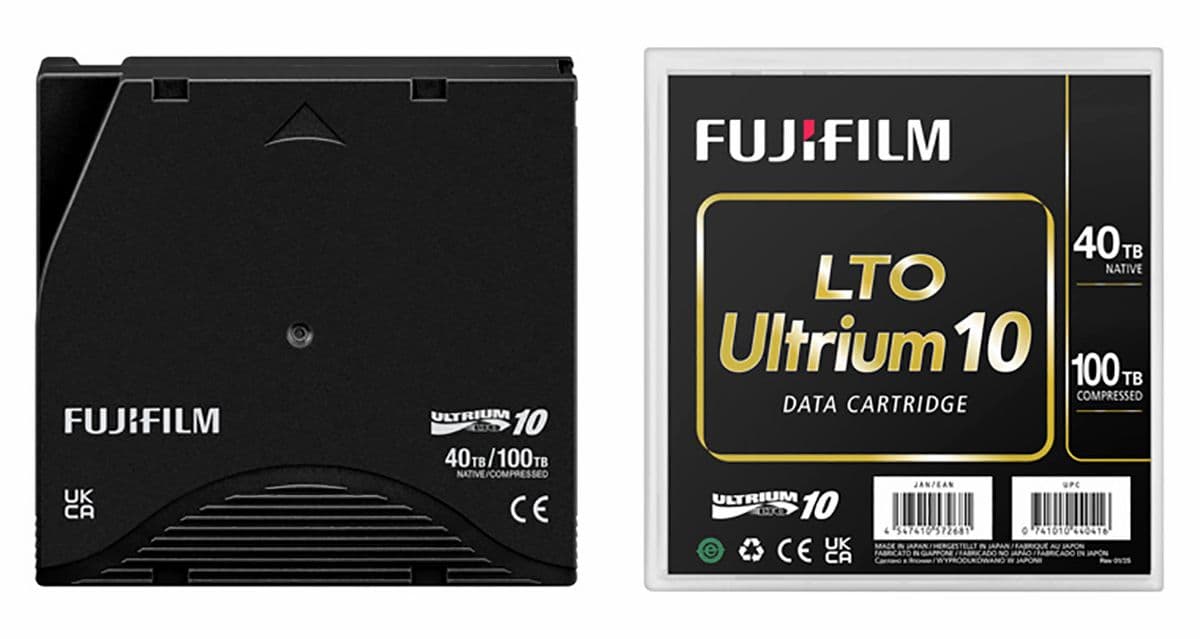
Fujifilm's Epic 40TB Tape Cartridge Is Here - Despite What Elon Musk Says, the Future of Offline Data Storage Looks Very Bright
•December 27, 2025
0
Companies Mentioned

Why It Matters
The launch proves offline tape storage remains a cost‑effective, secure tier for massive, long‑term data, countering claims that physical media is obsolete. It gives enterprises a resilient backup option amid rising cyber‑risk and exploding AI datasets.
Key Takeaways
- •40TB native, 100TB compressed capacity.
- •400 MB/s native, 1 GB/s compressed transfer rates.
- •Works with existing LTO‑10 drives, no new hardware.
- •Provides offline isolation, reducing ransomware exposure.
- •Targets AI workloads and regulatory compliance archiving.
Pulse Analysis
The LTO (Linear Tape‑Open) format has quietly progressed from 10 TB to 40 TB native capacity in just a few generations, and Fujifilm’s latest cartridge showcases the engineering breakthroughs that make this possible. By thinning the base‑film and optimizing magnetic‑particle composition, the company squeezes three times more data into the same physical envelope, while retaining the robust EEPROM memory and antenna needed for reliable cataloguing. This incremental yet substantial upgrade aligns with the broader industry trend of extending the lifespan of proven storage architectures rather than discarding them.
Enterprises today face a perfect storm: ransomware attacks that exploit always‑online data, regulatory frameworks demanding immutable archives, and AI workloads generating petabytes of training data. Tape’s inherent offline nature creates an air‑gap that dramatically lowers exposure to network‑based threats, while its cost per gigabyte remains far below that of SSDs or even cold‑cloud tiers. For organizations that must retain data for decades—financial services, healthcare, and media—tape offers predictable performance, low power consumption, and a straightforward path to scale without massive capital outlays.
Despite vocal skepticism from tech futurists, market data shows LTO shipments rising, driven by AI‑centric data retention and compliance pressures. Cloud providers can offer durability, but they keep data perpetually reachable, which some risk‑averse sectors view as a liability. Fujifilm’s backward‑compatible cartridge lowers adoption friction, encouraging a hybrid storage model where tape complements disk and cloud layers. As data volumes continue to explode, the economics and security advantages of magnetic tape are likely to keep it a cornerstone of enterprise archiving strategies for the foreseeable future.
Fujifilm's epic 40TB tape cartridge is here - despite what Elon Musk says, the future of offline data storage looks very bright
0
Comments
Want to join the conversation?
Loading comments...