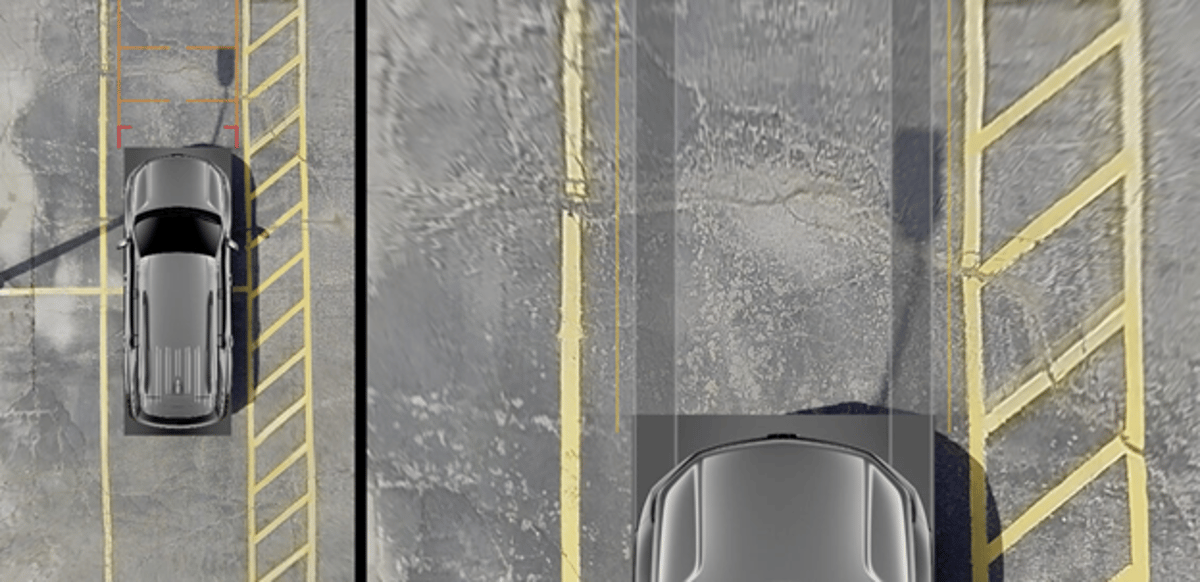
GM Details Unified Camera Stack for Driver Assist
Companies Mentioned
Why It Matters
This approach reduces costly model‑specific software, accelerates rollout of advanced driver‑assist features, and improves reliability as vehicle dynamics shift, giving GM a competitive edge in autonomous‑driving readiness. It also positions GM to expand AR‑enhanced safety tools across its lineup.
Key Takeaways
- •GM's geometry platform treats cameras as spatial sensors, not just images.
- •Online Alignment continuously refines extrinsic calibration during normal driving.
- •System fuses rear and trailer cameras, updating articulation angle every 33 ms.
- •Architecture enables scalable surround‑view, trailer, and AR overlay features.
Pulse Analysis
Camera‑based driver assistance has become a cornerstone of modern vehicle safety, yet automakers wrestle with the complexity of calibrating multiple lenses across diverse models. Traditional pipelines rely on static, factory‑only calibrations that can drift due to suspension travel, load changes, or temperature fluctuations, leading to visible stitching errors in surround‑view displays. GM’s new geometry platform reframes each camera as a precise spatial sensor, projecting pixel data into a unified rear‑bumper‑ground coordinate system. This shift simplifies software development, allowing a single perception stack to serve sedans, trucks, and SUVs without bespoke code for each camera arrangement.
At the heart of the system lies Online Alignment (OLA), an on‑the‑fly calibration engine that continuously refines extrinsic parameters as the vehicle operates. By maintaining orientation errors well under 0.1 degree, OLA prevents the seams that previously plagued top‑down views and ensures that lane edges, curbs, and obstacles are rendered accurately regardless of which lens captures them. The platform also integrates trailer‑specific data, fusing rear‑vehicle and trailer camera feeds and refreshing the trailer articulation angle roughly every 33 milliseconds. This real‑time reconstruction eliminates blind spots during towing, delivering a seamless, driver‑centric perspective that enhances both safety and convenience.
The broader market impact is significant. A scalable, model‑agnostic camera stack reduces engineering overhead, shortens time‑to‑market for new ADAS features, and creates a foundation for augmented‑reality overlays anchored in real‑world 3D coordinates. As competitors race to bundle more sophisticated perception suites, GM’s architecture offers a cost‑effective pathway to expand its autonomous‑driving roadmap while delivering immediate safety benefits to consumers. The move underscores the industry’s shift toward software‑centric vehicle platforms where hardware flexibility is matched by intelligent, adaptive calibration algorithms.
GM details unified camera stack for driver assist
Comments
Want to join the conversation?
Loading comments...