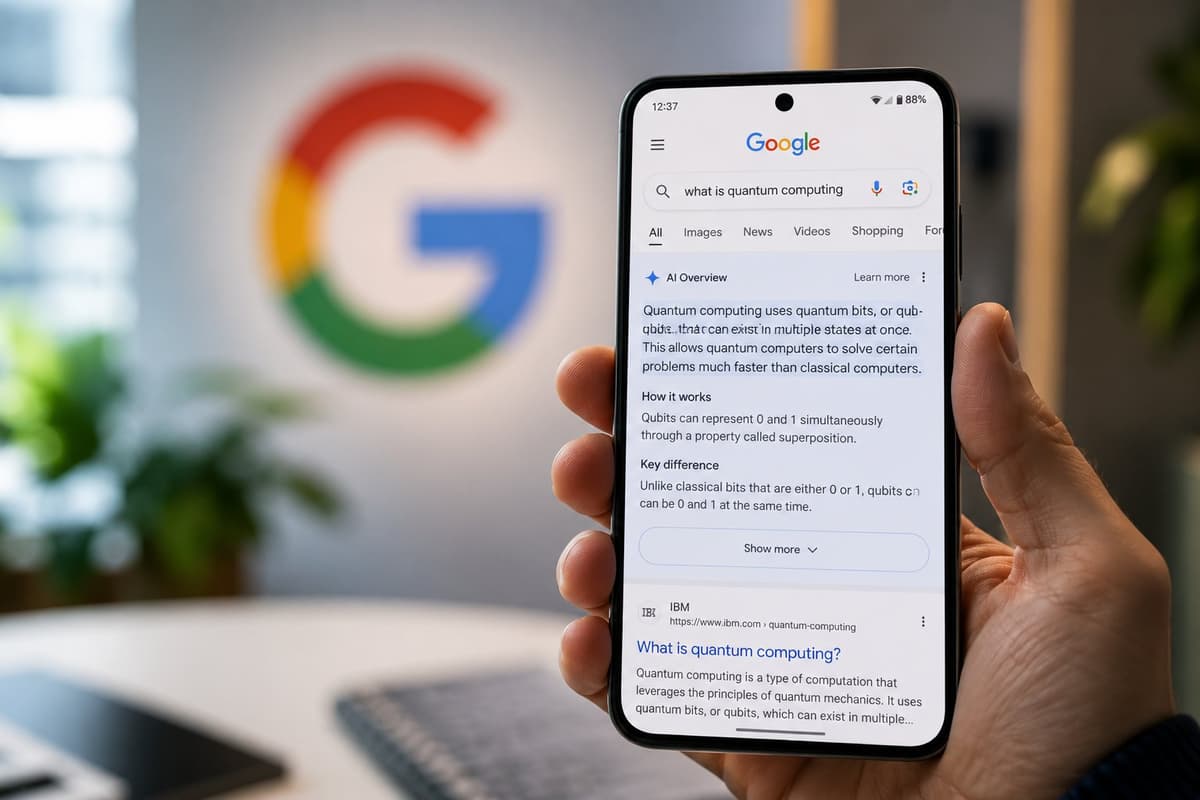
Google AI Overviews Legal Risks Raise New Enterprise Governance Questions
Companies Mentioned


Why It Matters
The rulings signal that companies could be held accountable for AI‑generated misinformation, prompting tighter enterprise oversight and new regulatory scrutiny of search‑engine AI features.
Key Takeaways
- •German court holds Google liable for inaccurate AI Overview content
- •AI Overviews can replace traditional results, reducing click-through rates
- •Companies must verify AI-generated answers before compliance or legal decisions
- •Publishers push for opt‑out tools and compensation for AI summarization
- •Internal logs must capture prompts, sources, and AI answers for oversight
Pulse Analysis
The rise of AI Overviews marks a shift in how users consume information, but the technology’s ability to synthesize content into novel language has exposed legal vulnerabilities. Recent court decisions in Germany and Canada illustrate that courts may treat AI‑generated summaries as the publisher’s responsibility, especially when the output influences reputational or financial outcomes. This emerging jurisprudence forces search providers to reconsider liability frameworks and could spur legislators to codify duties around AI‑driven content.
Enterprises that rely on AI Overviews for vendor research, compliance checks, or legal background must embed verification steps into their workflows. A practical governance model includes a clear verification rule—treat AI answers as orientation only and cross‑check any health, safety, legal, or financial claim against primary sources. Training programs should separate citation awareness from factual validation, while internal logging of prompts, source URLs, and generated text creates an audit trail for risk managers and auditors.
The broader market impact extends to publishers and content creators who see traffic erosion as AI Overviews repurpose their work without attribution. Recent pressure from media groups and a UK regulator’s opt‑out mandate highlight a growing demand for compensation mechanisms and transparency tools. As AI search tools become embedded in corporate decision‑making, the balance between efficiency gains and liability exposure will shape the next wave of AI governance standards and possibly trigger new antitrust or competition scrutiny of dominant platforms.
Google AI Overviews Legal Risks Raise New Enterprise Governance Questions
Comments
Want to join the conversation?
Loading comments...