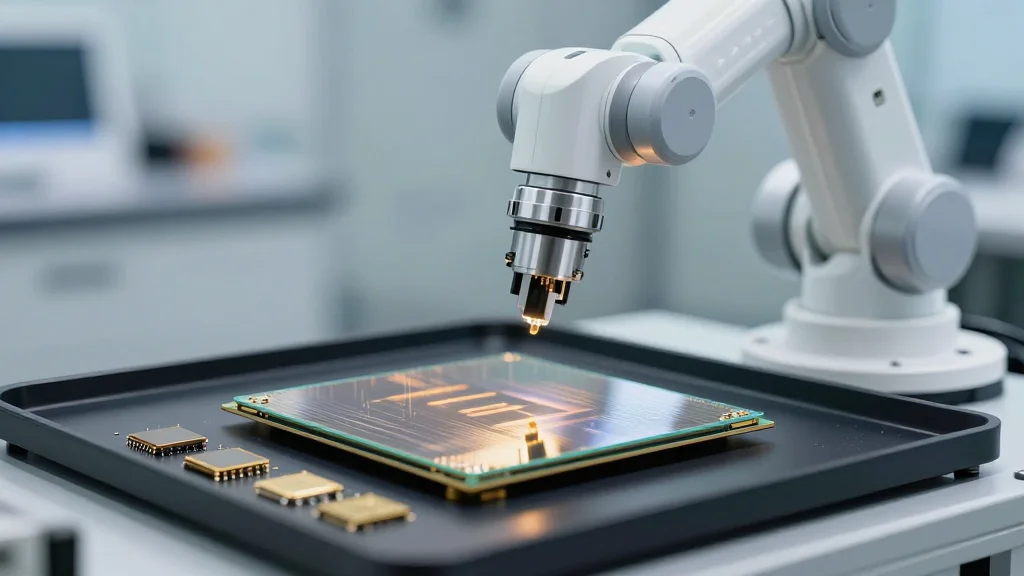
Google Orders Chips From Intel and Nvidia Is Testing Its Tech, as TSMC’s Grip on AI Starts to Strain
Companies Mentioned

Why It Matters
Diversifying AI‑chip supply reduces geopolitical and capacity risk, while giving Intel a foothold in the fast‑growing generative‑AI market.
Key Takeaways
- •Google orders 3 M Intel TPUs for 2028, diversifying supply
- •Nvidia runs early trials on Intel’s 18A process and multi‑chip packaging
- •Intel shares rose ~12% after the announcements
- •TSMC capacity constraints push AI leaders to seek alternative foundries
- •Intel’s packaging advances could narrow gap with TSMC’s lead
Pulse Analysis
The AI boom has turned Taiwan’s TSMC into a de‑facto monopoly for cutting‑edge silicon, but its limited capacity and geopolitical exposure are prompting the industry’s biggest buyers to look elsewhere. Google’s commitment to over three million Intel‑fabricated TPUs for 2028 signals a strategic shift toward a multi‑vendor model, reducing reliance on both Nvidia’s in‑house chips and TSMC’s foundry services. Nvidia’s parallel exploration of Intel’s 18A node and advanced packaging, including four‑chip‑fusion concepts for its upcoming Feynman GPU, underscores the urgency of securing alternative supply chains as AI workloads explode.
Intel’s resurgence hinges on more than just winning a few orders; it requires proving that its advanced packaging and the 18A process can deliver yields competitive with TSMC’s mature ecosystem. The company’s recent 12% share rally reflects investor optimism that these early wins could translate into a broader foundry revival, especially as the U.S. government and strategic partners like Nvidia have taken equity stakes to accelerate the effort. While Intel still trails in the most advanced logic nodes, its focus on packaging—where it already shows strengths—offers a quicker path to market relevance and could attract other memory and GPU players seeking diversified production routes.
If Google and Nvidia deepen their relationships with Intel, the competitive dynamics of the AI‑chip market could shift dramatically. More suppliers would likely ease pricing pressure and mitigate the risk of supply disruptions that have plagued recent AI deployments. Moreover, a credible U.S. alternative to TSMC would bolster national security objectives and could spur further investment in domestic semiconductor infrastructure. The coming years will reveal whether Intel can scale its new manufacturing capabilities fast enough to become a true counterweight to Taiwan’s dominance, reshaping the supply chain for the next generation of AI applications.
Google orders chips from Intel and Nvidia is testing its tech, as TSMC’s grip on AI starts to strain
Comments
Want to join the conversation?
Loading comments...