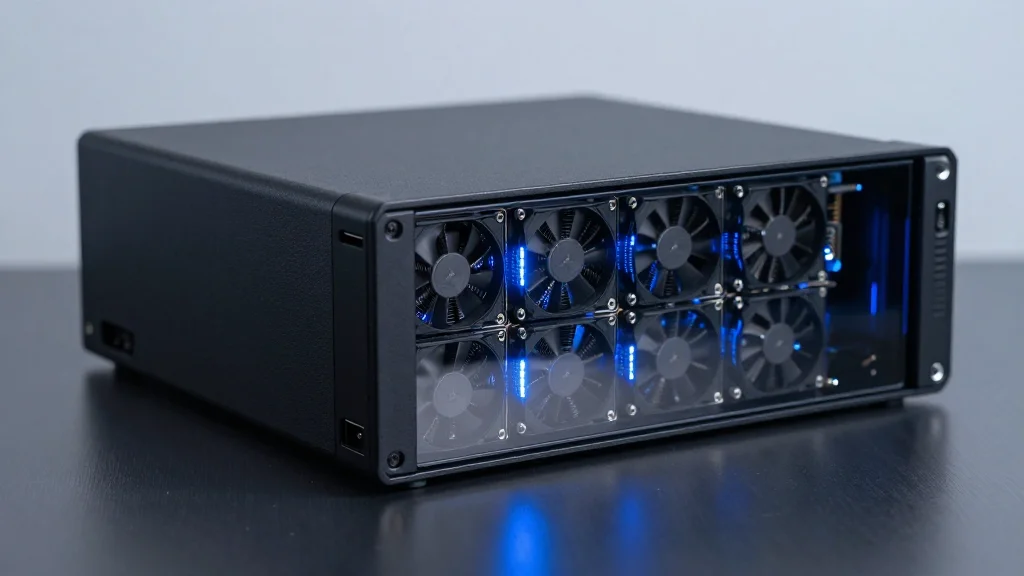
Google’s Gemini Can Now Run on a Single Air-Gapped Server — and Vanish when You Pull the Plug
Why It Matters
It gives finance, healthcare, and government customers a way to leverage top‑tier generative AI while meeting strict data‑privacy and sovereignty rules, expanding Google’s reach in markets dominated by Azure and AWS.
Key Takeaways
- •Cirrascale offers full Gemini on an 8‑GPU Dell appliance, air‑gapped
- •Model lives only in volatile memory; power loss erases weights and data
- •Pricing includes seat licenses, per‑token, and flat “all‑you‑can‑eat” options
- •Private deployment reduces latency and avoids public‑cloud API rate limits
- •Neocloud market projected $35 bn in 2026, growing >46% YoY
Pulse Analysis
The emergence of air‑gapped AI appliances addresses a long‑standing dilemma for regulated industries: how to harness the power of frontier models without surrendering data control. By embedding Google’s Gemini model in a Dell‑certified server that operates entirely offline, Cirrascale eliminates the need for public‑cloud API calls that expose prompts and outputs to third‑party infrastructure. Confidential computing enclaves keep the model weights in volatile memory, so a simple power cut destroys the intellectual property and any residual user data, satisfying stringent compliance regimes in finance, healthcare, and defense.
From a technical standpoint, the appliance leverages eight Nvidia GPUs to deliver inference performance comparable to Google’s own TPU clusters, while the confidential‑compute layer enforces tamper‑evidence and automatic data purge. Sessions are isolated in encrypted caches that clear on termination, and any breach triggers a self‑destruct sequence that renders the hardware inoperable until serviced by Dell, Google, or Cirrascale. This architecture not only protects Google’s proprietary model but also offers customers predictable latency and deterministic throughput, a critical advantage for mission‑critical workloads that suffer from the variability of public‑cloud API response times.
Strategically, the move positions Google to compete more aggressively with Microsoft’s Azure OpenAI Service and Amazon’s Bedrock, especially in sectors where data sovereignty and security are non‑negotiable. The neocloud market, projected to reach $35 billion in 2026 with a 46% CAGR, is rapidly maturing, and private‑AI offerings are becoming a differentiator rather than a niche. Cirrascale’s flexible pricing—seat licenses, per‑token billing, and flat‑rate models—caters to both cap‑ex‑heavy enterprises and research institutions, accelerating adoption. As more frontier models follow Gemini’s lead, the industry is likely to see a broader migration of AI workloads from public clouds to secure, on‑premises environments, reshaping the competitive landscape for the next decade.
Google’s Gemini can now run on a single air-gapped server — and vanish when you pull the plug
Comments
Want to join the conversation?
Loading comments...