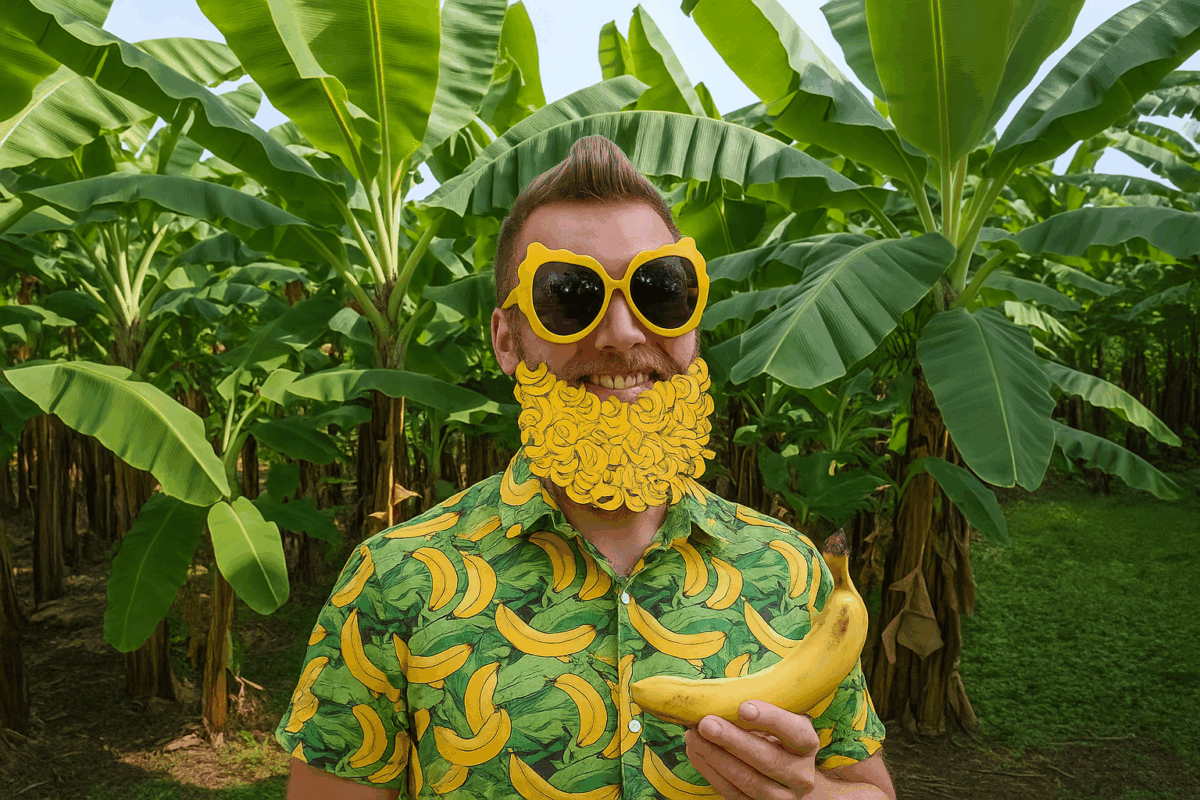
Google's "Nano Banana" Owes Its Odd Name to a Project Manager Working Alone at 2:30 A.m.
•January 7, 2026
0
Companies Mentioned


Why It Matters
Nano Banana’s breakthrough performance strengthens Google’s foothold in the fast‑growing generative‑AI market, while the story underscores how agile internal processes and executive focus can reshape competitive dynamics.
Key Takeaways
- •Nano Banana tops image model benchmark rankings
- •Name created from project manager’s nicknames at 2:30 a.m.
- •Google’s AI push accelerated by Sergey Brin’s return
- •OpenAI researcher’s question spurred Brin’s re‑engagement
- •Model’s success fuels competition with OpenAI offerings
Pulse Analysis
Google’s newly released image generation model, dubbed “Nano Banana,” has quickly risen to the top of the LM Arena benchmark, outpacing rivals such as OpenAI’s DALL‑E 3 and Stability AI’s Stable Diffusion 2.5. The model delivers higher fidelity, faster inference, and lower latency on Google’s TPU v5e hardware, translating into more realistic images for commercial and creative applications. Analysts attribute its performance edge to a hybrid architecture that blends diffusion techniques with a lightweight transformer, allowing it to generate 4K‑resolution outputs while consuming less compute. This leap reinforces Google’s ambition to dominate the generative‑AI market.
The moniker “Nano Banana” emerged from an impromptu decision by project manager Naina Raisinghani at 2:30 a.m., who combined two personal nicknames to satisfy an internal naming requirement. While unconventional, the name sparked viral attention on social media, demonstrating how quirky branding can amplify product visibility without formal marketing spend. Within Google, the episode highlights the flexibility of its internal development pipelines, where engineers can ship models to benchmark platforms autonomously. Such agility contrasts with more regimented naming conventions in legacy enterprises and may encourage a culture of rapid experimentation across AI teams.
The announcement also resurfaced a lesser‑known catalyst: an OpenAI researcher’s casual question that prompted co‑founder Sergey Brin to emerge from retirement and re‑engage with Google’s AI strategy. Brin’s renewed involvement accelerates resource allocation toward next‑generation models, intensifying competition with OpenAI, Anthropic, and emerging Chinese players. Industry observers see Brin’s return as a signal that Google will double down on proprietary hardware, data assets, and talent acquisition to maintain a leadership position. For enterprises evaluating AI vendors, Nano Banana’s performance and Google’s renewed executive focus suggest a shifting balance of power in the generative‑AI ecosystem.
Google's "Nano Banana" owes its odd name to a project manager working alone at 2:30 a.m.
0
Comments
Want to join the conversation?
Loading comments...