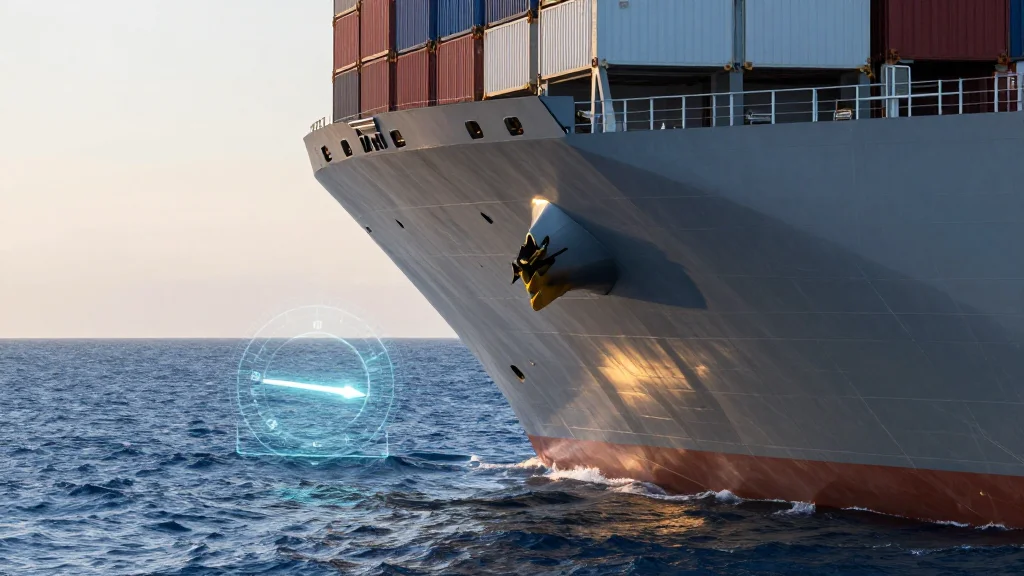
Greek Digitalisation Firm Wants Ships to Use AI to Make Speed Changes
Why It Matters
Automating speed changes turns advisory software into an active fuel‑saving tool, accelerating the maritime industry's path toward lower operating costs and reduced carbon emissions.
Key Takeaways
- •Deepsea's AI proposes real‑time speed changes during voyages
- •Shipowners currently ignore automated recommendations, missing fuel savings
- •AI integration could cut emissions by up to 5% per vessel
- •Industry adoption hinges on trust in algorithmic decision‑making
Pulse Analysis
Voyage optimisation software has become a staple on modern container and bulk carriers, using weather routing, port‑arrival windows and charter‑party constraints to calculate the most fuel‑efficient speed profile. Yet most operators still rely on manual adjustments, reviewing the software’s output and deciding when to slow down or speed up. Deepsea Technologies, a Greek digitalisation start‑up, argues that the missing link is real‑time automation: an AI engine that ingests sensor data, forecasts, and contractual obligations to issue instantaneous speed‑change commands without human intervention.
The transition from advisory tools to autonomous execution faces several hurdles. Data integrity is paramount; inaccurate AIS positions or weather feeds can lead to sub‑optimal or even unsafe recommendations. Moreover, shipmasters and owners must trust an algorithm to override traditional seamanship instincts, especially in congested straits or during adverse weather. Deepsea’s approach combines reinforcement learning with a transparent decision‑log, allowing crews to audit each recommendation. Early trials on a Mediterranean feeder fleet showed a 3‑4% reduction in fuel burn, confirming that the technology can deliver tangible savings when properly calibrated.
If AI‑driven speed control scales across the global fleet, the cumulative impact could be significant. The International Maritime Organization estimates that a 5% cut in fuel consumption would translate to roughly 1.2 million tonnes of CO₂ avoided annually, a figure that aligns with industry decarbonisation targets. Financially, the savings equate to hundreds of millions of dollars in reduced bunker costs for major shipowners. As regulatory pressure mounts and investors demand greener operations, automated voyage optimisation is poised to move from a niche experiment to a standard operating procedure in the next five years.
Greek digitalisation firm wants ships to use AI to make speed changes
Comments
Want to join the conversation?
Loading comments...