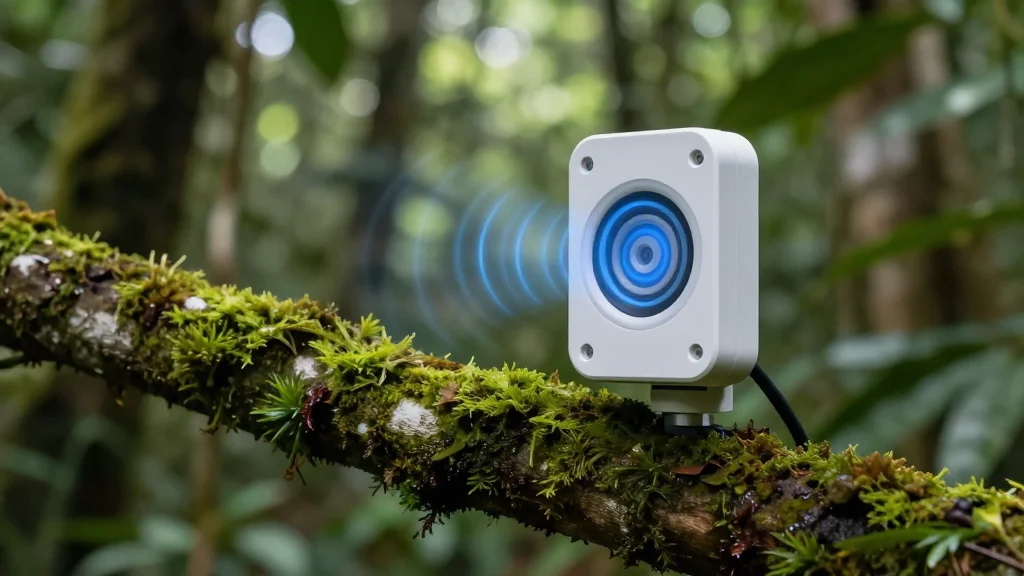
Guatemala Deploys AI Sensors to Spot Illegal Deforestation in Real Time

Why It Matters
Real‑time AI monitoring transforms how conservation agencies respond to illegal activities, shifting from reactive patrols to proactive, data‑driven interventions. By cutting the lag between an illegal act and ranger awareness, the technology can reduce forest loss, protect wildlife habitats, and preserve carbon stocks that are critical to climate mitigation. The pilot also demonstrates a viable model for public‑private‑academic collaboration in environmental AI, showing how modest grant funding can catalyze high‑impact solutions. Successful scaling could attract further investment from governments and NGOs, accelerating the deployment of AI tools across the globe’s most vulnerable ecosystems.
Key Takeaways
- •Guatemala’s Maya Biosphere Reserve launches AI acoustic monitoring pilot funded by a $2 million Bezos Earth Fund grant.
- •Machine‑learning models detect gunshots, chainsaws and other illegal‑activity sounds in near‑real time.
- •Reserve covers 2.2 million hectares (5.3 million acres) of forest under threat from logging and hunting.
- •Project partners include WCS, Cornell University’s Lab of Ornithology, Chemnitz University of Technology, and Brazil’s Federal University of Mato Grande do Sul.
- •Pilot aims to reduce ranger response time from weeks to minutes, with broader rollout planned for Brazil’s Pantanal wetland.
Pulse Analysis
The Guatemala pilot marks a watershed moment for AI in conservation, moving the technology from experimental labs into operational fieldwork. Historically, acoustic monitoring has suffered from limited coverage and delayed analysis, but the integration of satellite uplinks and cloud‑based machine learning eliminates those bottlenecks. This shift mirrors trends in other sectors—such as edge computing for telecom towers—where AI is deployed at the data source to accelerate decision‑making.
From a market perspective, the success of this pilot could unlock a new niche for AI vendors focused on low‑bandwidth, ruggedized sensors. Companies that can deliver reliable hardware and adaptable models stand to capture contracts from NGOs, governments and multilateral agencies seeking scalable solutions. Moreover, the $100 million Bezos Earth Fund challenge signals that philanthropic capital is willing to back AI projects with clear, measurable outcomes, potentially spurring a wave of similar grant programs.
Strategically, the initiative also highlights a tension between technology optimism and on‑the‑ground realities. While AI can flag incidents instantly, effective enforcement still depends on human capacity, logistics and political will. If the pilot demonstrates that rapid alerts translate into tangible reductions in illegal activity, it will provide a compelling case study for policy makers to invest in the necessary ranger infrastructure. Conversely, if false positives or technical failures dominate, it could reinforce skepticism about AI’s role in complex ecological contexts. The coming months will be critical in determining whether AI becomes a standard tool in the conservation toolkit or remains a promising but unproven experiment.
Guatemala Deploys AI Sensors to Spot Illegal Deforestation in Real Time
Comments
Want to join the conversation?
Loading comments...