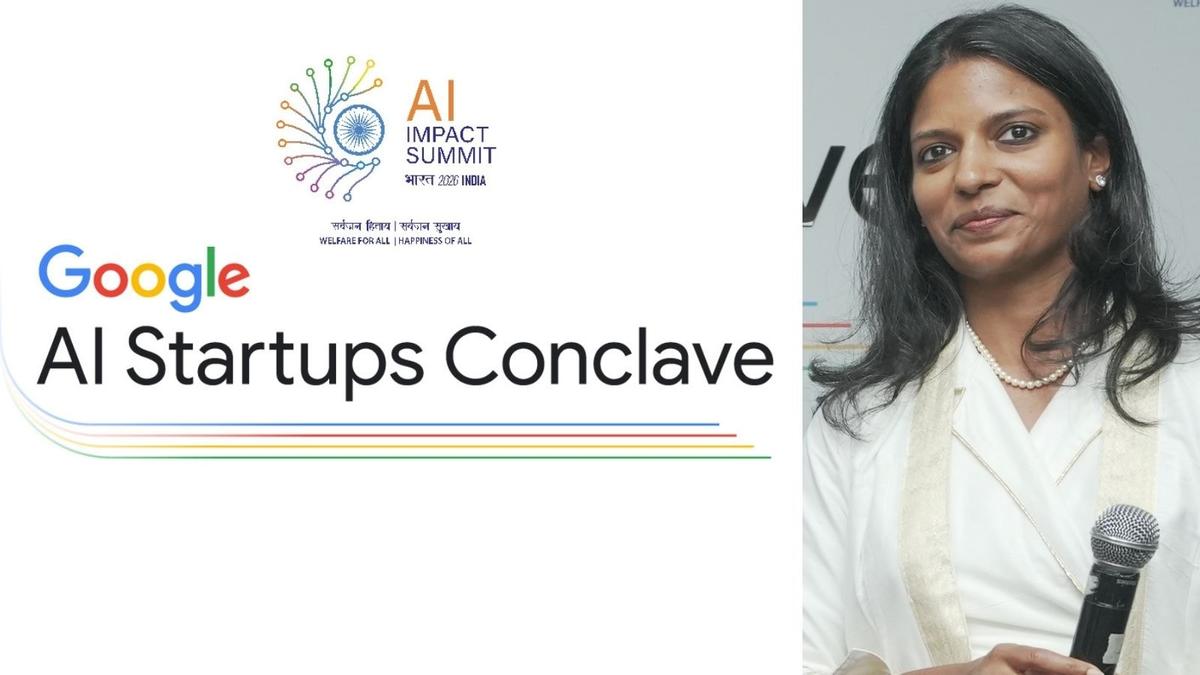
‘Half of India’s Next Wave of Unicorns Will Be AI Companies’: Google Exec Seema Rao at AI Startups Conclave
•January 15, 2026
0
Companies Mentioned

Why It Matters
The forecast signals a seismic shift toward AI‑driven growth, positioning India as a premier destination for high‑value tech investment and global AI leadership.
Key Takeaways
- •Over 50% new Indian unicorns projected to be AI firms
- •Generative AI shortens product development, removes coding barriers
- •Trust, data governance, and market access are biggest adoption hurdles
- •Government policies and India AI Mission actively support AI startups
- •Google launching market‑access program to help scale startups globally
Pulse Analysis
India’s AI surge is unlike any previous tech wave. Generative models have removed traditional bottlenecks such as lengthy coding cycles and costly compute, allowing founders to prototype, test, and iterate at unprecedented speed. This acceleration is especially potent in a linguistically diverse market, where AI‑driven translation and lip‑sync tools can instantly localize content across dozens of languages, unlocking new revenue streams for startups that previously faced prohibitive localization costs.
Despite the rapid innovation, Indian AI firms confront two critical hurdles. First, establishing trust through robust data governance, sovereignty, and privacy safeguards is essential for enterprise adoption. Second, scaling beyond domestic pilots to secure multi‑million‑dollar contracts with global enterprises remains difficult. Google’s newly announced market‑access program aims to bridge this gap by providing go‑to‑market support, mentorship, and connections to multinational buyers, directly addressing the “last‑mile” challenge highlighted by Rao.
The broader ecosystem benefits from a converging set of supportive policies. The India AI Mission and Startup India initiatives are investing in infrastructure, talent development, and regulatory clarity, creating a fertile environment for AI ventures. Coupled with the upcoming Global AI Impact Summit, these efforts signal to investors and corporates worldwide that India is ready to host and export AI solutions at scale. As a result, capital inflows are expected to rise, and the nation could become a leading exporter of AI‑enabled products and services over the next decade.
‘Half of India’s next wave of unicorns will be AI companies’: Google exec Seema Rao at AI Startups Conclave
0
Comments
Want to join the conversation?
Loading comments...