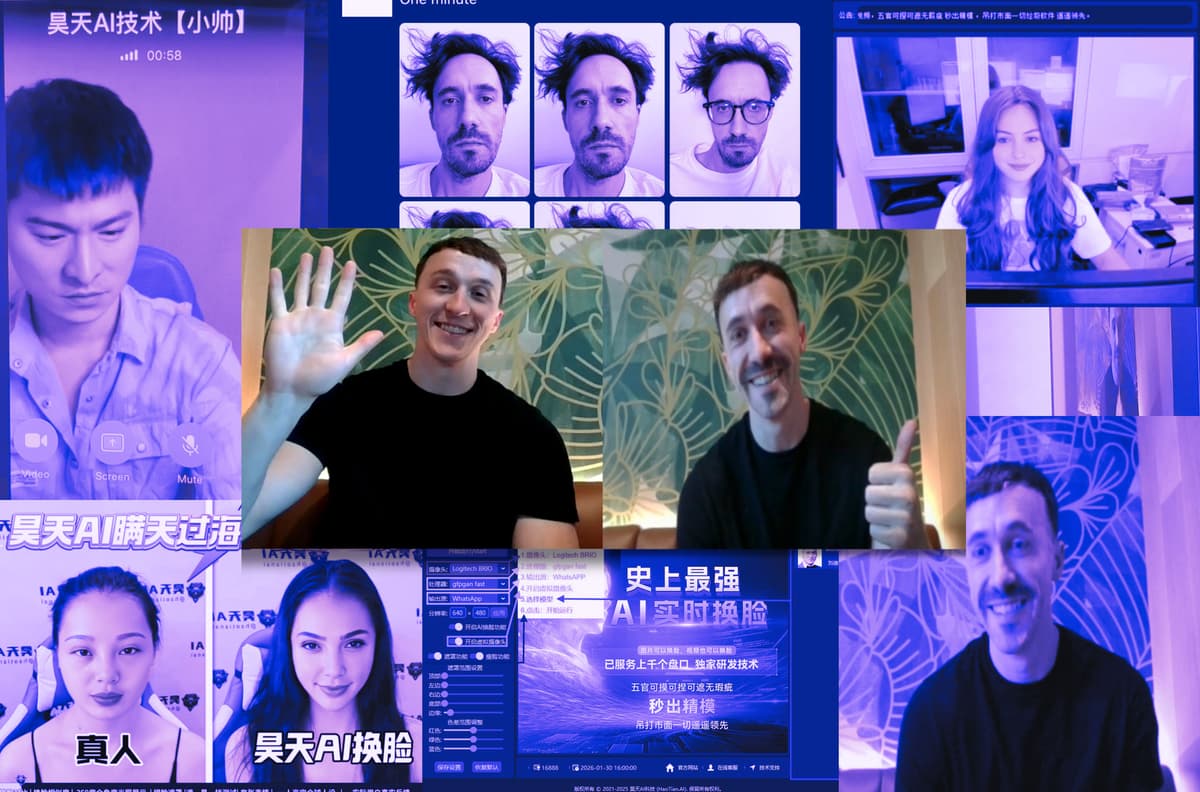
‘HELLO BOSS’: Inside the Chinese Realtime Deepfake Software Powering Scams Around the World
Companies Mentioned
Why It Matters
Real‑time deepfakes lower the barrier for sophisticated impersonation attacks, threatening corporate financial security and eroding trust in video communication tools.
Key Takeaways
- •Chinese firm offers low‑cost, real‑time face‑swap software
- •Scammers use it for live CEO‑fraud and BEC attacks
- •Tool runs on consumer gaming laptops, no specialized hardware
- •Detection vendors race to create anti‑deepfake safeguards
Pulse Analysis
The emergence of real‑time deepfake software marks a turning point in the cyber‑crime landscape. Unlike pre‑rendered videos that require hours of processing, the Chinese platform can overlay a target’s facial features onto a live video stream in under a second. Built on generative adversarial networks and optimized for consumer GPUs, the solution runs on off‑the‑shelf gaming laptops, dramatically reducing the cost and technical expertise needed to execute convincing impersonations. This democratization of hyper‑realistic visual manipulation has caught the attention of fraud rings that previously relied on static images or voice‑over scams.
In practice, the technology is being weaponized in business‑email‑compromise (BEC) and CEO‑fraud operations. Attackers initiate video calls on platforms such as Microsoft Teams, Zoom, or Webex, and instantly replace their own visage with that of a senior executive. The visual authenticity bypasses many of the red‑flags that organizations have trained employees to recognize, leading to higher success rates in extracting wire transfers or confidential data. Early case studies indicate that losses from such scams can exceed $1 million per incident, underscoring the urgent need for updated security protocols that incorporate visual‑authentication checks.
Regulators and cybersecurity firms are responding with a mix of policy and technology. Governments in the U.S., EU, and Asia are drafting guidelines that require disclosure when synthetic media is used in commercial contexts. Meanwhile, vendors are integrating deepfake detection algorithms—leveraging subtle pixel‑level inconsistencies and biometric liveness checks—directly into video‑conferencing platforms. As the arms race between deepfake creators and defenders intensifies, businesses must adopt multi‑factor verification, employee training, and real‑time monitoring to safeguard against this rapidly evolving threat.
‘HELLO BOSS’: Inside the Chinese Realtime Deepfake Software Powering Scams Around the World
Comments
Want to join the conversation?
Loading comments...