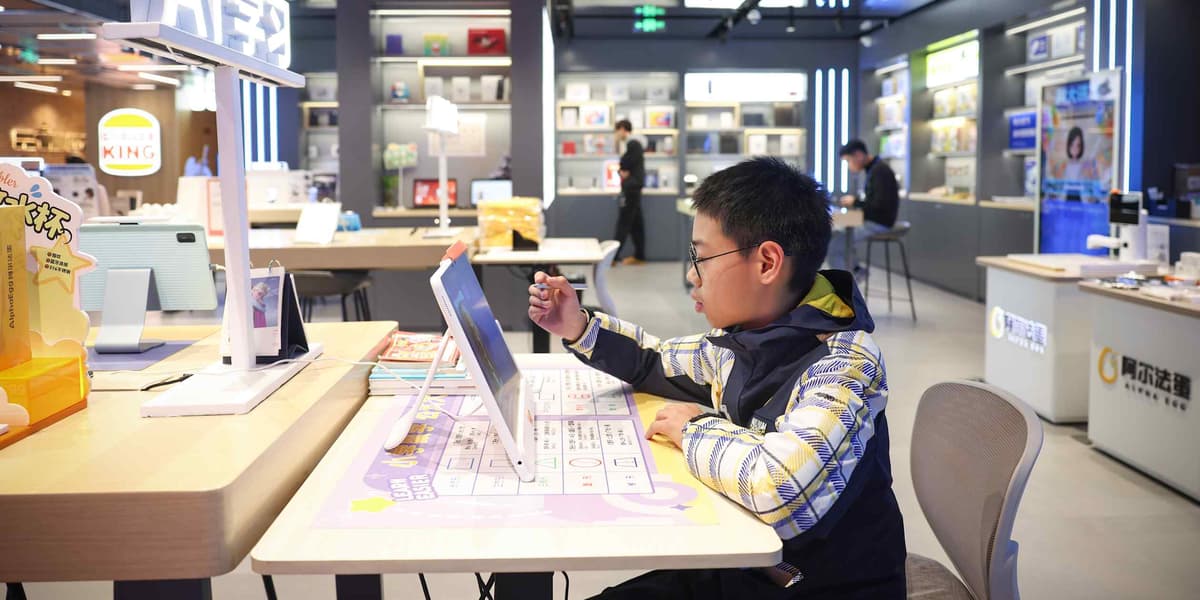
Homegrown AI Powers China's Ambitions, From Classroom to Home
Why It Matters
China’s coordinated AI push reshapes the global technology race, influencing talent pipelines, market competition, and data sovereignty across education and consumer sectors.
Key Takeaways
- •China integrates generative AI into K‑12 curricula nationwide
- •State‑backed AI platforms prioritize domestic data and models
- •Policy aims AI self‑sufficiency by 2030 with billions funding
- •Tech giants partner schools to create AI‑enhanced learning tools
- •Urban households adopt AI assistants for education and daily chores
Pulse Analysis
China’s AI ambition has moved from a strategic slogan to concrete implementation across the education system. Since the 2023 "New Generation AI Development Plan," the government has earmarked over $150 billion in subsidies and tax incentives to nurture domestic model training, data centers, and talent pipelines. By mandating AI modules in primary and secondary schools, Beijing hopes to embed algorithmic literacy early, creating a generation comfortable with prompt engineering and AI ethics. This top‑down approach contrasts with the United States, where AI integration remains largely market‑driven, and positions China to capture a sizable share of the future AI workforce.
In classrooms, leading Chinese tech firms such as Baidu, Alibaba, and SenseTime are co‑developing AI‑enhanced textbooks, adaptive tutoring platforms, and real‑time language translation tools. Pilot programs in Shanghai and Shenzhen report up to a 30% improvement in student engagement metrics, while teachers receive AI‑assisted grading and lesson‑planning dashboards. These collaborations not only accelerate product iteration but also generate vast domestic datasets, reinforcing the self‑reliance loop. Critics warn that early exposure may widen the digital divide, yet policymakers argue that standardized AI curricula will democratize access to cutting‑edge skills across socioeconomic groups.
Beyond schools, AI is seeping into Chinese homes through smart speakers, robotic companions, and integrated home‑automation hubs. Consumers are drawn to devices that can tutor children, manage household chores, and provide personalized health insights, all while storing data on sovereign cloud infrastructure. This domestic ecosystem reduces reliance on foreign AI services, bolstering data security and aligning with national cybersecurity mandates. As Chinese households adopt these technologies, global AI vendors face a fragmented market where local standards and language models dominate, reshaping competitive dynamics and prompting multinational firms to rethink entry strategies.
Homegrown AI powers China's ambitions, from classroom to home
Comments
Want to join the conversation?
Loading comments...