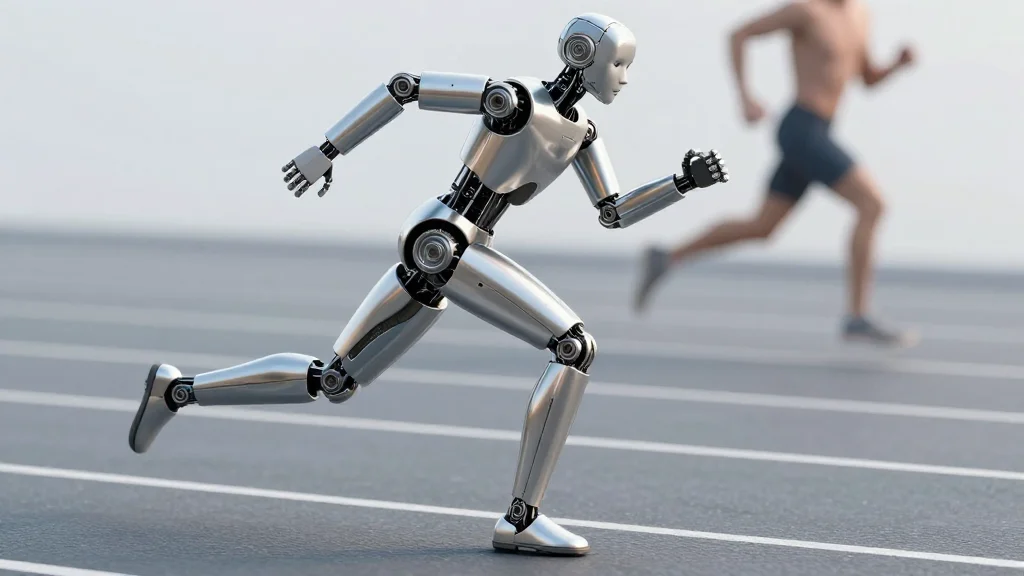
Honor’s Lightning Crushes Human Record at Beijing Half-Marathon, Finishing in 50:26

Why It Matters
The lightning‑fast performance of Honor’s robot signals that AI‑enabled humanoid platforms are moving from experimental prototypes to commercially viable machines. Faster, more stable locomotion opens doors for robots to take on tasks that are dangerous or ergonomically challenging for humans, such as disaster response, warehouse picking, or retail assistance. China’s dominance in humanoid robot sales and its aggressive public showcases also reshape the global competitive landscape, pressuring Western firms to accelerate their own AI‑robotics programs. The race underscores how advances in AI perception, control theory, and thermal management can converge to produce tangible, high‑profile outcomes that capture public imagination and attract policy support.
Key Takeaways
- •Honor’s Lightning finished the 21km half‑marathon in 50:26, beating the human record of 57:20.
- •Over 100 humanoid robots competed, a five‑fold increase from the 2025 event.
- •Nearly 40 % of the robots operated autonomously, using AI navigation without remote control.
- •Engineers highlighted 90‑95 cm legs and liquid‑cooling technology as key performance drivers.
- •China holds about 90 % of global humanoid robot sales, positioning the country as a leader in the sector.
Pulse Analysis
Honor’s victory is less a one‑off spectacle and more a bellwether for the commercialization trajectory of AI‑driven robotics. The convergence of high‑density actuation, advanced thermal management, and real‑time perception algorithms has finally produced a platform that can sustain sub‑minute per‑kilometre speeds over a half‑marathon distance. This performance leap narrows the gap between research labs and market‑ready products, suggesting that the next wave of investment will focus on scaling reliability rather than raw speed.
Historically, humanoid robots have struggled with power density and joint wear, limiting their operational windows to minutes. The liquid‑cooling system borrowed from Honor’s flagship smartphones represents a cross‑industry technology transfer that could become a standard design pattern, much like automotive thermal management did for electric vehicles. As battery chemistry improves and AI planning becomes more predictive, we can expect humanoids to transition from showcase events to roles in logistics hubs, where they can navigate dynamic environments with minimal human oversight.
Geopolitically, China’s ability to field a dominant share of the global humanoid market gives it leverage in setting industry standards and influencing supply chains for critical components such as AI chips and high‑strength alloys. Western competitors, still fragmented across hardware and software silos, may need to pursue joint ventures or accelerate government‑backed R&D to keep pace. The Beijing half‑marathon thus serves as both a technical milestone and a strategic signal: AI‑powered humanoids are entering the mainstream, and the firms that master the integration of perception, actuation, and thermal control will shape the next decade of automation.
Honor’s Lightning Crushes Human Record at Beijing Half-Marathon, Finishing in 50:26
Comments
Want to join the conversation?
Loading comments...