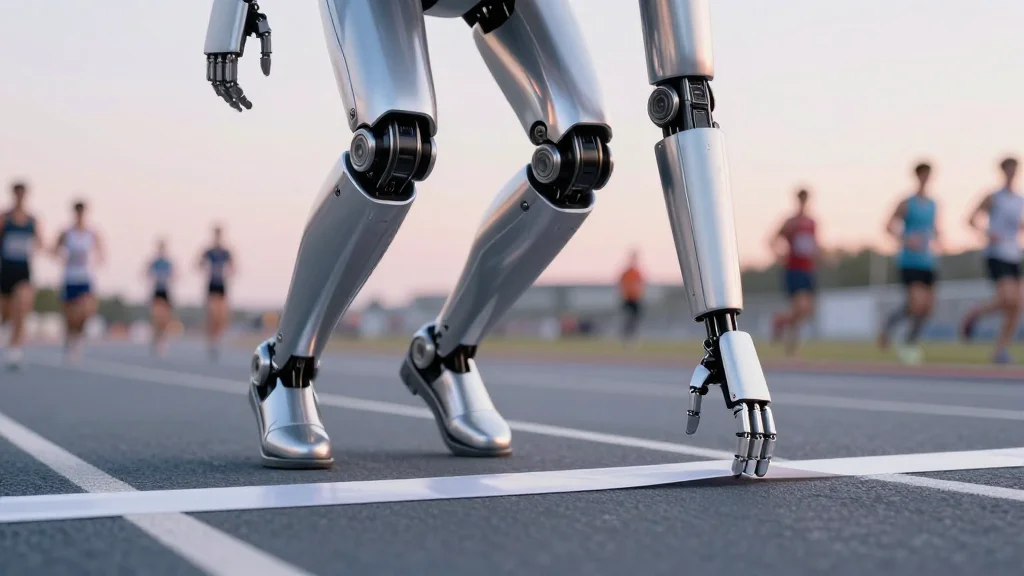
Honor's Lightning Humanoid Shatters Half-Marathon Record in Beijing, Finishing in 50:26

Why It Matters
The Lightning robot’s record‑breaking performance signals a watershed moment for AI‑driven robotics, showing that machines can now outperform elite human athletes in endurance tasks. This breakthrough could accelerate the adoption of humanoid robots in sectors such as logistics, construction, and disaster response, where speed and reliability are critical. Moreover, the public visibility of the event amplifies the debate over automation’s impact on employment, highlighting the need for policy frameworks that balance technological progress with workforce transition. China’s dominance in the race underscores the nation’s strategic push to become a global leader in advanced robotics. By showcasing home‑grown talent and government backing, the event may attract further investment, both domestic and foreign, into AI research, hardware development, and manufacturing ecosystems. The competitive pressure could also spur rivals in the United States, Europe, and Japan to accelerate their own humanoid programs, potentially reshaping the global AI race.
Key Takeaways
- •Honor's Lightning robot finished the 13.1‑mile half‑marathon in 50:26, beating the human record by over 7 minutes.
- •More than 100 robots competed alongside 12,000 human runners; Honor secured all three podium spots.
- •Nearly 50% of robot entrants navigated the course autonomously, a first for the event.
- •Engineer Du Xiaodi highlighted leg length (90‑95 cm) and liquid‑cooling tech as key performance enablers.
- •Public reaction mixed: awe at the technology, but concerns about job displacement grew.
Pulse Analysis
Lightning’s triumph is less a sports story than a proof‑of‑concept for next‑generation AI robotics. The speed advantage stems from a combination of mechanical engineering—longer, more powerful limbs—and sophisticated thermal management borrowed from consumer electronics. This cross‑pollination of hardware expertise suggests that Chinese firms are leveraging their massive smartphone supply chains to accelerate robotics, a strategy that could compress development cycles dramatically.
From a market perspective, the race functions as a live demo for investors and corporate buyers. The visual impact of a robot outrunning humans on a televised event is a potent marketing tool that could translate into pre‑orders for industrial units, especially in high‑risk environments where human fatigue is a liability. However, the gap between sprinting on a flat course and performing dexterous assembly tasks remains wide. Companies that can bridge that gap—by integrating advanced perception, manipulation, and AI decision‑making—will capture the most value.
Strategically, the event reinforces China’s ambition to lead the AI frontier. Government subsidies, dedicated robotics parks, and a talent pipeline feeding from universities like Beijing University of Posts and Telecommunications create an ecosystem that can outpace fragmented efforts elsewhere. The United States, while home to deep‑learning research powerhouses, still lacks a coordinated national robotics agenda, which may leave it trailing in the race for commercial humanoids. The next few years will likely see a sharpening of competition, with policy, talent, and capital flowing toward the firms that can demonstrate real‑world utility beyond the track.
Honor's Lightning Humanoid Shatters Half-Marathon Record in Beijing, Finishing in 50:26
Comments
Want to join the conversation?
Loading comments...