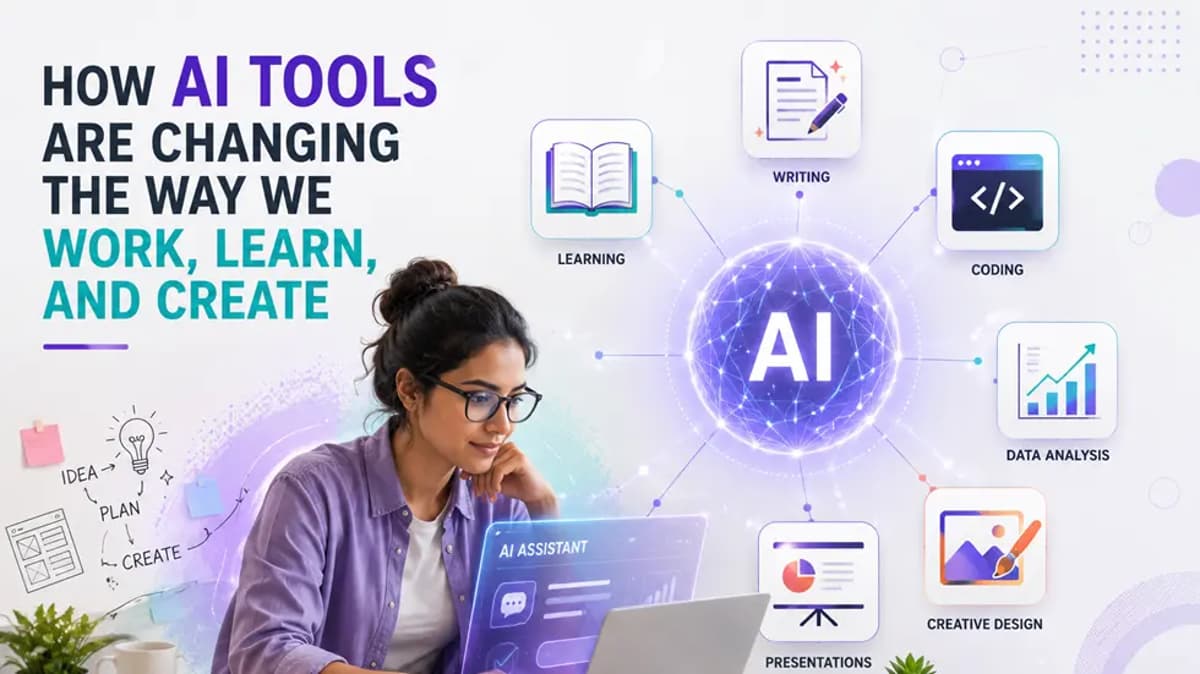
How AI Tools Are Changing the Way We Work, Learn, and Create
Why It Matters
AI accelerates productivity while reshaping job roles, making organizations that integrate it responsibly more competitive. The shift emphasizes human‑AI collaboration over simple automation, influencing talent development and operational efficiency.
Key Takeaways
- •AI tools shift work from repetitive tasks to strategic thinking
- •Draft generation reduces blank‑page time for marketers, students, developers
- •Real‑time data scanning aids lawyers, doctors, financiers facing information overload
- •Human oversight remains essential to verify AI‑generated facts and mitigate bias
- •Successful adoption requires workflow redesign, training, and measurable impact tracking
Pulse Analysis
The rapid adoption of generative AI tools marks a turning point for modern enterprises. No longer a peripheral experiment, these platforms now handle routine functions—drafting emails, creating presentations, writing code—allowing workers to allocate mental bandwidth toward higher‑order activities such as strategic planning and creative problem solving. This friction‑reduction model mirrors the productivity boost once delivered by spreadsheets, but it extends to any domain where a blank page or data overload stalls progress.
Across high‑stakes industries, AI’s ability to ingest massive information troves and distill actionable insights is reshaping decision‑making. Lawyers can summarize case law in seconds, clinicians receive concise literature reviews, and financial analysts get instant scenario comparisons. While the speed and breadth of these assistants are compelling, they also introduce new verification challenges; professionals must still validate sources, check factual accuracy, and guard against algorithmic bias. Tools like AI detectors provide a layer of transparency, but they are not substitutes for rigorous human review.
The real competitive edge lies in integrating AI thoughtfully into existing workflows. Companies that map repetitive tasks, select purpose‑built tools, and invest in employee training see measurable efficiency gains—sometimes as modest as ten minutes saved per employee per day, which scales to significant cost reductions organization‑wide. Coupled with clear ethical policies and continuous performance monitoring, AI becomes an accelerator rather than a distraction, positioning firms that master this balance at the forefront of the next productivity wave.
How AI Tools Are Changing the Way We Work, Learn, and Create
Comments
Want to join the conversation?
Loading comments...