How Anthropic’s New Claude Connectors to 3D Design Tools Close the AM Coordination Gap
Why It Matters
Automating coordination cuts engineering time and lowers production costs, turning AI from a niche design aid into a workflow catalyst. This shift gives manufacturers a new lever for competitive advantage in a software‑driven market.
Key Takeaways
- •Eight Claude connectors enable natural‑language control of major CAD tools
- •Automation reduces manual file handoffs, accelerating additive manufacturing cycles
- •Anthropic funds Blender’s Python API, strengthening open‑source integration
- •Academic partnerships give students early access to AI‑driven design tools
Pulse Analysis
Additive manufacturing has long wrestled with a coordination bottleneck: engineers spend hours moving, reformatting, and synchronizing files across disparate CAD and preparation software. Early AI efforts, such as Synera’s integration of Materialise’s Magics SDK, automated geometry cleanup and support generation but left the handoff stage untouched. This gap has become the industry’s primary economic constraint, as surveys show workflow control now outweighs raw process knowledge in determining competitive edge. By targeting the handoff layer, Anthropic’s new Claude connectors promise to reshape how design data flows, unlocking efficiency gains that were previously hidden in manual processes.
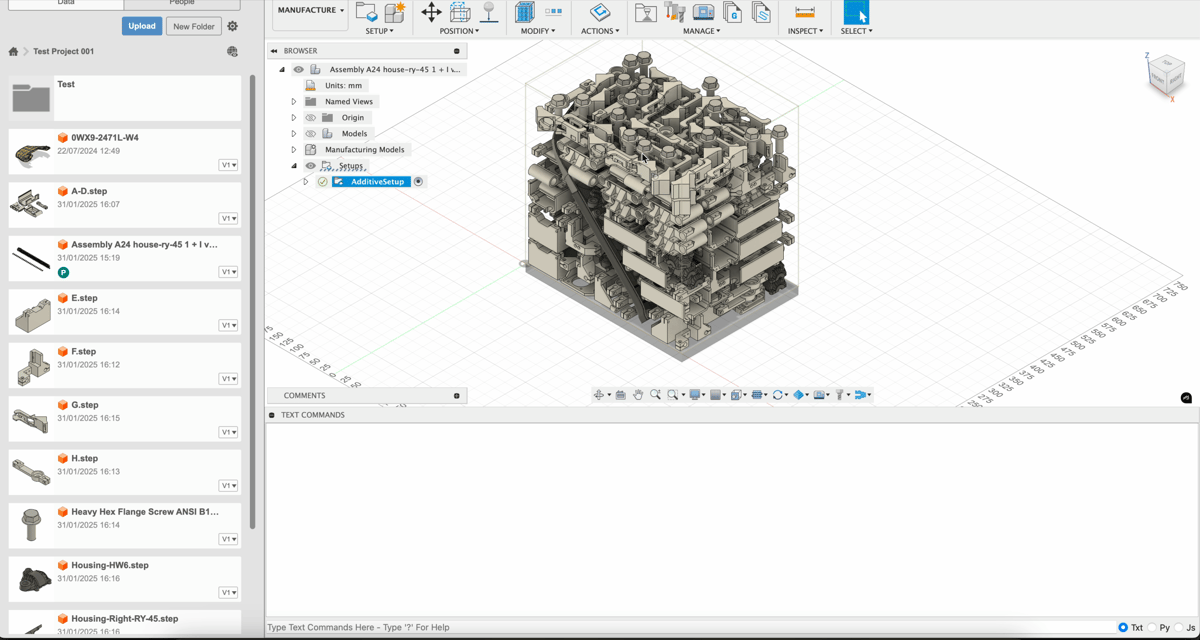
The eight connectors expose the native APIs of Autodesk Fusion, Blender, SketchUp and other tools through conversational prompts, allowing users to create, edit, and query models without writing code. In Fusion, separate modules handle geometry manipulation and project‑level data queries, while Blender’s connector leverages its Python API for batch scripting, mesh repair and export of print‑ready files. SketchUp’s integration translates natural‑language descriptions into initial 3D concepts, accelerating the early design phase. By automating format translation and asset synchronization, the connectors let AM service bureaus assess incoming files, classify jobs, and generate documentation with far less human intervention, freeing engineers to focus on higher‑value design decisions.
Beyond immediate productivity gains, Anthropic’s move signals a broader industry shift toward AI‑driven workflow orchestration. The company’s financial contribution to Blender underscores a commitment to open‑source ecosystems, ensuring long‑term API stability. Partnerships with RISD, Ringling College and Goldsmiths embed the technology in creative curricula, cultivating a new generation of designers fluent in AI‑augmented tools. As software capabilities outpace hardware advances, manufacturers that adopt such coordination‑centric AI are likely to achieve higher machine utilization, lower labor costs, and a stronger competitive position in the rapidly evolving 3D printing market.
How Anthropic’s New Claude Connectors to 3D Design Tools Close the AM Coordination Gap
Comments
Want to join the conversation?
Loading comments...