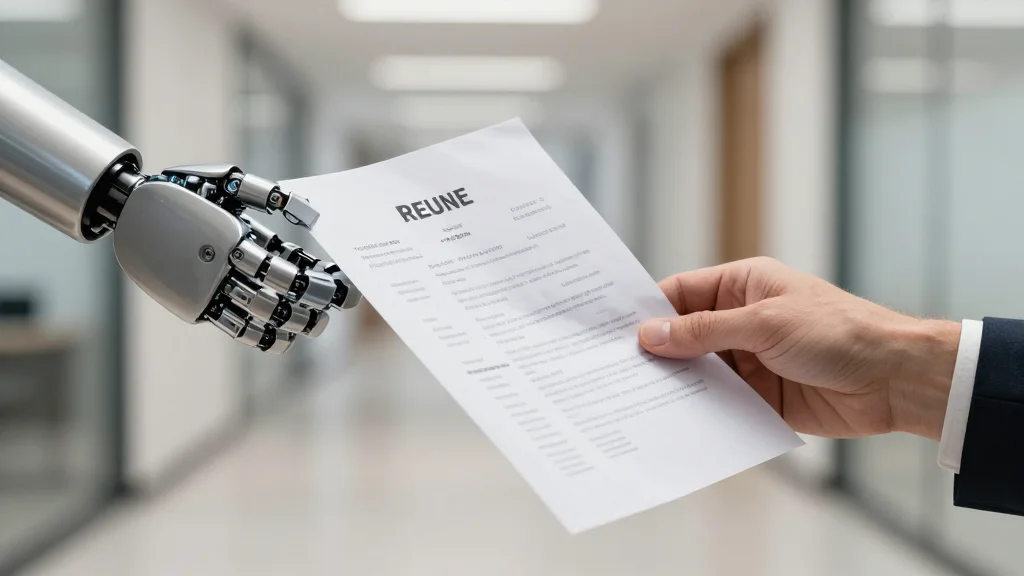
How C-Suite and Board Roles Are Being Reshaped Around AI
Why It Matters
The shift forces companies to recruit and develop leaders who can orchestrate human‑AI collaboration, making culture and system design the next competitive moat. Boards that fail to integrate AI‑augmented governance risk strategic irrelevance and regulatory exposure.
Key Takeaways
- •AI adds tech competencies to traditional C‑suite job descriptions
- •Empathy, learning ability, and judgment become top executive differentiators
- •New roles like Chief AI Officer and Chief Augmentation Officer emerge
- •Boards shift from passive oversight to AI‑augmented decision‑making
- •Real‑time data flattens hierarchies, expanding spans of control
Pulse Analysis
The rise of artificial intelligence mirrors past technological revolutions that redefined management—from railroads birthing professional managers to the internet spawning platform CEOs. Today, AI is not merely a tool but a strategic substrate that rewrites the skill matrix for senior leaders. Where a CFO once relied on accounting mastery, the modern finance chief must interpret predictive models, oversee data governance, and align financial strategy with algorithmic insights. Similarly, CHROs transition from custodians of policy to architects of human‑machine talent ecosystems, leveraging workforce analytics and AI‑driven performance platforms. This convergence of domain knowledge and technical fluency elevates judgment, learning agility, and ethical stewardship as the premium executive traits.
Corporate titles are evolving to reflect these new priorities. Roles such as Chief AI Officer, Chief Augmentation Officer, and Chief Ethics Officer have migrated from niche experiments to mainstream expectations, signaling that data quality, model risk, and responsible AI deployment are now board‑level concerns. The skill sets embedded in job descriptions—cloud security, machine‑learning literacy, and digital transformation—have become baseline requirements across the C‑suite. Companies that proactively embed these capabilities gain faster decision cycles, more accurate forecasting, and a cultural edge that competitors lacking AI fluency struggle to match.
Boards, too, are undergoing a metamorphosis. Early adopters use generative AI for routine tasks like summarizing filings, but the next wave integrates AI into scenario planning, risk modeling, and CEO evaluation, creating a hybrid deliberation model. This shift promises greater agility but also raises governance challenges around accountability, bias, and the potential for over‑delegation to opaque algorithms. Leaders who can balance AI augmentation with transparent oversight will shape the future of corporate governance, ensuring that technology enhances—not replaces—human judgment and organizational purpose.
How C-Suite and Board Roles Are Being Reshaped Around AI
Comments
Want to join the conversation?
Loading comments...