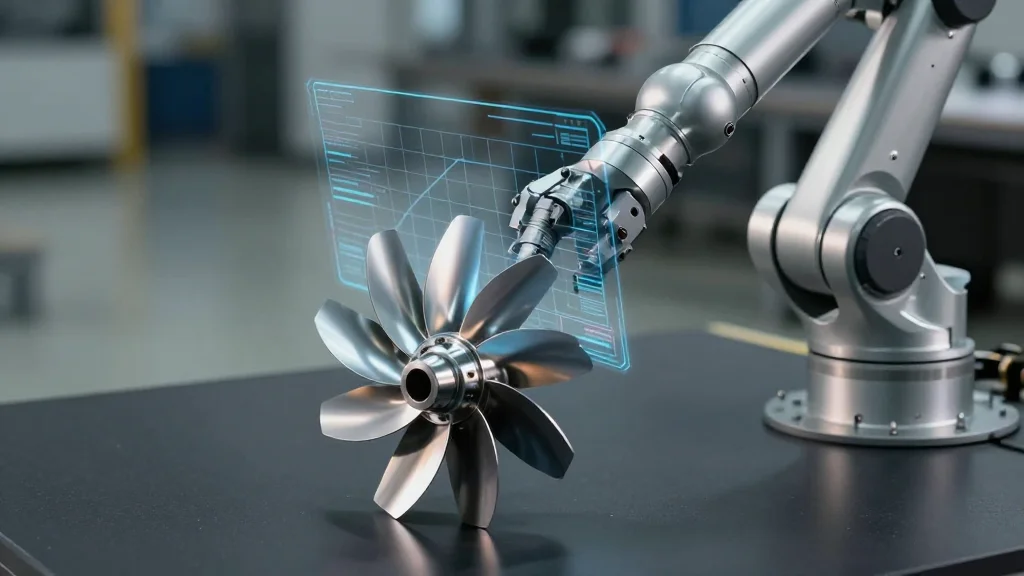
How Manufacturers Are Testing Physical AI Before Making Big Investments
Why It Matters
Testing centers de‑risk AI adoption, enabling manufacturers to validate performance, safety and ROI before large capital outlays, accelerating the shift toward smart factories.
Key Takeaways
- •TCS, Microsoft, Deloitte open AI testing labs for manufacturers.
- •Labs let firms trial physical AI before large capital spend.
- •Real‑world data quality remains biggest hurdle for AI adoption.
- •Single‑use‑case pilots deliver fastest ROI in smart factories.
- •Predictive‑maintenance bots emerging as high‑impact AI application.
Pulse Analysis
The manufacturing sector is moving beyond text‑based AI models toward embodied systems that combine robotics, edge computing and sensor data. To bridge the gap between curiosity and full‑scale rollout, major players like Tata Consultancy Services, Microsoft and Deloitte have launched physical AI testbeds across the United States. These labs provide a sandbox where plant managers can interact with humanoid robots, AI‑driven quality inspection tools and data‑ops pipelines, gaining hands‑on insight into integration challenges before committing millions of dollars to permanent installations.
Despite the promise of these environments, firms encounter two persistent obstacles: data hygiene and operational variability. Plant‑floor data is often fragmented, noisy and inconsistent, which can degrade model accuracy and lead to costly errors. Moreover, production lines differ in equipment, materials and human inputs, demanding AI solutions that can adapt in real time. Experts advise manufacturers to start with a single, well‑defined use case—such as reducing scrap on a CNC line or improving cycle time on a machining cell—to generate measurable ROI while refining data pipelines and model robustness.
Looking ahead, the most compelling AI applications are those that deliver immediate, quantifiable benefits and can be layered onto existing infrastructure. Predictive‑maintenance bots, powered by agentic AI platforms, are already helping companies like Makino troubleshoot equipment faster and avoid unplanned downtime. As testing labs proliferate and data‑ops capabilities mature, manufacturers are expected to scale successful pilots into enterprise‑wide deployments, accelerating the broader digital transformation of sectors ranging from aerospace to life sciences. The convergence of low‑risk experimentation and clear financial upside positions physical AI as a cornerstone of the next wave of manufacturing productivity.
How manufacturers are testing physical AI before making big investments
Comments
Want to join the conversation?
Loading comments...