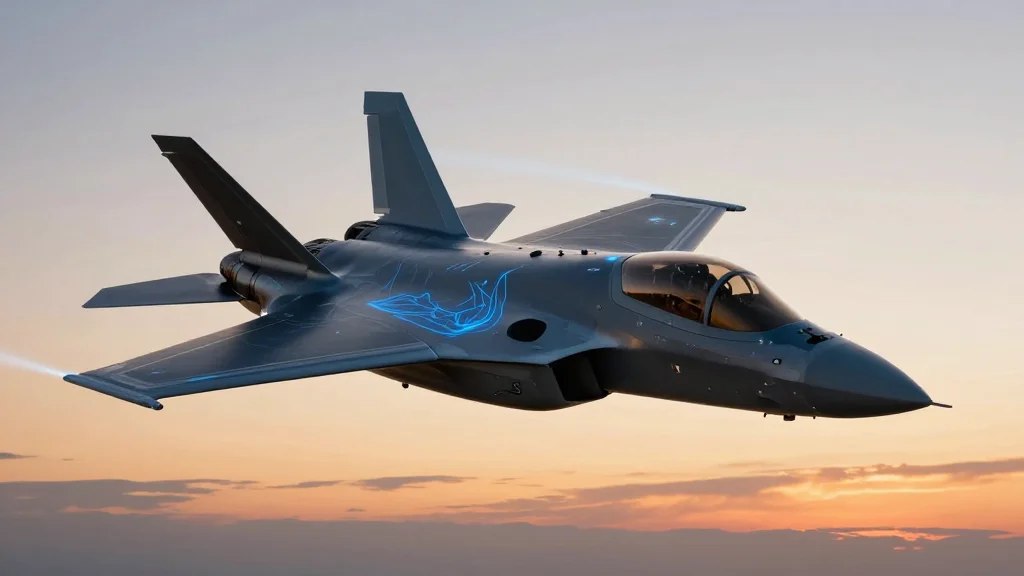
How NATO Can Integrate AI to Prevail in Future Algorithmic Warfare
Why It Matters
AI integration will define NATO’s deterrence and operational edge; neglecting spectrum control or AI readiness could trigger unintended escalations.
Key Takeaways
- •AI becomes core to NATO decision‑support and autonomy
- •Human error risk rises with faster AI‑driven timelines
- •Electromagnetic spectrum control critical for AI‑enabled operations
- •Redundancy and AI literacy essential for resilience
- •Escalation driven by effects, not AI presence alone
Pulse Analysis
The race to embed artificial intelligence in defense is no longer a speculative exercise; it is a strategic imperative for NATO as it confronts a rapidly modernizing adversary landscape. China and Russia have publicly pledged to field AI‑enhanced weapons, prompting the Alliance’s 2022 Strategic Concept to prioritize technological superiority. By weaving AI into command, control, communications, intelligence, surveillance, and reconnaissance (C4ISR) networks, NATO can accelerate data fusion, improve predictive logistics, and enable autonomous swarms, thereby reshaping the tempo and scale of future conflicts.
However, the promise of AI brings a parallel set of operational hazards. Faster, opaque algorithms compress decision cycles, increasing cognitive load on commanders and exposing them to misperception, bias, and deskilling. Moreover, AI systems depend on a fragile triad of data, algorithms, and computing power, all of which are vulnerable to cyber intrusion, data poisoning, and physical attacks on data‑centers or satellite links. Control of the electromagnetic spectrum becomes a linchpin; jamming or spoofing can cripple AI‑driven sensors and communications, turning a technological advantage into a liability. Redundancy, hardened infrastructure, and rigorous AI literacy programs are therefore essential to mitigate these risks.
Policy makers must translate these insights into concrete doctrine. NATO should institutionalize continuous AI education for commanders, codify redundancy protocols, and develop a shared lexicon for escalation thresholds in algorithmic engagements. Engaging the private AI sector under a clear code of conduct can secure supply‑chain integrity while fostering innovation. By treating the electromagnetic layer as a distinct operational domain and projecting strategic ambiguity around AI capabilities, NATO can deter adversaries without revealing critical vulnerabilities, preserving its competitive edge in the emerging era of algorithmic warfare.
How NATO can integrate AI to prevail in future algorithmic warfare
Comments
Want to join the conversation?
Loading comments...