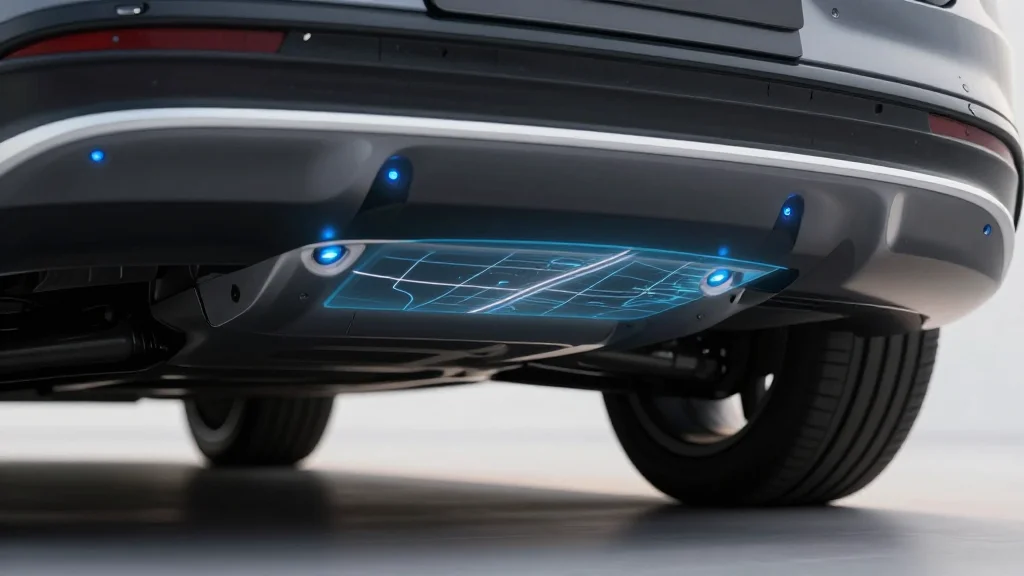
How New AI Tech Can Predict Potholes Before You Hit Them
Companies Mentioned
Why It Matters
Real‑time chassis adaptation enhances driver safety and comfort while creating a data asset that OEMs can monetize for road‑maintenance services.
Key Takeaways
- •AI Road Sense predicts potholes up to 25 m ahead.
- •Adjusts suspension damping instantly for smoother ride.
- •Three tiers: Standard, Advanced (cameras), Premium (lidar).
- •Integrates driver behavior recognition for personalized comfort.
- •Enables data sharing for future road‑maintenance insights.
Pulse Analysis
At CES 2024, ZF introduced AI Road Sense, the latest component of its Chassis 2.0 strategy. The system fuses data from existing vehicle sensors, forward‑looking cameras and, in the premium tier, lidar to generate a three‑dimensional profile of the road up to 25 metres ahead. Advanced machine‑learning algorithms then classify surface conditions—dry, wet, icy or damaged—and command the Cubix chassis controller to retune damping torque on each wheel in milliseconds. By continuously re‑configuring suspension settings, the technology promises to neutralize the impact of potholes and uneven pavement before the driver even feels them.
The immediate business impact is two‑fold. First, OEMs that adopt AI Road Sense can market a quantifiable safety and comfort upgrade, differentiating their models in a crowded electric‑vehicle market where ride quality is a key buying criterion. Second, the system creates a new data stream that can be anonymized and sold to municipalities for predictive road‑maintenance planning, opening a recurring‑revenue model for both ZF and its automotive partners. Early‑stage pilots suggest a potential 5‑10 percent reduction in suspension wear, translating into lower warranty costs and higher residual values for fleet operators.
AI‑driven chassis control aligns with the broader shift toward fully connected, sensor‑rich vehicles. As 5G rollout accelerates, real‑time road‑condition feeds can be shared across fleets, enabling cooperative safety nets where one car’s detection warns the next. Regulators are also showing interest; the European Union’s upcoming “Smart Infrastructure” directive encourages manufacturers to contribute road‑quality data to public databases. However, challenges remain, including lidar cost, data‑privacy compliance, and the need for robust validation across diverse climates. If ZF can scale the premium lidar package affordably, AI Road Sense could become a de‑facto standard for next‑generation suspension systems.
How new AI tech can predict potholes before you hit them
Comments
Want to join the conversation?
Loading comments...