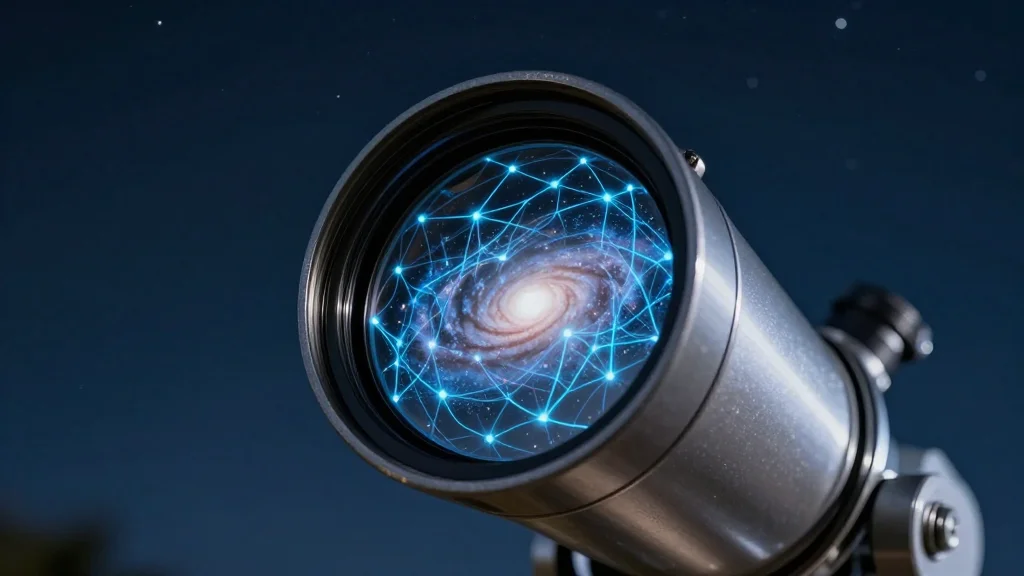
How Scientists Are Using AI to Analyze the Universe
Why It Matters
By automating the analysis of petabyte‑scale sky surveys, AstroAI shortens discovery cycles and equips the scientific workforce with essential AI skills, strengthening the United States’ leadership in space research and data‑driven innovation.
Key Takeaways
- •AstroAI builds custom AI models for astrophysics data analysis.
- •AI clusters massive datasets without prior coding, revealing hidden patterns.
- •Institute trains researchers from students to senior scientists in AI.
- •Initiative accelerates discovery, reducing analysis time by months.
Pulse Analysis
The volume of astronomical data has exploded in recent years, driven by next‑generation telescopes and all‑sky surveys that generate petabytes of raw observations. Traditional manual analysis can no longer keep pace, prompting research institutions to turn to machine learning for scalable insight extraction. AstroAI’s platform addresses this gap by delivering purpose‑built AI models that ingest raw telemetry, spectra, and imaging data, then automatically group similar observations and flag outliers that may indicate novel astrophysical events.
At the core of AstroAI’s technology is an unsupervised clustering engine that operates without pre‑defined labels or extensive coding. Researchers simply upload a dataset, and the system identifies intrinsic structures, revealing relationships that human analysts might miss. This no‑code approach democratizes advanced analytics, allowing astronomers to focus on hypothesis generation rather than data wrangling. Early deployments have already uncovered unexpected variable star patterns and hinted at previously unknown exoplanet signatures, illustrating the tangible scientific payoff of AI‑augmented discovery.
Beyond the immediate research gains, AstroAI is cultivating a new generation of AI‑savvy scientists through a tiered training program that spans undergraduate labs to senior faculty workshops. By embedding AI literacy across the research pipeline, the institute not only accelerates current projects but also builds a talent pool capable of tackling future data challenges across disciplines. The model could inspire similar AI‑driven initiatives in other data‑intensive fields, positioning the U.S. as a hub for innovative, interdisciplinary scientific computing.
How Scientists Are Using AI to Analyze the Universe
Comments
Want to join the conversation?
Loading comments...