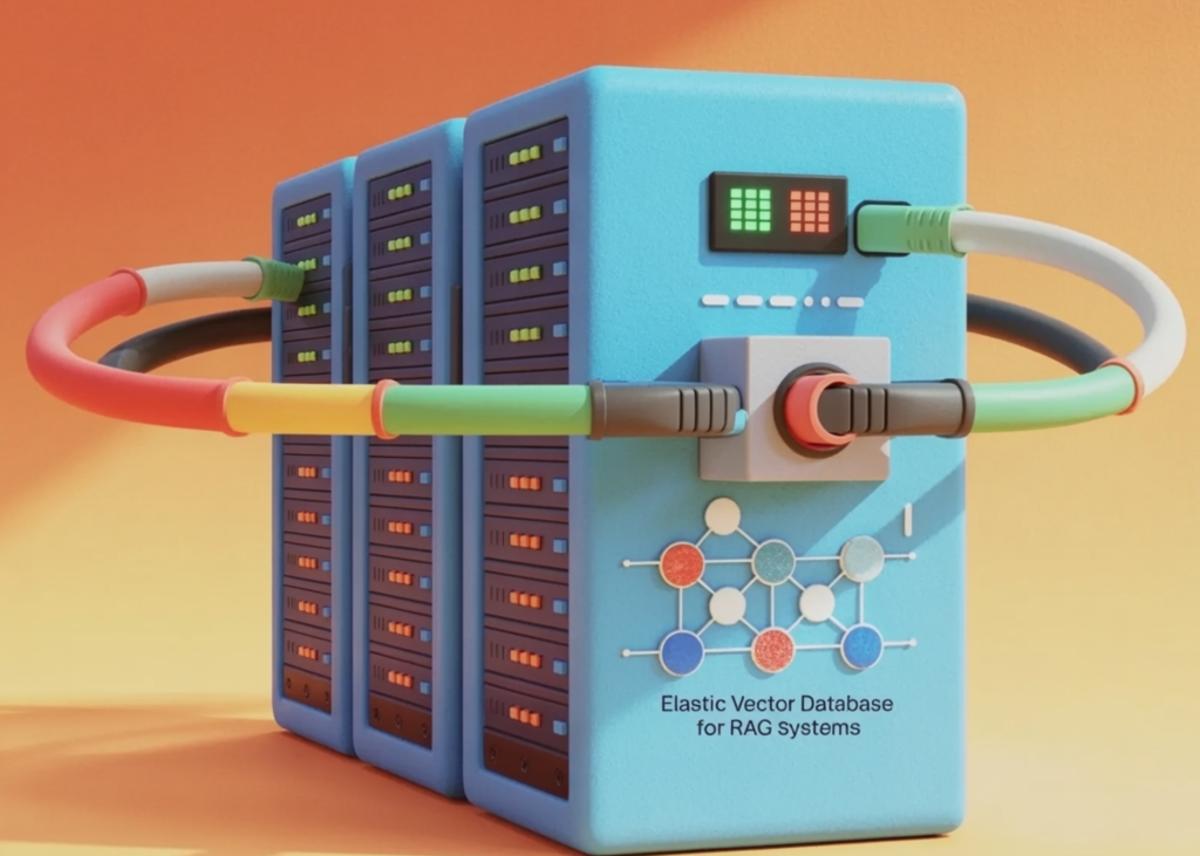
How to Build an Elastic Vector Database with Consistent Hashing, Sharding, and Live Ring Visualization for RAG Systems
•February 26, 2026
0
Why It Matters
Efficient sharding reduces re‑indexing costs and latency as RAG workloads grow, making large‑scale AI services more economical and reliable.
Key Takeaways
- •Consistent hashing balances embeddings across nodes
- •Virtual nodes improve load distribution
- •Adding/removing nodes moves only small fraction of vectors
- •Live ring visualization makes sharding behavior tangible
- •Technique scales RAG systems with minimal data reshuffling
Pulse Analysis
Consistent hashing has become a cornerstone for distributed storage, and its relevance spikes in the era of large‑scale vector embeddings used by Retrieval‑Augmented Generation (RAG) pipelines. By mapping each embedding to a point on a hash ring, the algorithm ensures deterministic placement while keeping the system resilient to node churn. Virtual nodes—multiple hash points per physical node—smooth out uneven key distribution, preventing hot spots that could degrade query latency. This foundational approach enables developers to treat vector databases as elastic services rather than static clusters.
The tutorial’s live ring visualization bridges theory and practice, letting engineers watch shard allocations shift in real time as nodes are added or removed. Because only the keys that fall between the departing and incoming node’s positions need to relocate, the fraction of moved embeddings stays low, often under a few percent. This minimal data movement translates directly into reduced network traffic, faster scaling, and lower operational costs. Moreover, the interactive widgets provide an intuitive debugging tool, helping teams validate load‑balancing strategies before deploying to production.
From a business perspective, adopting an elastic vector store built on consistent hashing can accelerate time‑to‑market for AI‑driven products. Companies can scale their RAG services horizontally without costly full re‑indexing, preserving query performance even as data volumes surge. The approach also aligns with cloud‑native principles, allowing automated node provisioning and de‑provisioning based on demand. As enterprises continue to embed generative AI into customer‑facing applications, the ability to manage massive embedding stores efficiently will be a decisive competitive advantage.
How to Build an Elastic Vector Database with Consistent Hashing, Sharding, and Live Ring Visualization for RAG Systems
0
Comments
Want to join the conversation?
Loading comments...