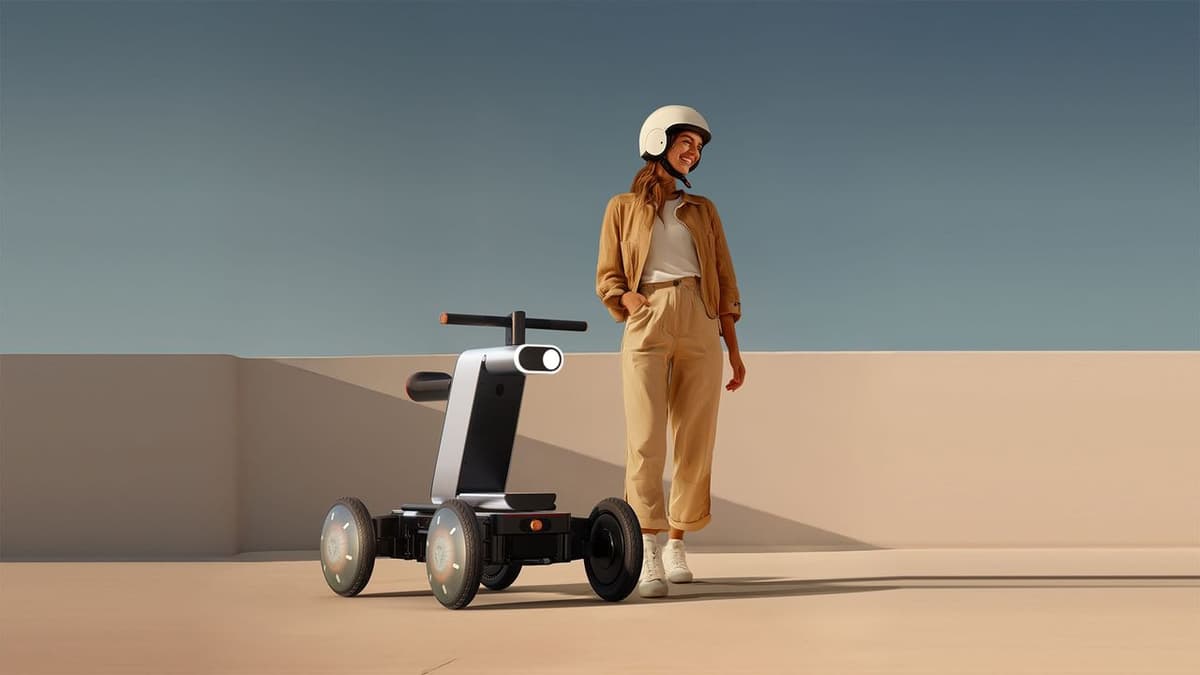
Hyundai’s Charming Autonomous Robot Can Be Everything From a Golf Trolley to an E-Scooter – and It's Going on Sale Soon
•December 4, 2025
0
Companies Mentioned

Why It Matters
MobED demonstrates how modular robotics can address diverse logistics and personal‑mobility challenges, potentially reshaping last‑mile delivery and warehouse automation. Its scalable production could accelerate adoption of autonomous platforms across industries.
Key Takeaways
- •Swiveling wheels enable leg‑like movement over obstacles
- •Modular design supports warehouse, delivery, golf, and e‑scooter uses
- •Automotive‑grade materials allow mass‑production scalability
- •Drone‑style interface simplifies remote operation and automation
- •Hyundai targets both industrial and consumer mobility markets
Pulse Analysis
Hyundai’s entry into the modular robotics arena with the Mobile Eccentric Droid (MobED) signals a strategic shift from traditional vehicle manufacturing toward adaptable autonomous platforms. By leveraging automotive‑grade components and a production‑line mindset, the company aims to lower the cost barrier that has limited widespread robot deployment in logistics and personal mobility. The platform’s open‑ended architecture invites third‑party developers to attach sensors, arms, or user interfaces, turning a single chassis into a multi‑purpose tool. This flexibility mirrors the broader industry trend of converging hardware and software to create scalable, service‑oriented solutions.
The heart of MobED is its eccentric control mechanism, which lets each wheel rotate independently and even tilt, effectively granting the robot leg‑like articulation without the complexity of true legged locomotion. This design enables the platform to climb modest steps, absorb uneven terrain, and maintain balance while carrying payloads. Compared with conventional wheeled AGVs, MobED offers superior maneuverability in confined spaces such as narrow aisles or indoor courtyards. Hyundai’s accompanying drone‑style control interface and programmable API further reduce integration time, allowing warehouse operators or developers to script autonomous routes with minimal training.
From a market perspective, MobED could accelerate adoption of autonomous solutions across sectors that have been hesitant due to high upfront costs and limited use‑case flexibility. Its scalable manufacturing approach positions Hyundai to compete with specialist robotics firms while tapping into its existing supply chain efficiencies. If pricing proves competitive, the platform may find traction not only in factories and fulfillment centers but also in consumer niches like golf courses or urban micro‑mobility, where a self‑balancing e‑scooter could replace traditional bikes. The success of MobED will likely influence how automakers invest in robotics ecosystems over the next decade.
Hyundai’s charming autonomous robot can be everything from a golf trolley to an e-scooter – and it's going on sale soon
0
Comments
Want to join the conversation?
Loading comments...