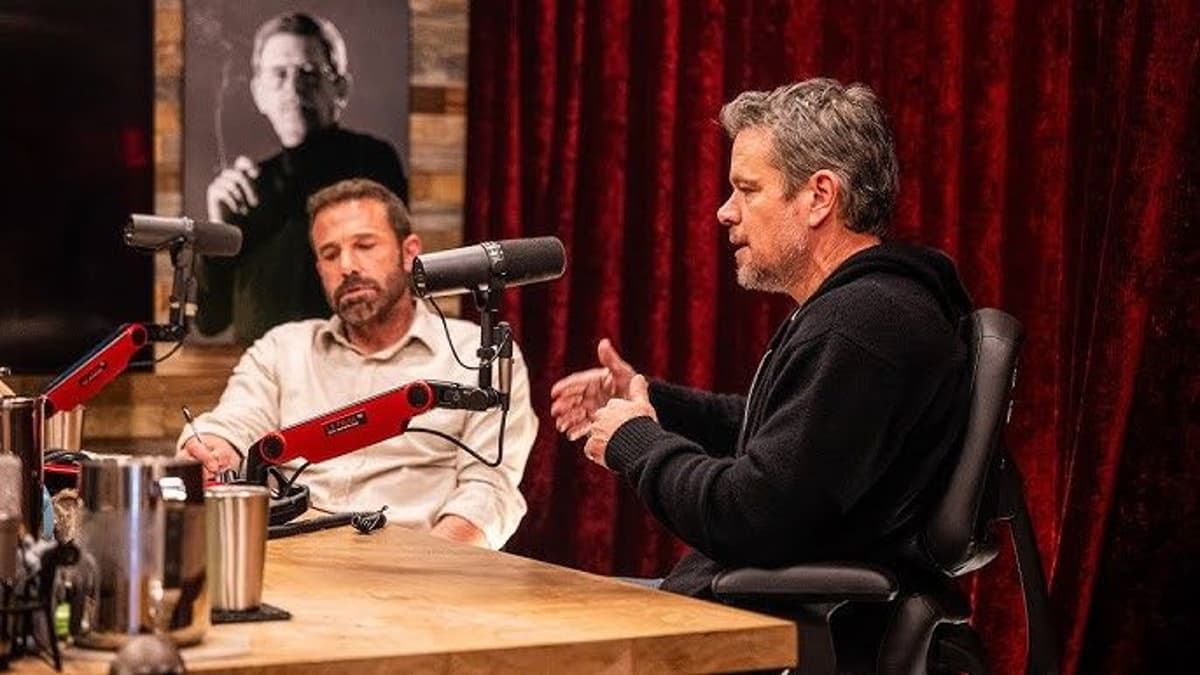
‘I Can’t Stand What It Writes’: Ben Affleck and Matt Damon Share Their Views on Using AI to Write Movies, but Admit It Could Become a New Editing Tool
•January 19, 2026
0
Companies Mentioned

Why It Matters
The actors’ stance highlights a pivotal tension between creative authenticity and cost‑driven AI adoption, signaling how the film industry may balance artistic integrity with emerging technology.
Key Takeaways
- •Affleck calls AI script output “shitty” and average.
- •Damon says AI can’t mimic genuine facial emotion.
- •Both view AI as future visual‑effects tool.
- •AI could cut location costs, speed production.
- •Guilds may regulate AI as creative assistance.
Pulse Analysis
The debate sparked by Affleck and Damon reflects a broader industry unease about generative‑AI encroaching on storytelling. While large language models can churn out plot outlines, critics argue they gravitate toward median solutions, lacking the depth and emotional resonance that seasoned screenwriters provide. This perception fuels concerns among creatives that AI could dilute narrative quality, especially as studios experiment with cost‑cutting technologies. By framing AI as a supplemental rather than primary writer, the actors underscore the importance of human intuition in crafting compelling cinema.
Nevertheless, the conversation also reveals practical incentives for adopting AI in film production. Visual‑effects pipelines already rely on sophisticated software to create realistic environments, and AI promises to extend those capabilities by automating routine tasks such as background plate generation, virtual set dressing, and even preliminary storyboard drafts. The potential to simulate remote locations—like a North‑Pole setting—without on‑site shoots can dramatically shrink budgets and accelerate timelines. As a result, producers may view AI as a strategic tool for efficiency, provided it remains under the oversight of experienced creatives and union guidelines.
Looking ahead, the industry is likely to see a calibrated integration of AI, guided by guild negotiations and evolving best practices. Regulatory frameworks could define permissible uses, ensuring AI augments rather than replaces human talent. This balance may foster new hybrid roles where writers leverage AI for ideation while retaining creative control, and VFX teams employ AI‑driven compositing to enhance visual storytelling. Ultimately, the trajectory will depend on whether AI can prove its value without compromising the artistic standards that audiences expect from premium cinema.
‘I can’t stand what it writes’: Ben Affleck and Matt Damon share their views on using AI to write movies, but admit it could become a new editing tool
0
Comments
Want to join the conversation?
Loading comments...