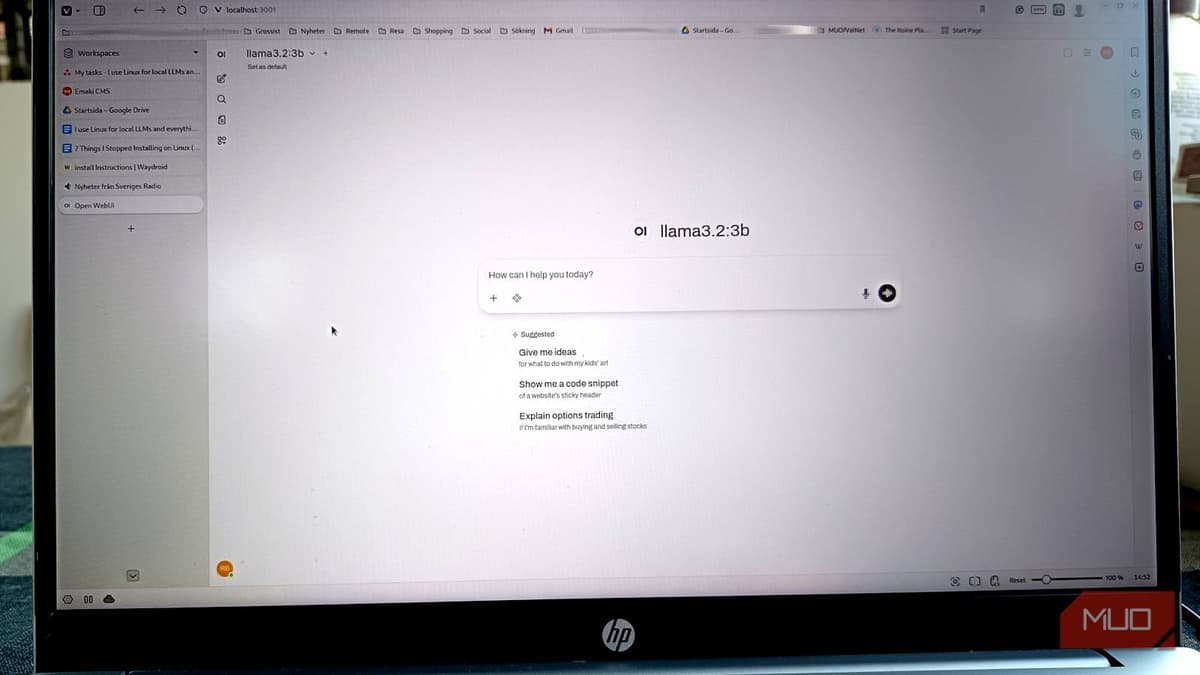
I Switched to Linux for Local LLMs and Setup that Took Hours on Windows Took Minutes

Why It Matters
A streamlined Linux setup cuts deployment time and support overhead, accelerating adoption of on‑premise AI across enterprises. Faster, reliable GPU utilization translates directly into higher productivity and lower total cost of ownership for AI projects.
Key Takeaways
- •Linux install runs with a single command, GPU auto‑detected.
- •Windows often falls back to CPU, requiring manual driver checks.
- •Docker and Open WebUI launch instantly on Linux; Windows needs extra setup.
- •Switching saves hours of debugging per model iteration.
- •Linux Mint provides a familiar, stable desktop for former Windows users.
Pulse Analysis
Local large language models (LLMs) are moving from cloud‑only experiments to on‑premise deployments as enterprises seek data privacy and cost control. While Windows dominates the desktop market, its ecosystem was never designed for the low‑level hardware orchestration that LLM inference demands. Users often wrestle with WSL2 layers, mismatched driver versions, and silent CPU fallbacks, turning what should be a minutes‑long install into a protracted debugging session. This friction hampers rapid prototyping and raises the barrier for teams without dedicated DevOps resources.
Linux, by contrast, offers native support for the binaries that power Ollama and related tools. The installation script leverages systemd to register services, automatically probes GPU capabilities, and integrates with Docker without the need for an intermediary compatibility layer. As a result, a single command pulls in the model, confirms GPU acceleration, and launches the Open WebUI, delivering instant, production‑grade performance. The streamlined workflow not only reduces time‑to‑value but also simplifies ongoing maintenance as new models or quantized versions are introduced.
For businesses evaluating local AI, the operational savings are tangible. Faster setups mean developers can iterate on model selection and fine‑tuning without incurring hours of system‑level troubleshooting, lowering support tickets and freeing engineering bandwidth for higher‑impact work. The article’s recommendation of Linux Mint provides a low‑learning‑curve path for Windows‑savvy users, ensuring that the transition does not sacrifice usability. As the AI landscape matures, organizations that adopt Linux‑first LLM pipelines will likely enjoy a competitive edge through quicker deployments and more reliable inference workloads.
I switched to Linux for local LLMs and setup that took hours on Windows took minutes
Comments
Want to join the conversation?
Loading comments...