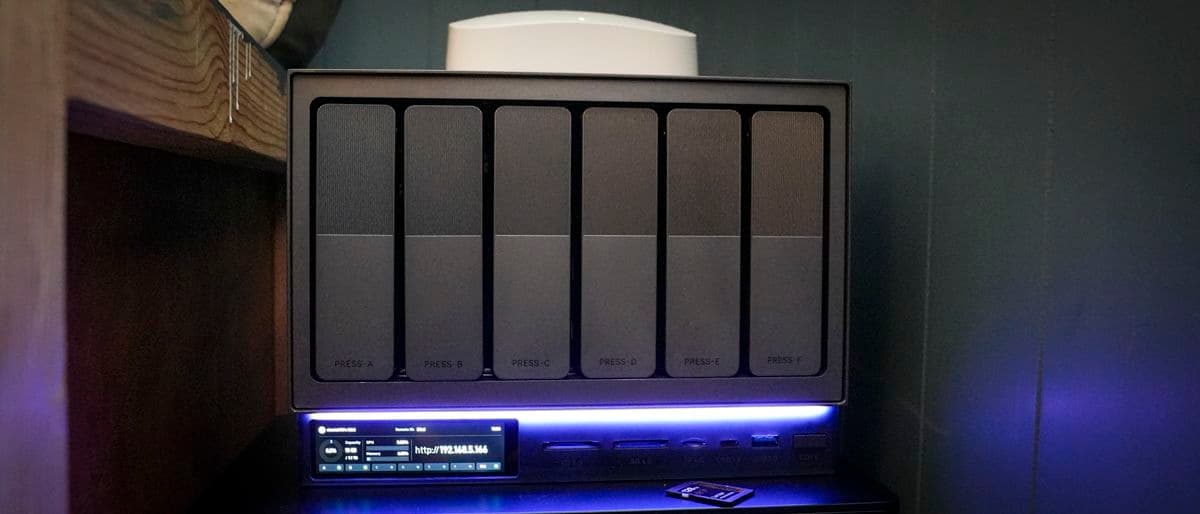
I Tested the Zettlab D6 NAS and with Local AI, It's Like Having a Personal Assistant to Log, Document and Find My Files
•December 3, 2025
0
Companies Mentioned


Why It Matters
Embedding local AI into NAS hardware gives businesses instant, privacy‑preserving search and automation, reducing reliance on cloud services and boosting productivity.
Key Takeaways
- •AI-enabled NAS offers on-device LLM chat search
- •Extracts text from video, audio, images automatically
- •Supports RAID, backup, but drives cost extra
- •ARM 3588 CPU powers entry-level model; Intel option available
- •Desktop and mobile apps streamline management and remote access
Pulse Analysis
AI‑powered network attached storage is reshaping how enterprises handle data at the edge. By running a localized large language model directly on the device, the Zettlab D6 eliminates the latency and privacy concerns associated with cloud‑based AI queries. This on‑premise approach enables instant natural‑language searches across heterogeneous media—documents, images, video, and audio—while keeping sensitive files within the organization’s firewall. For sectors such as media production, legal, and research, the ability to ask a NAS to "find the contract from Q3 2024" or "transcribe this interview" accelerates workflows without exposing data to third‑party APIs.
Beyond search, the D6’s AI engine adds value through automated metadata extraction and content classification. Video frames are scanned for objects, audio streams are transcribed, and text is harvested from images, creating a rich, searchable index that traditional NAS devices lack. This capability supports advanced use cases like compliance monitoring, where organizations can quickly locate regulated content, and knowledge management, where employees retrieve insights from legacy media archives. Coupled with standard RAID protection and flexible drive bays, the device offers a hybrid solution that blends robust data resilience with intelligent data discovery.
The market impact of devices like the Zettlab D6 extends to cost optimization and IT simplification. Companies can replace separate AI services, transcription tools, and document management platforms with a single, unified appliance. The inclusion of desktop and mobile management apps further reduces the learning curve, allowing non‑technical staff to interact with the system via conversational prompts. As edge computing gains traction, AI‑enhanced NAS units are poised to become foundational components of modern, data‑centric enterprises.
I tested the Zettlab D6 NAS and with local AI, it's like having a personal assistant to log, document and find my files
0
Comments
Want to join the conversation?
Loading comments...