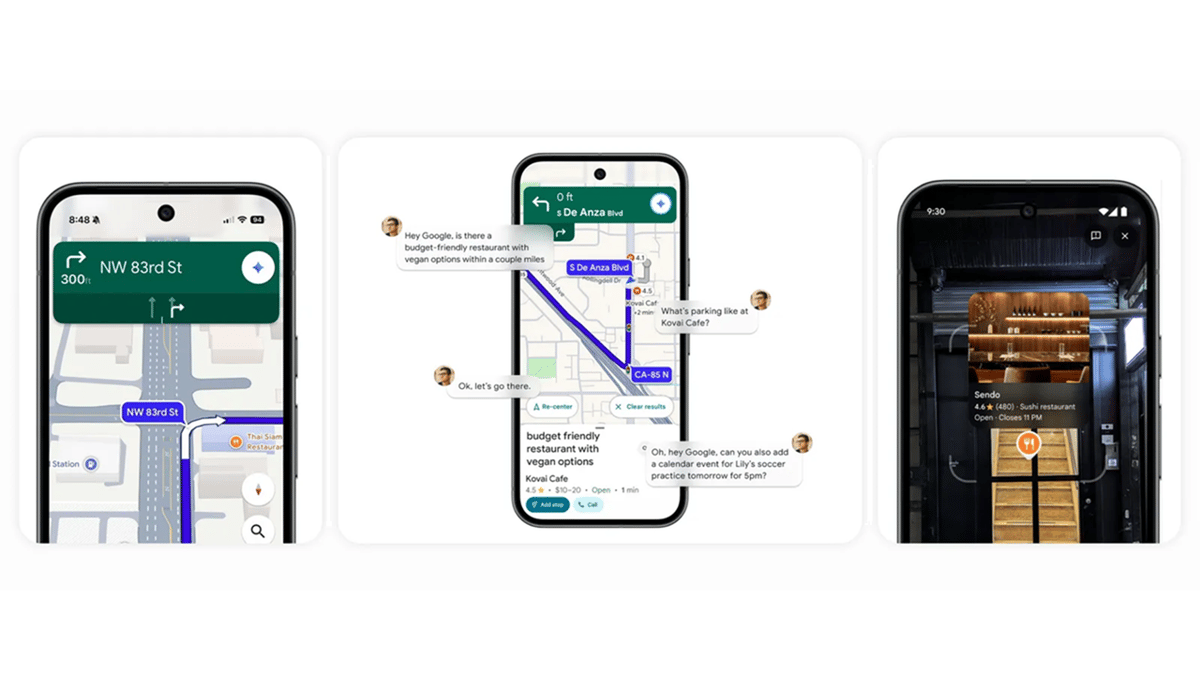
I Tried Talking to Google Maps with Gemini, and It Actually Understood What I Wanted
•December 18, 2025
0
Companies Mentioned


Why It Matters
The Gemini‑powered Maps transforms navigation from static directions to an interactive, personalized assistant, boosting user engagement and creating new revenue opportunities for Google and local businesses.
Key Takeaways
- •Gemini 3 powers conversational navigation in Google Maps
- •Real‑time suggestions combine traffic, reviews, and user preferences
- •Users can plan stops without leaving the navigation interface
- •AI evaluates criteria like scenery, cost, and parking availability
- •Integrated Gemini reduces need for separate assistant apps
Pulse Analysis
Google’s Gemini 3 marks a watershed moment for AI‑driven mapping, moving beyond static point‑to‑point directions to a truly conversational experience. By tapping into the same large‑language model that powers Assistant, Maps can interpret nuanced queries—such as “scenic lunch spots with easy parking”—and instantly overlay contextual results on the route. This shift leverages Google’s massive location data set, including real‑time traffic, business listings, and user reviews, to generate answers that feel personalized rather than generic. The integration also consolidates workflows, allowing drivers and pedestrians to stay within the Maps app while accessing AI assistance, which streamlines the user journey and reduces app‑switching friction.
From a business perspective, the Gemini‑enabled Maps feature deepens Google’s moat in the hyper‑competitive navigation market. Competitors like Apple Maps and Waze have begun experimenting with AI, but Google’s advantage lies in its unified ecosystem and the breadth of its data. Real‑time, multi‑criteria routing—balancing speed, cost, scenery, and amenities—opens new monetization pathways, such as premium recommendation slots for local businesses or targeted advertising based on inferred user intent. Moreover, the conversational interface can capture richer intent signals, feeding back into Google’s broader ad and search algorithms, thereby enhancing relevance across its advertising portfolio.
The rollout also raises considerations around privacy and data stewardship. Gemini’s ability to process location history and real‑time queries means more granular user profiling, prompting regulators and privacy advocates to scrutinize consent mechanisms. Google will need to balance the convenience of proactive suggestions with transparent data practices to maintain trust. As AI becomes a staple of everyday tools, the success of Gemini in Maps could set a benchmark for how other services—travel booking, logistics, and even smart city platforms—integrate conversational AI while navigating the evolving regulatory landscape.
I tried talking to Google Maps with Gemini, and it actually understood what I wanted
0
Comments
Want to join the conversation?
Loading comments...