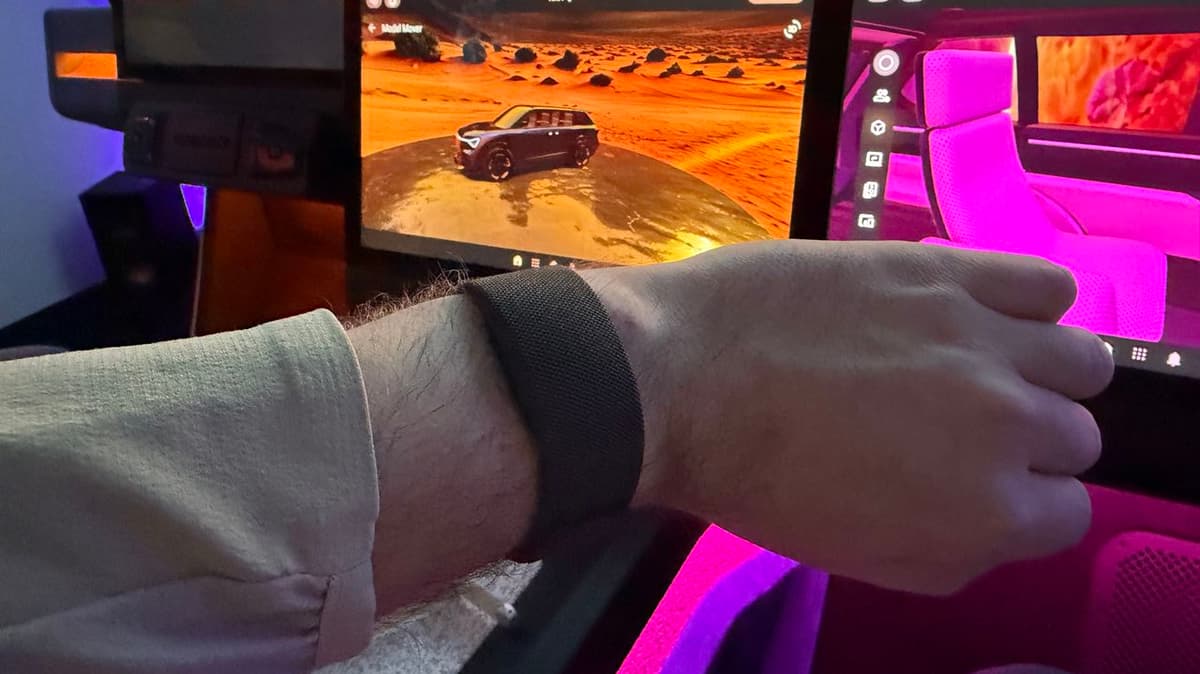
I Used Meta’s Neural Band to Control a Car’s Screen in a Garmin Concept, and It Kind of Rocked, but Not Just for the Gestures
•January 10, 2026
0
Companies Mentioned


Why It Matters
The integration of gesture‑based wearables could reduce driver distraction and streamline vehicle interfaces, while UWB key detection enables more personalized, secure cabin experiences. This signals a shift toward multimodal, hands‑free control in next‑generation automobiles.
Key Takeaways
- •Garmin demos Neural Band gesture control at CES 2026.
- •Neural Band reads wrist signals, provides haptic feedback.
- •Concept integrates UWB digital key for personalized cabin settings.
- •Gesture interface could replace voice or touch in Android Auto.
- •Potential standalone sale expands Meta wearable ecosystem.
Pulse Analysis
The automotive industry is increasingly exploring hands‑free interaction as a means to improve safety and user experience. Meta’s Neural Band, originally designed as an accessory for its Ray‑Ban Display Glasses, captures subtle electrical signals from the wrist to interpret finger gestures. By translating these motions into commands for a vehicle’s infotainment system, manufacturers can minimize reliance on touchscreens and voice assistants, both of which can distract drivers in complex traffic scenarios.
Garmin’s Unified Cabin concept builds on this premise by pairing the Neural Band with ultra‑wideband (UWB) positioning technology. UWB enables the vehicle to detect the precise location of a digital key—whether embedded in a phone, fob, or potentially the band itself—and automatically adjust lighting, seat configuration, and climate settings for the identified occupant. This level of personalization not only enhances comfort but also adds a layer of security, as the car can verify who is inside before granting full control. The demonstration also raised questions about safety when gestures are performed near the steering wheel, highlighting the need for rigorous testing before mass adoption.
If Meta decides to market the Neural Band as a standalone product, it could become a versatile component across multiple vehicle platforms, offering OEMs a modular input solution that integrates seamlessly with Android Auto and other ecosystems. Such a move would expand Meta’s wearable portfolio beyond visual AR devices, positioning the company as a key player in the emerging market for smart car accessories. For automakers, adopting gesture‑based wearables could differentiate future models, attract tech‑savvy consumers, and align with broader trends toward connected, personalized mobility.
I used Meta’s Neural Band to control a car’s screen in a Garmin concept, and it kind of rocked, but not just for the gestures
0
Comments
Want to join the conversation?
Loading comments...