I Went Hands-On with Hengbot Sirius, an AI Robot that Left Me Wanting More
•December 4, 2025
0
Companies Mentioned


Why It Matters
Sirius highlights the gap between cutting‑edge robot AI and the practical usability consumers expect, underscoring challenges for new entrants in the robot‑dog market.
Key Takeaways
- •$700 Kickstarter price, $1,000 retail estimate.
- •45‑minute battery, no autonomous charging.
- •Only one touch sensor; limited tactile interaction.
- •Uses Amazon LLMs for voice commands, no smart‑home integration.
- •Falls frequently due to spring‑based leg design.
Pulse Analysis
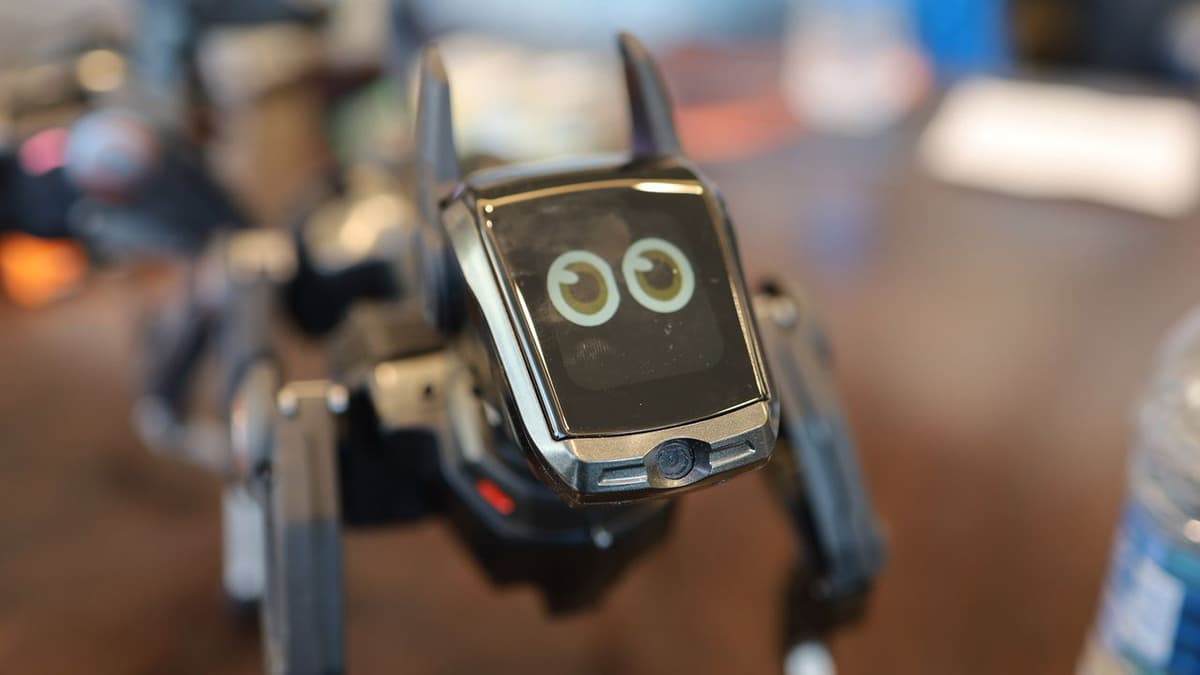
The robot‑dog segment has matured from novelty gadgets to premium companions, with Sony’s Aibo setting a high bar for sensor richness and user experience, while Boston Dynamics’ Spot demonstrates industrial-grade mobility. Against this backdrop, Hengbot Sirius enters as a low‑cost, developer‑focused alternative, promising AI‑driven personality through Amazon’s language models but compromising on the tactile and durability features that mainstream buyers expect. Its minimalist hardware—four spring‑supported legs, a single head sensor, and a short‑lived battery—positions it as a proof‑of‑concept rather than a ready‑to‑live‑with pet.
Technically, Sirius leverages 14 actuators, most of which power leg‑to‑body joints and head movements, while the legs themselves rely on passive springs for stability. This design choice reduces component cost but leads to frequent toppling, a drawback highlighted in hands‑on reviews. The device’s 45‑minute runtime, coupled with a USB‑C charge that requires manual handling, limits its practicality for continuous home presence. However, its integration of Amazon’s large language models enables voice commands and rudimentary owner recognition, and the open‑source firmware invites hobbyist developers to expand functionality, potentially adding more sensors or smarter navigation.
For investors and manufacturers, Sirius serves as a cautionary case study: advanced AI alone cannot compensate for fundamental ergonomic and ecosystem shortcomings. Future iterations will need to address battery endurance, multi‑modal touch sensing, and seamless smart‑home connectivity to compete with established players. If Hengbot can evolve the platform into a more robust, user‑friendly robot dog, it could carve a niche among tech enthusiasts while gradually appealing to broader consumer segments.
I went hands-on with Hengbot Sirius, an AI robot that left me wanting more
0
Comments
Want to join the conversation?
Loading comments...