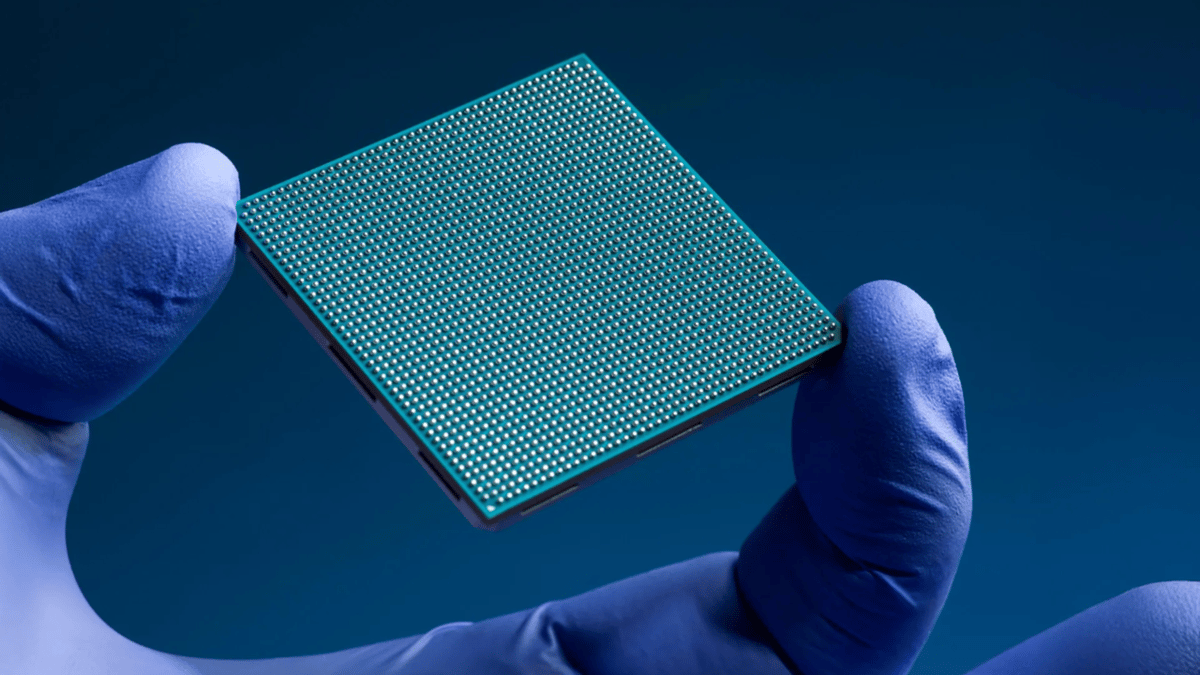
'I'm Sorry Dave': NASA Is Working on an AI Chip to Help Next-Generation Spacecraft Think for Themselves — so Clearly They Haven't Seen 2001: A Space Odyssey

Why It Matters
Onboard AI dramatically cuts communication latency, enabling real‑time responses essential for crew safety and mission success in deep space. The breakthrough also sets a new benchmark for commercial and defense aerospace computing.
Key Takeaways
- •New radiation‑hardened chip offers up to 100× current performance.
- •Prototype tests show 500× speed over existing space processors.
- •Autonomy reduces reliance on Earth controllers during deep‑space missions.
- •Chip designed to survive radiation, temperature swings, and shock.
- •Enables real‑time hazard response for Moon and Mars missions.
Pulse Analysis
Spacecraft have long depended on modest, radiation‑tolerant processors that limit onboard analysis and require frequent ground intervention. NASA’s HPSC initiative flips that model by delivering a multicore AI chip that not only survives the harsh space environment but also multiplies processing capability by orders of magnitude. The leap from legacy hardware to a system capable of 500‑fold speed gains unlocks the possibility of on‑board data reduction, complex navigation algorithms, and AI‑driven scientific discovery without the bandwidth bottlenecks that have traditionally constrained missions.
The strategic advantage of such autonomy becomes evident when considering deep‑space communication delays that can stretch to several minutes between Earth and a Mars‑bound vehicle. An intelligent processor can assess sensor inputs, identify hazards, and execute corrective maneuvers instantly, preserving mission integrity and crew safety. This capability is especially critical for upcoming Artemis lunar landings and future crewed expeditions to Mars, where real‑time human oversight is impractical. While the technology promises operational efficiency, it also revives debates about machine decision‑making authority, echoing the cautionary narrative of HAL in "2001: A Space Odyssey."
Beyond NASA, the chip’s commercial and defense implications are profound. Partnering with Microchip Technology accelerates technology transfer to satellite operators, defense contractors, and emerging space‑startup ecosystems seeking high‑performance, radiation‑hard computing. As the aerospace sector embraces more autonomous platforms, standards for verification, validation, and ethical AI use will evolve. NASA’s progress signals a broader industry shift toward resilient, intelligent hardware that can power the next generation of exploration, scientific research, and in‑orbit services.
'I'm sorry Dave': NASA is working on an AI chip to help next-generation spacecraft think for themselves — so clearly they haven't seen 2001: A Space Odyssey
Comments
Want to join the conversation?
Loading comments...