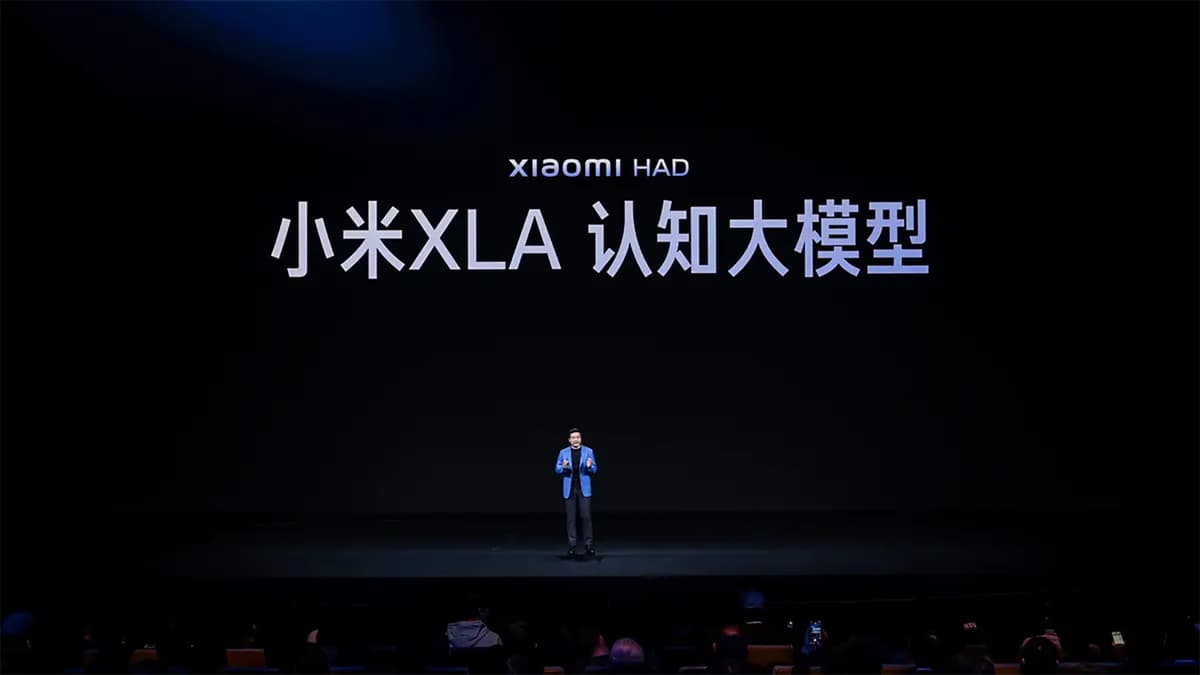
In Conversation: Xiaomi on Its Shift to the XLA Cognitive Model in Assisted Driving
Why It Matters
By embedding cognitive reasoning into vehicles, Xiaomi aims to solve long‑tail driving scenarios and differentiate its assisted‑driving offering, potentially accelerating industry adoption of large‑model‑based autonomy.
Key Takeaways
- •XLA combines multimodal sensors with embodied‑intelligence data for finer perception
- •Latent‑space reasoning keeps inference latency low while preserving interpretability
- •New parking feature finds optimal garage spots using contextual cues
- •Hybrid approach retains world‑model simulation for safety‑critical testing
- •Xiaomi’s early start gives it a first‑mover edge in cognitive AD tech
Pulse Analysis
The automotive industry is at a crossroads where traditional rule‑based assisted‑driving systems no longer suffice for complex urban environments. Xiaomi’s XLA cognitive large model represents a strategic pivot toward multimodal AI that mimics human commonsense reasoning. By training on a proprietary MiMo‑Embodied foundation model, XLA achieves centimeter‑level spatial perception, narrowing the precision gap between cars and humanoid robots. This technical leap enables the vehicle to interpret nuanced cues—such as temporary road closures or garage signage—and generate safe, human‑like maneuvers, addressing the long‑tail problem that has hampered pure end‑to‑end solutions.
Beyond perception, Xiaomi’s architecture emphasizes latent‑space reasoning, a technique that translates internal machine language into actionable decisions without the latency of full textual reasoning. This balances computational efficiency with interpretability, a crucial factor given the limited on‑board processing power of consumer vehicles. The company’s hybrid strategy also retains world‑model simulations in the cloud, allowing exhaustive testing of rare scenarios—like unusual obstacles or extreme weather—before deployment. Such closed‑loop simulation pipelines are becoming industry standards for validating safety and reliability at scale.
Xiaomi’s rapid progression—from its first‑generation SU7 system in 2024 to the XLA rollout in 2025—highlights the pressure on late entrants to accelerate innovation. The firm’s commitment to expanding model parameters, enriching training data, and publishing research positions it as a serious contender against incumbents like Tesla and traditional OEMs. If Xiaomi can sustain this momentum, its cognitive large‑model approach could set a new benchmark for user‑centric, experience‑first assisted driving, reshaping market expectations and prompting competitors to adopt similar AI‑driven architectures.
In conversation: Xiaomi on its shift to the XLA cognitive model in assisted driving
Comments
Want to join the conversation?
Loading comments...