In This Manhattan Lab, AI Designs Materials From Scratch

Companies Mentioned
Why It Matters
Accelerating material discovery shortens product development timelines and reduces R&D costs, giving early adopters a competitive edge in high‑performance and sustainable technologies. The approach also unlocks value from failed experiments, creating a data advantage that traditional labs lack.
Key Takeaways
- •Radical AI runs up to 50 autonomous experiments daily.
- •AI scans 10,000 papers in five seconds for hypothesis generation.
- •Startup raised $55 million seed to accelerate materials discovery.
- •System leverages 57 million lab data points, including failed experiments.
- •Goal to double daily experiments to 100 by summer’s end.
Pulse Analysis
The discovery of new materials has long been a bottleneck for high‑performance technologies, from aerospace alloys to next‑generation batteries. Traditional workflows require a handful of scientists to iterate over hypotheses, synthesize samples, and run dozens of tests—a process that can stretch beyond two decades. Meanwhile, global pressures such as climate targets, supply‑chain constraints, and the push for clean‑energy solutions demand faster, more sustainable innovation cycles. Artificial intelligence promises to compress these timelines by mining vast literature, learning from both successes and failures, and proposing viable compositions at scale.
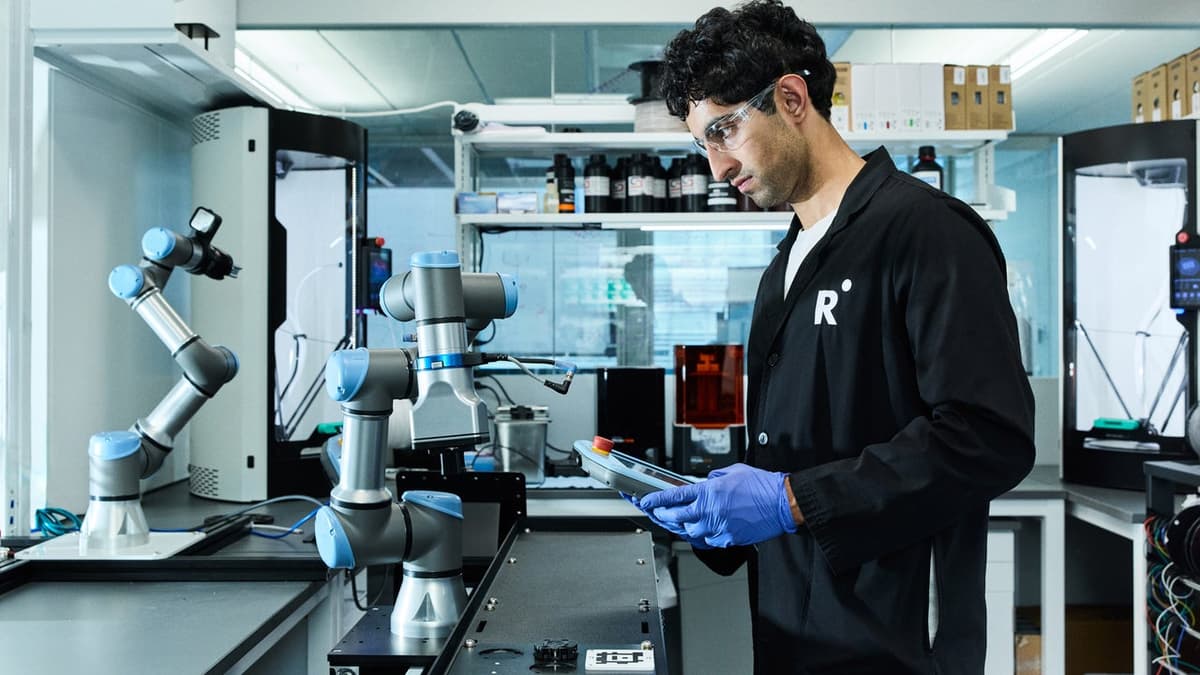
Radical AI’s Manhattan lab embodies that promise with a near‑autonomous production line. A robotic arm handles glass bottles and elemental pellets, while downstream stations melt, characterize, and stress‑test each alloy. The core AI engine ingests 380,000 research papers and 57 million internal data points, then generates dozens to hundreds of candidate formulas within minutes. In practice the system can launch up to 50 experiments per day—a rate a human researcher would need a year to match. The startup’s $55 million seed funding fuels further hardware integration and software refinement to reach 100 daily runs by summer.
The commercial impact of such speed is profound. Faster material cycles enable jet‑engine manufacturers to extend component lifespans, while energy firms can prototype heat‑resistant alloys for fusion reactors in months rather than decades. Investors are taking note; the $55 million round signals confidence that AI‑driven labs will become a new R&D standard across heavy industry. As the platform scales, the ability to monetize proprietary data—especially failed experiments that are rarely published—could create a defensible moat, reshaping how companies approach innovation and competitive advantage.
In this Manhattan lab, AI designs materials from scratch
Comments
Want to join the conversation?
Loading comments...