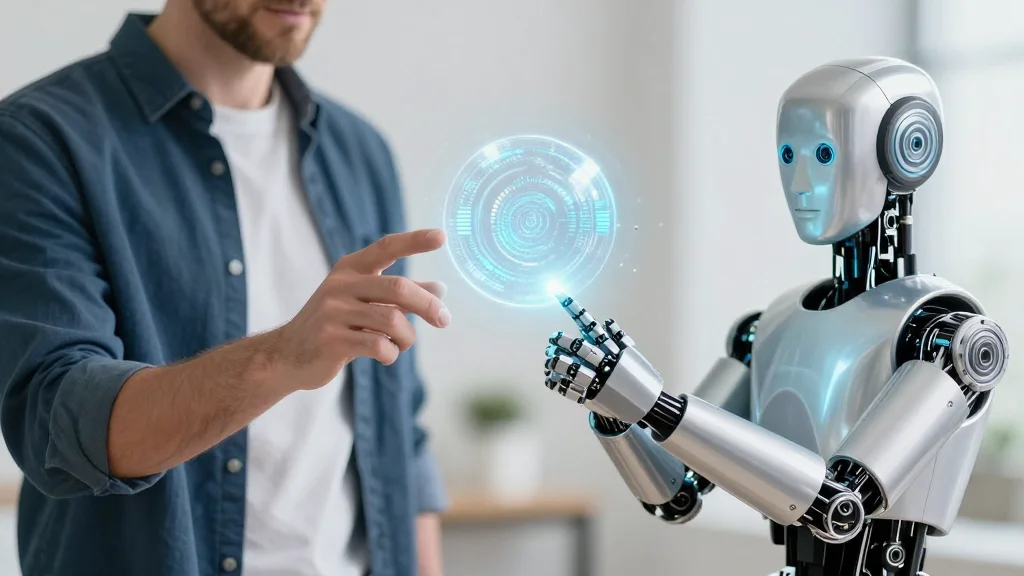
Is AI Cannibalizing Human Intelligence? A Neuroscientist's Way to Stop It

Companies Mentioned
Why It Matters
The findings highlight that without deliberate human scrutiny, AI risks diminishing cognitive skills and decision quality, underscoring the need for design that fosters constructive human‑AI interaction.
Key Takeaways
- •Hybrid teams that interrogate AI outperform pure AI or humans.
- •Confirmation‑bias loops cause AI‑human teams to mirror AI alone.
- •Only 5‑10% of teams acted as effective AI sparring partners.
- •Ming urges new benchmarks measuring human‑AI collaborative prediction accuracy.
Pulse Analysis
Vivienne Ming’s recent study, featured in the Wall Street Journal, shines a light on the nuanced dynamics of human‑AI collaboration. By pitting pure AI models like ChatGPT and Gemini against human forecasters and mixed teams on a real‑world prediction market, she discovered that while AI consistently beats unaided humans, the true breakthrough emerges when humans treat the model as a critical interlocutor. The minority of teams that questioned AI confidence and demanded counter‑arguments achieved accuracy comparable to, and occasionally surpassing, the market benchmark.
The experiment underscores a broader societal concern Ming dubs the "Information‑Exploration Paradox": as information becomes virtually free, people gravitate toward effortless AI answers, sidelining the uncomfortable but essential practice of grappling with uncertainty. In education, students who rely on AI for quick solutions show short‑term gains but long‑term skill erosion. Developers, too, risk shipping code they barely understand when they accept AI‑generated snippets without scrutiny. This erosion of critical thinking threatens innovation pipelines and reduces the collective capacity to solve novel problems.
Ming’s response is both prescriptive and hopeful. She advocates redesigning AI systems to act as "sparring partners" that surface their own weaknesses, prompting users to probe, debate, and refine conclusions. Her forthcoming book, "Robot‑Proof," outlines practical habits—such as asking for the strongest argument against an AI’s answer—to rebuild resilience. Industry leaders are urged to adopt new benchmarks that evaluate hybrid teams on collaborative reasoning, not just raw predictive power, ensuring that AI augments rather than cannibalizes human intelligence.
Is AI Cannibalizing Human Intelligence? A Neuroscientist's Way to Stop It
Comments
Want to join the conversation?
Loading comments...