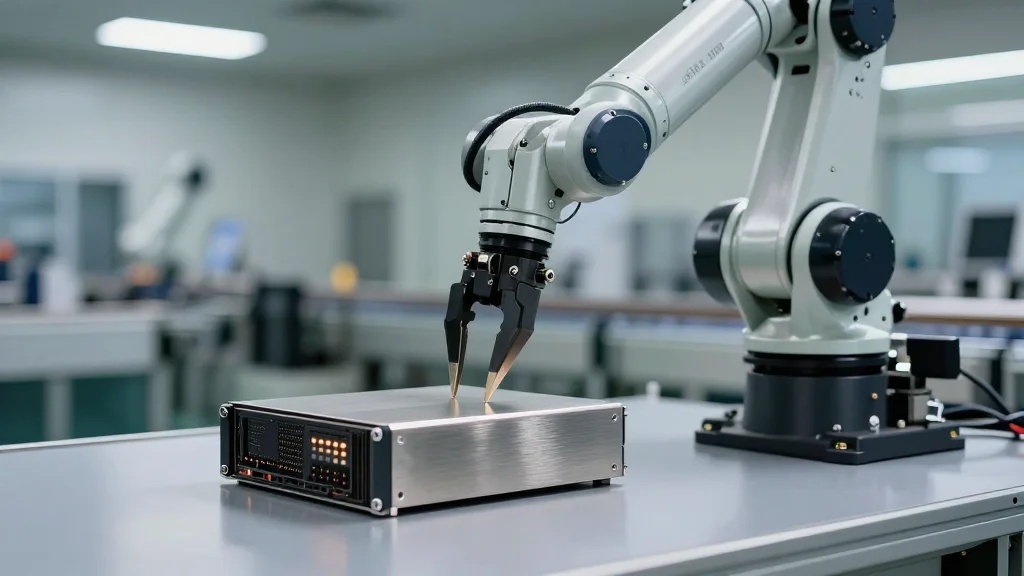
Is Private 5G the Key to Scaling AI in Manufacturing
Why It Matters
Without reliable, high‑speed connectivity, AI cannot deliver its promised efficiency gains, putting manufacturers at risk of falling behind competitors. Private 5G provides the bandwidth and latency needed to turn AI insights into immediate operational actions.
Key Takeaways
- •Private 5G delivers ultra‑low latency for factory AI.
- •Wi‑Fi cannot handle massive sensor data volumes reliably.
- •AI applications boost productivity, quality, and safety in manufacturing.
- •Scalable 5G reduces wiring costs and improves network flexibility.
- •Real‑time AI decisions require guaranteed bandwidth and reliability.
Pulse Analysis
The surge of AI in manufacturing is creating an unprecedented appetite for data bandwidth and near‑instantaneous communication. Predictive‑maintenance algorithms can generate terabytes of sensor readings each day, while computer‑vision systems process millions of images per shift. Conventional Wi‑Fi and wired networks struggle to keep pace, leading to latency spikes and dropped packets that undermine real‑time decision making. Private 5G, with its dedicated spectrum and edge‑centric architecture, delivers sub‑millisecond latency and gigabit‑per‑second throughput, ensuring AI models receive the freshest data exactly when needed.
Beyond performance, private 5G addresses the harsh realities of industrial environments. Chemical plants, steel mills, and automotive factories often operate amid explosive atmospheres, electromagnetic interference, and sprawling layouts where laying fiber is prohibitively expensive. A handful of strategically placed 5G access points can blanket an entire facility, supporting thousands of devices without the massive cabling costs that can run into tens of thousands of dollars per connection. The technology also offers built‑in security slices and network slicing, allowing critical AI workloads to be prioritized over less time‑sensitive traffic, a capability Wi‑Fi simply cannot match.
The strategic implications are clear: firms that deploy private 5G will unlock the full potential of AI, from autonomous quality inspection to dynamic production scheduling and energy‑optimization. As AI models become more sophisticated, the demand for reliable, high‑capacity connectivity will only intensify, making private 5G a competitive differentiator rather than a nice‑to‑have add‑on. Industry analysts forecast that by 2028, over half of large‑scale manufacturers will have adopted private 5G, accelerating the shift toward truly smart factories and reshaping supply‑chain dynamics worldwide.
Is private 5G the key to scaling AI in manufacturing
Comments
Want to join the conversation?
Loading comments...