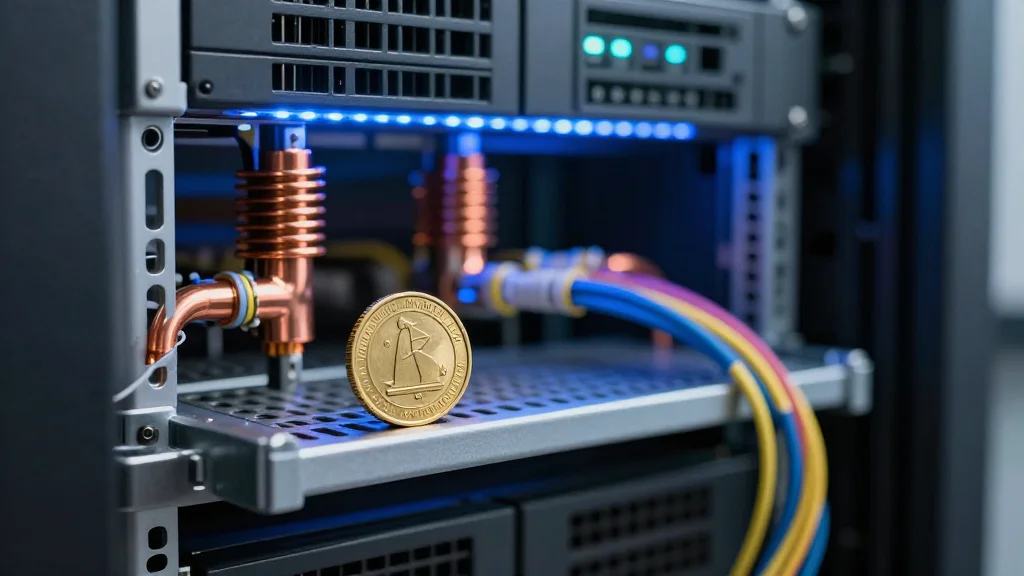
It’s Been One of Wall Street’s Most Heated AI Debates — and It May Be Tot...
Companies Mentioned
Why It Matters
The choice between copper and optical networking will shape capital allocation in the data‑center supply chain, affecting earnings for component manufacturers and the performance of AI services. Understanding the dynamics helps investors anticipate growth hotspots in a rapidly expanding market.
Key Takeaways
- •AI workloads spur unprecedented data‑center bandwidth demand
- •Copper offers lower cost but faces speed constraints
- •Optical delivers higher throughput and lower latency
- •Mizuho sees both copper and optical gaining tailwinds
- •Nvidia CEO backs a hybrid networking strategy
Pulse Analysis
The surge in generative AI models has transformed data‑center design, pushing bandwidth requirements beyond the capabilities of legacy copper interconnects. Operators now need to support multi‑petabit per second traffic, prompting a wave of upgrades to both physical layer components and network topologies. This shift creates a sizable market for high‑performance transceivers, wavelength‑division multiplexing (WDM) systems, and advanced copper cabling that can handle higher frequencies, all while balancing power consumption and cost.
Copper and optical technologies each bring distinct advantages. Copper’s mature ecosystem, lower material costs, and ease of deployment make it attractive for short‑reach connections within racks. However, its signal attenuation and electromagnetic interference limit scalability for longer distances and higher data rates. Optical fibers, by contrast, provide virtually limitless bandwidth, lower latency, and immunity to electromagnetic noise, but they require more complex termination and higher upfront investment. Companies such as Broadcom, Lumentum, and Corning are racing to capture market share, while traditional copper vendors like TE Connectivity are investing in higher‑frequency solutions to stay relevant.
Looking ahead to 2029, analysts anticipate a hybrid networking architecture where copper handles intra‑rack traffic and optical links dominate inter‑rack and spine‑leaf connections. This convergence reduces risk for investors, as both segments are poised for growth. Firms that can integrate seamless copper‑to‑optical conversion, offer scalable modular designs, and align with major AI hardware providers will likely outperform. For Wall Street, the key is to identify players with diversified product portfolios and strong R&D pipelines, ensuring they capture the tailwinds of the AI‑driven data‑center boom.
It’s been one of Wall Street’s most heated AI debates — and it may be tot...
Comments
Want to join the conversation?
Loading comments...