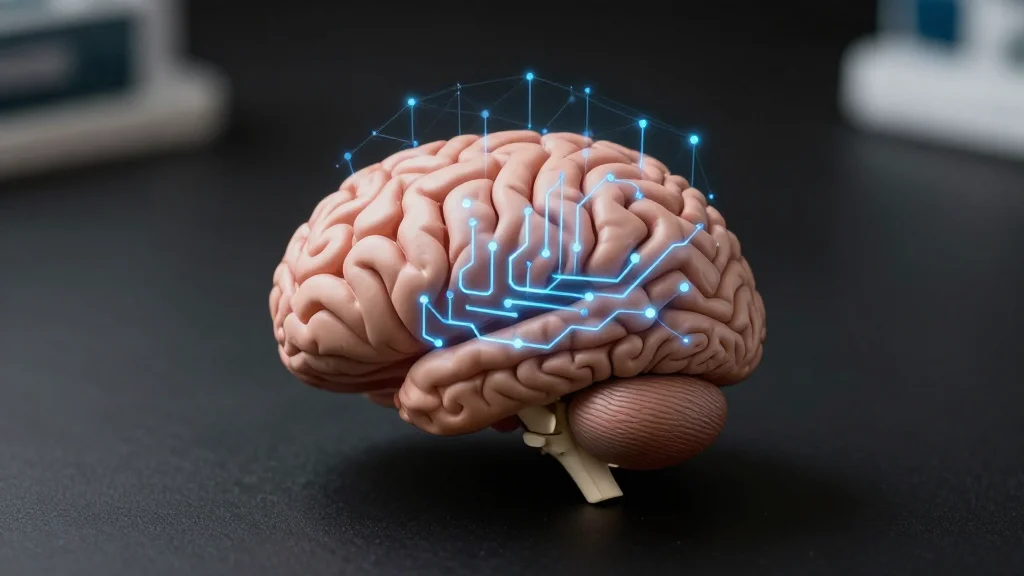
It’s Tempting to Offload Your Thinking to AI. Cognitive Science Shows Why That’s a Bad Idea

Why It Matters
As AI assistants become ubiquitous in workplaces and education, unchecked dependence could diminish problem‑solving abilities and innovation, affecting overall productivity and competitive advantage.
Key Takeaways
- •Excessive AI offloading reduces deep encoding, harms memory retention
- •Studies link heavy AI use to increased anxiety and perceived laziness
- •Balanced scaffolding, not full offloading, preserves critical thinking skills
- •Reflective practices help monitor AI’s impact on cognition
- •Overreliance may weaken workforce problem‑solving and innovation
Pulse Analysis
The rapid expansion of consumer‑grade AI—from chatbots to generative assistants—has turned offloading mental work into a default habit. Recent experiments from university labs reveal that when users rely on AI to draft emails, summarize articles, or answer trivia, the brain prioritizes encoding at the expense of storage and retrieval, weakening long‑term retention. Moreover, surveys link frequent AI use with heightened anxiety and a self‑perceived decline in effort, suggesting that convenience may come with hidden cognitive costs.
Cognitive scientists draw a line between offloading and scaffolding. Scaffolding leverages external resources—teachers, colleagues, digital tools—to support learning while still requiring the learner to engage, synthesize, and eventually internalize knowledge. In contrast, wholesale offloading bypasses this active processing, turning AI into a crutch rather than a catalyst. The theory of extended cognition posits that tools become part of our mental workspace, but only when we deliberately integrate them. Unchecked delegation can therefore shrink the mental models that underpin critical analysis and decision‑making, a risk that reverberates across education, finance, and R&D sectors.
To preserve cognitive health while harnessing AI’s productivity gains, experts recommend reflective checkpoints: after each AI interaction, ask whether the task was scaffolded or simply outsourced, note any lingering anxiety, and identify opportunities to rehearse the skill manually. Organizations can embed these habits into training programs, encouraging employees to alternate between AI assistance and independent problem‑solving. By balancing automation with deliberate practice, the workforce can reap efficiency benefits without sacrificing the deep thinking that fuels innovation.
It’s tempting to offload your thinking to AI. Cognitive science shows why that’s a bad idea
Comments
Want to join the conversation?
Loading comments...