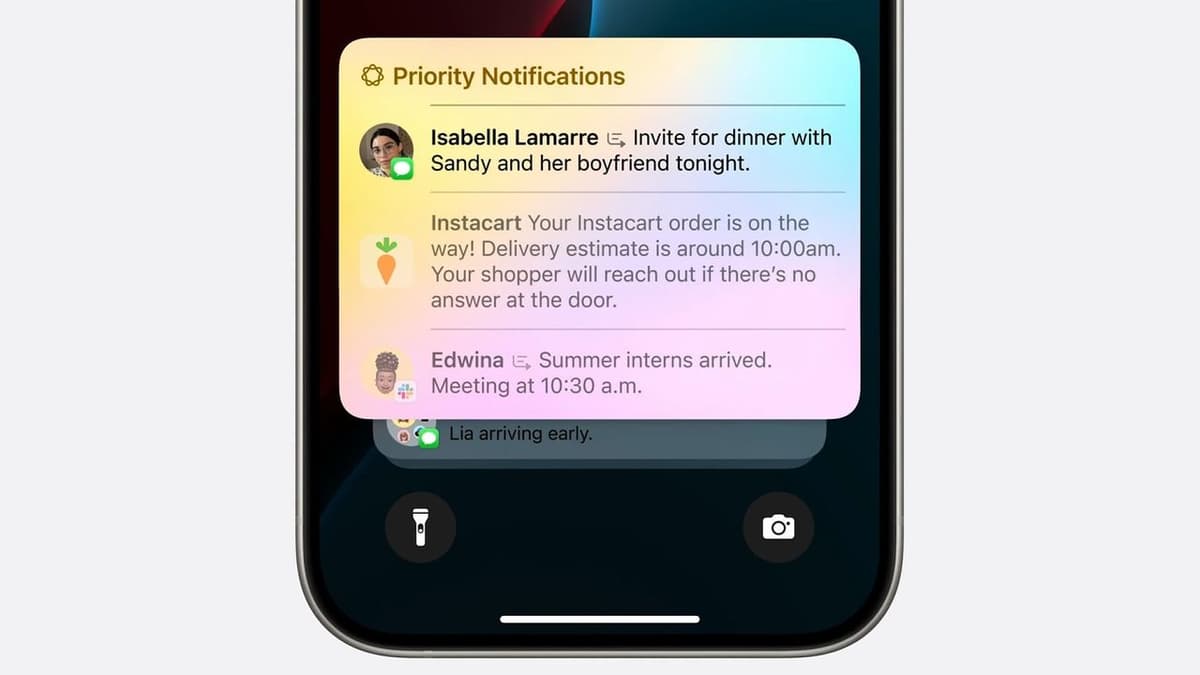
I’ve Disabled This iOS 26 Apple Intelligence Feature, and You Probably Should Too
•January 20, 2026
0
Companies Mentioned

Why It Matters
Accurate notification summarization could cut screen time and improve information triage, but current flaws erode trust and productivity. Enterprise users risk missing critical alerts, affecting workflow efficiency.
Key Takeaways
- •iOS 26 reintroduces notification summaries after earlier removal
- •Summaries still miss details, causing reliability concerns
- •Apple disabled news app summaries due to major errors
- •Users can toggle feature globally or per app in Settings
- •Custom categories let users limit summaries to low‑risk content
Pulse Analysis
Apple’s push toward integrated AI, branded as Apple Intelligence, reflects a broader industry race to embed machine‑learning assistants directly into operating systems. By bundling notification summarization into iOS 26, Apple promises users a streamlined inbox that filters noise without manual effort. The concept aligns with productivity trends where users juggle dozens of apps, yet the execution hinges on natural‑language understanding that can parse context, tone, and relevance—capabilities that remain nascent even for tech giants.
In practice, the feature’s shortcomings have quickly surfaced. Early adopters reported that summaries frequently omit key details from group chats and, more critically, misrepresent news stories—a flaw that forced Apple to temporarily disable the tool for news apps after launch. Such inaccuracies compel users to read both the summary and the original content, negating any time‑saving benefit and potentially leading to missed or misunderstood information. Competitors like Google’s Android AI and Microsoft’s Copilot have faced similar hurdles, but they often provide more granular controls or fallback mechanisms, giving them a usability edge.
Looking ahead, Apple’s roadmap likely includes refined language models, better training data, and tighter integration with app developers to improve fidelity. Meanwhile, power users can mitigate risks by customizing the feature: disabling it for high‑stakes categories, enabling it only for social feeds, or turning it off entirely until reliability improves. For businesses, the prudent approach is to treat AI‑generated summaries as supplemental, not authoritative, ensuring critical alerts remain visible through conventional notification settings.
I’ve disabled this iOS 26 Apple Intelligence feature, and you probably should too
0
Comments
Want to join the conversation?
Loading comments...