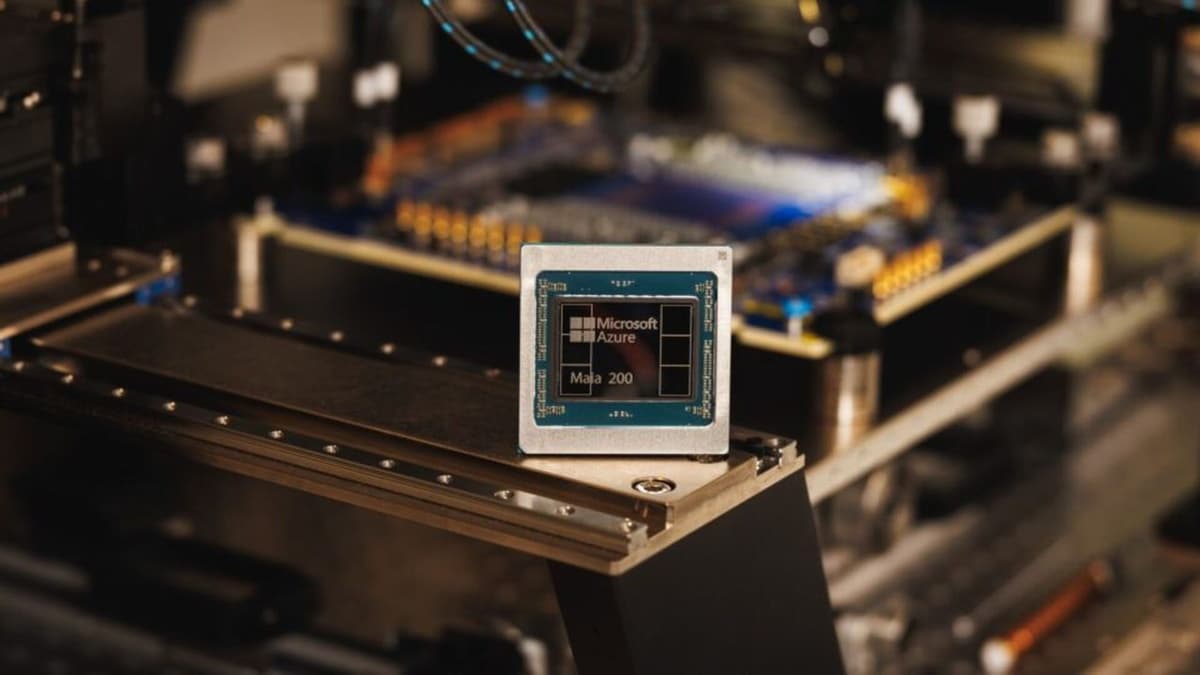
'Just Remember, You Have to Be Ahead for All Time to Come': Microsoft CEO Satya Nadella Reveals AI Chip Shopping Spree - Says It Will Still Buy Nvidia, AMD Chips, Despite Recent Launch of In-House Maia 200 Hardware
•February 2, 2026
0
Companies Mentioned


Why It Matters
Maia 200 gives Microsoft greater control over inference performance while retaining third‑party GPU partnerships, safeguarding Azure’s competitiveness amid a global AI‑chip shortage.
Key Takeaways
- •Microsoft launches Maia 200 inference chip for Azure data centers
- •Chip optimizes RAM, SSD throughput for large AI models
- •Microsoft will still purchase Nvidia and AMD GPUs
- •Supply constraints keep multi‑vendor strategy necessary
- •Internal chip aims to reduce, not eliminate, compute pressure
Pulse Analysis
The race to own the AI compute stack has accelerated as hyperscale cloud operators seek to lower latency, cut costs, and differentiate services. Microsoft’s debut of the Maia 200 processor marks its first step toward a vertically integrated hardware portfolio, joining the ranks of Amazon’s Trainium and Google’s TPU. While the chip is still early‑stage, its introduction signals that Microsoft is willing to invest in custom silicon to address the specific demands of inference workloads that dominate Azure’s AI offerings.
Maia 200 is purpose‑built for inference‑heavy models, emphasizing high memory bandwidth, rapid RAM access, and SSD‑backed data movement. By offloading these tasks from general‑purpose GPUs, the chip can deliver lower latency and higher throughput for large language models and vision systems that run continuously in production. Microsoft claims the processor outperforms competing in‑house designs from other cloud providers, though independent benchmarks are pending. The architecture complements Nvidia and AMD GPUs, which remain essential for training and mixed‑precision workloads, allowing Azure customers to mix and match the most efficient compute for each stage.
Keeping Nvidia and AMD in the supply chain reflects the reality of today’s semiconductor shortages and the high cost of scaling custom fabs. A multi‑vendor strategy gives Microsoft flexibility to meet surging demand while its own silicon matures, reducing risk of single‑point failures. It also positions Azure as a hybrid platform where customers can leverage both proprietary and third‑party accelerators, a compelling proposition for enterprises wary of vendor lock‑in. As AI workloads continue to outpace hardware supply, Microsoft’s balanced approach may become a template for other cloud providers seeking resilience and performance.
'Just remember, you have to be ahead for all time to come': Microsoft CEO Satya Nadella reveals AI chip shopping spree - says it will still buy Nvidia, AMD chips, despite recent launch of in-house Maia 200 hardware
0
Comments
Want to join the conversation?
Loading comments...