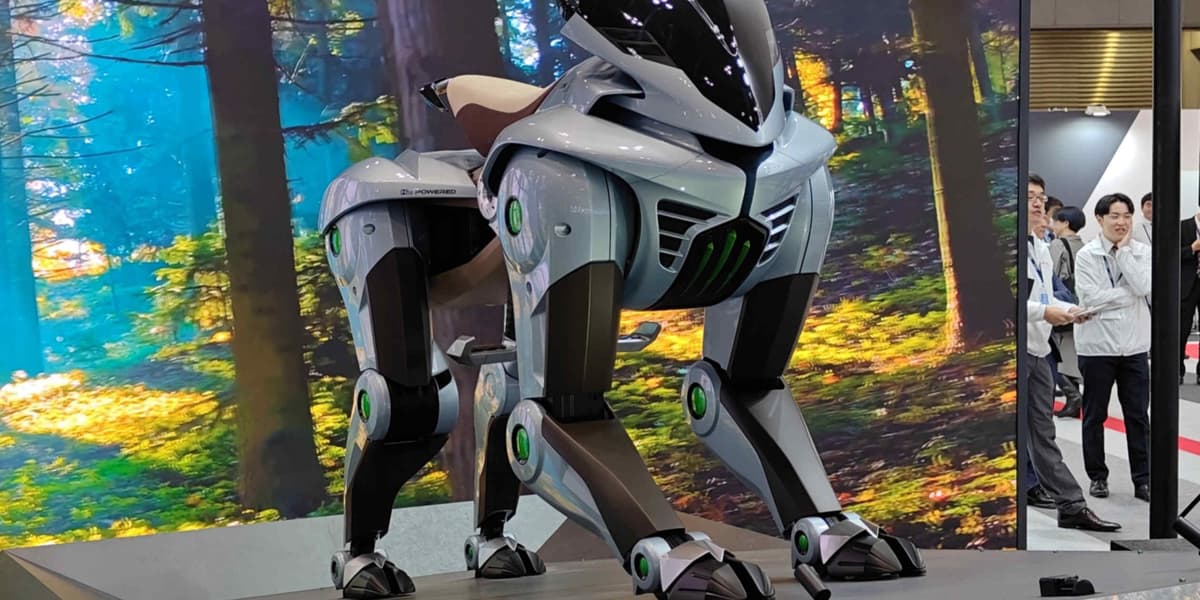
Kawasaki Heavy to Develop Shipbuilding AI Robot Amid Welder Shortage
Companies Mentioned
Why It Matters
The robot tackles a tightening labor market and could reshape shipyard efficiency, giving Japanese shipbuilders a competitive edge in a cost‑sensitive global market.
Key Takeaways
- •Kawasaki aims to double ship welding speed with AI robot
- •Robot leverages Corleo quadrupedal technology for precise arc welding
- •Addresses Japan's shipyard welder shortage projected at 30% gap
- •Expected to cut labor costs and improve worker safety
- •Pilot trials slated for 2027 at Kawasaki's Kobe shipyard
Pulse Analysis
The shipbuilding sector faces a perfect storm of rising demand for larger, more complex vessels and a dwindling pool of skilled welders. Japan, home to some of the world’s most advanced yards, has reported a 30% shortfall in qualified welding technicians, forcing firms to outsource or delay projects. Against this backdrop, manufacturers are turning to automation and artificial intelligence to sustain output and maintain margins, echoing broader trends in heavy industry where robotics are increasingly deployed for repetitive, high‑risk tasks.
Kawasaki Heavy Industries is leveraging its Corleo quadrupedal robot platform—originally designed for inspection and maintenance—to create a dedicated welding robot for ship hull construction. By integrating AI‑based vision systems and adaptive control algorithms, the robot can adjust arc parameters in real time, ensuring consistent bead quality across varied steel grades. Early simulations suggest the unit could double the welding rate of a human operator while reducing defect rates. Moreover, the robot’s modular design allows it to navigate the confined spaces of a shipyard, a capability that traditional fixed‑axis welders lack. Kawasaki plans to begin pilot installations at its Kobe shipyard in 2027, with a view to commercial rollout by 2029.
If successful, Kawasaki’s solution could set a new benchmark for productivity and safety in maritime manufacturing. Faster, more reliable welding translates into shorter build cycles, lower labor expenses, and fewer workplace injuries—critical factors as shipowners press for cost‑effective delivery. Competitors in South Korea and China are also accelerating robotics programs, so early adoption may help Japanese yards preserve market share. The broader implication is a shift toward AI‑augmented shipbuilding, where human expertise focuses on oversight and complex engineering while machines handle the repetitive, physically demanding work.
Kawasaki Heavy to develop shipbuilding AI robot amid welder shortage
Comments
Want to join the conversation?
Loading comments...