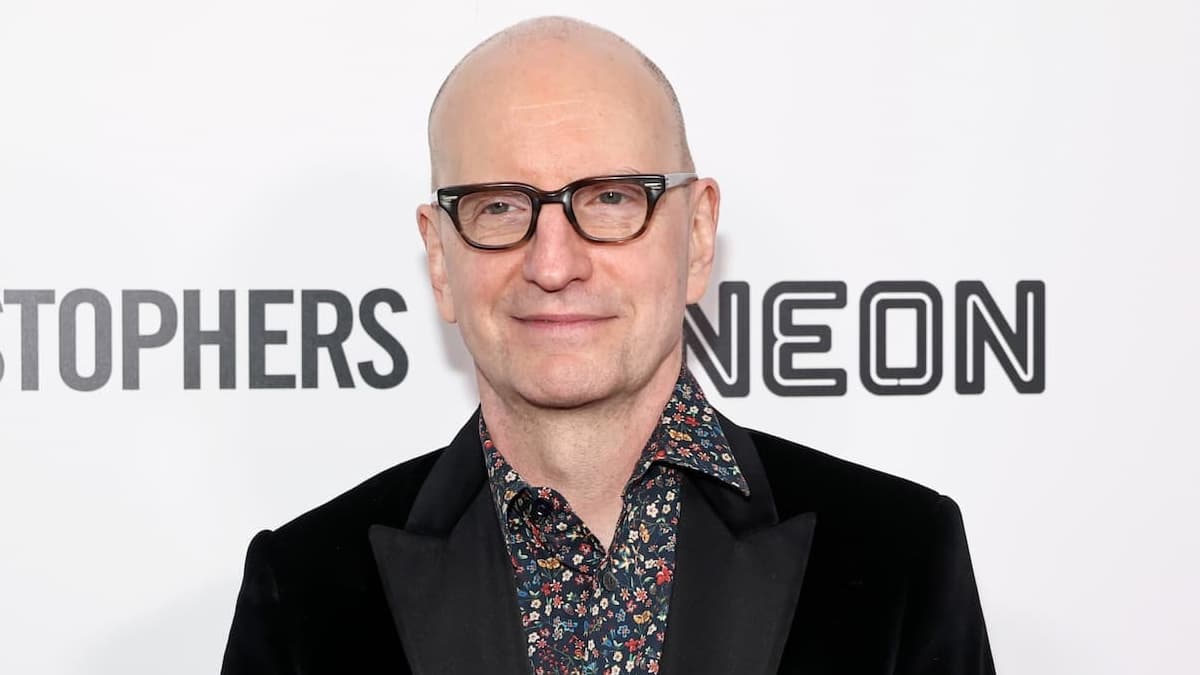
Legendary Director Argues Why AI Was Necessary (And Funny) for His Film About This Divisive Rocker: ‘Do I Look Like Somebody That Would Do That?’
Why It Matters
Soderbergh’s public endorsement of AI as a visible creative tool could accelerate adoption in mainstream filmmaking, while also shaping the ethical conversation around synthetic media. It signals a shift where high‑profile directors experiment with generative tech, influencing both production workflows and audience expectations.
Key Takeaways
- •Soderbergh uses AI for comedic, non‑realistic sequences in Lennon doc
- •He frames AI as a transparent creative tool, not deception
- •Documentary has no release date; AI use sparks industry debate
- •Soderbergh calls himself “pro‑choice” on AI, urging experimentation
- •Sean Lennon says his father would have embraced AI experimentation
Pulse Analysis
The film world is at a crossroads as generative AI moves from experimental labs to the director’s chair. Steven Soderbergh’s John Lennon documentary leverages Meta’s new video generation platform to fill visual gaps left by archival footage, opting for hyper‑stylized, tongue‑in‑cheek imagery rather than photorealism. By treating AI as a compositional brush rather than a replacement for human talent, Soderbergh showcases how the technology can expand a filmmaker’s visual vocabulary without erasing the creator’s hand.
Industry observers have long debated the line between AI‑driven deception and legitimate artistic augmentation. Soderbergh draws a clear boundary: when the audience knows the output is synthetic, the tool functions like traditional VFX, enhancing storytelling without misleading viewers. This transparency model could become a benchmark for future productions, offering a framework that satisfies both creative ambition and ethical scrutiny. As studios grapple with the cost‑benefit calculus of AI‑generated assets, the director’s approach provides a pragmatic template for integrating the technology responsibly.
The ripple effects extend beyond a single documentary. High‑profile endorsement from a director of Soderbergh’s stature may prompt other creators to experiment with AI, accelerating its normalization across genres. Audiences, meanwhile, will need to adapt to a landscape where visual authenticity is increasingly curated. The conversation around regulation, credit attribution, and revenue sharing is likely to intensify, shaping the next wave of policy and industry standards. In short, Soderbergh’s experiment is a bellwether for how AI could reshape the economics and aesthetics of modern filmmaking.
Legendary Director Argues Why AI Was Necessary (And Funny) for His Film About This Divisive Rocker: ‘Do I Look Like Somebody That Would Do That?’
Comments
Want to join the conversation?
Loading comments...