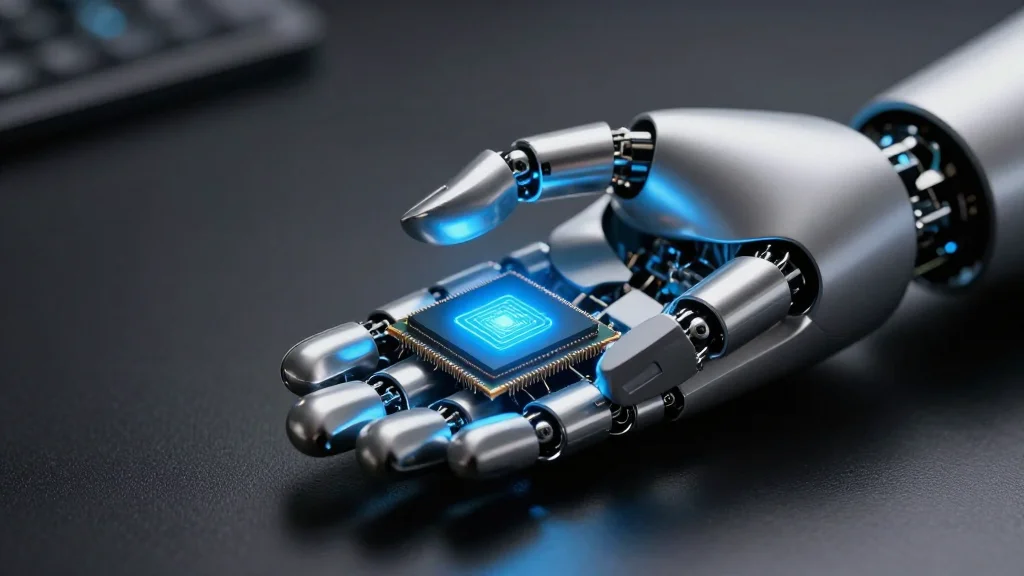
LG Electronics and Nvidia Are in Talks on Robotics, AI Data Centres, and Mobility
Why It Matters
A partnership would give Nvidia a foothold in the consumer robotics market and position LG as a key hardware supplier for Nvidia‑driven AI infrastructure, accelerating commercialization of physical‑AI across homes, data centers, and vehicles.
Key Takeaways
- •LG seeks Nvidia's Isaac stack to accelerate CLOiD robot production
- •Partnership could embed Nvidia AI chips in LG's data‑center HVAC solutions
- •Joint effort may combine LG in‑cabin AI with Nvidia DRIVE for vehicles
- •Consumer‑scale robotics gives Nvidia access to massive home data for training
- •Talks signal shift of physical‑AI focus from industrial to consumer markets
Pulse Analysis
The convergence of LG’s Zero Labor Home vision with Nvidia’s Isaac robotics platform marks a pivotal moment for consumer‑grade physical AI. LG’s CLOiD robot, already equipped with its proprietary Affectionate Intelligence software, lacks the high‑fidelity simulation and pre‑trained models that Nvidia provides through Omniverse. By marrying Nvidia’s GPU‑accelerated inference with LG’s extensive appliance ecosystem, the combined offering could dramatically shorten development cycles, turning prototype robots into mass‑produced products within months rather than years. This synergy also promises richer data streams from real households, feeding back into Nvidia’s training pipelines and enhancing model robustness.
Beyond robotics, the talks hint at a strategic alignment in data‑center thermal management, a rapidly growing niche as AI workloads push power densities higher. LG’s expertise in high‑efficiency HVAC systems could complement Nvidia’s GPU clusters, delivering integrated cooling solutions that reduce energy consumption and operational costs for hyperscale operators. Such a collaboration would embed LG’s hardware deeper into Nvidia’s supply chain, creating a joint value proposition for cloud providers seeking turnkey AI infrastructure. In the automotive arena, LG’s in‑cabin AI components—ranging from gaze tracking to generative infotainment—could be tightly coupled with Nvidia’s DRIVE compute platform, delivering seamless, AI‑driven experiences for next‑generation electric and autonomous vehicles.
Industry analysts view this dialogue as a bellwether for the broader physical‑AI race, which is transitioning from isolated industrial pilots to consumer‑facing products. Nvidia’s push to standardize its AI stack across sectors mirrors its earlier success in establishing GPUs as the de‑facto compute engine for cloud AI. If LG formalizes the partnership, it could accelerate that trajectory, forcing competitors in both robotics and data‑center cooling to seek comparable alliances. The move also underscores the escalating capital flow into the intelligence layer of the robotics stack, where data richness and real‑world deployment speed become decisive competitive advantages.
LG Electronics and Nvidia are in talks on robotics, AI data centres, and mobility
Comments
Want to join the conversation?
Loading comments...