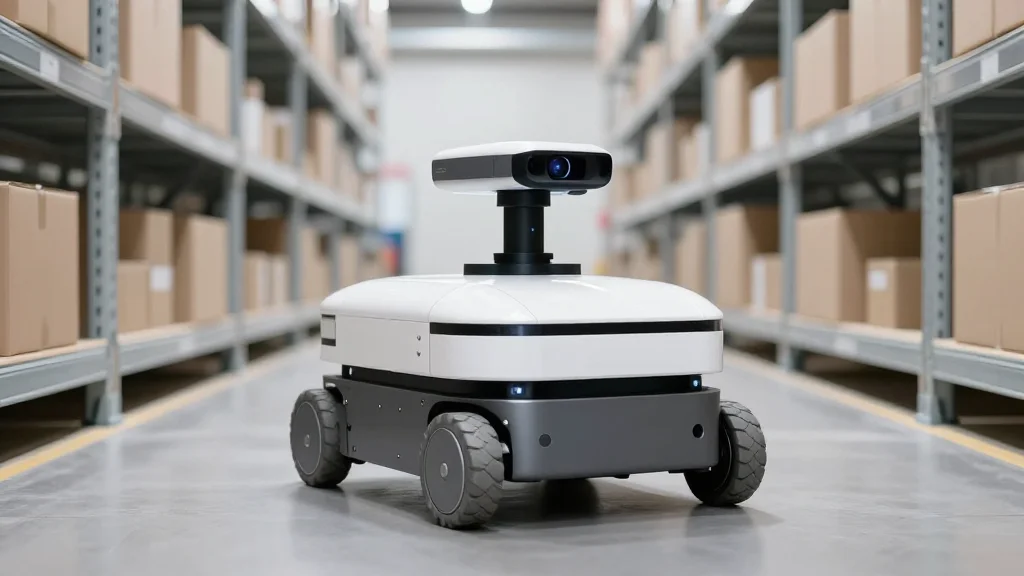
Locus Array: The AI-Powered Warehouse Robot System Transforming Fulfillment
Why It Matters
By removing the need for costly fixed infrastructure and upfront capital, Locus Array lets retailers and distributors adapt quickly to volatile SKU mixes and e‑commerce demand, reshaping warehouse economics. The RaaS model also lowers entry barriers, accelerating automation adoption across mid‑size fulfillment centers.
Key Takeaways
- •Locus Array enables fully autonomous end‑to‑end warehouse workflows.
- •Robots‑to‑Goods model replaces fixed infrastructure, boosting flexibility.
- •RaaS model eliminates upfront capital, scaling costs with usage.
- •System cuts over 90% of manual labor, improving safety.
- •Compact design fits existing facilities with minimal modifications.
Pulse Analysis
The warehouse automation landscape has long been dominated by fixed conveyor lines, shuttle systems, and large capital‑intensive AS/RS installations. Those infrastructures were built for stable demand patterns, but today’s e‑commerce surge drives rapid SKU proliferation and volatile order profiles. Physical AI—software that perceives, reasons, and acts in real time—offers a way to retrofit intelligence onto existing spaces, turning the warehouse from a static assembly line into a dynamic, data‑rich environment. Locus Array embodies this shift, leveraging LocusONE’s real‑time analytics to coordinate fleets of mobile robots that can navigate, pick, and replenish without pre‑programmed pathways.
At the core of Locus Array is the robots‑to‑goods (R2G) paradigm, which flips the traditional goods‑to‑person model on its head. Instead of moving inventory to fixed workstations, autonomous robots travel to the inventory, perform picking, put‑away, and sorting tasks, and then deliver completed orders to consolidation points. This flexibility reduces the need for heavy infrastructure, cuts floor space, and enables higher storage density. Operators can reconfigure zones, add new product lines, or scale throughput simply by deploying additional robots, achieving a level of elasticity that fixed systems cannot match.
The decision to sell Locus Array through a Robots‑as‑a‑Service (RaaS) arrangement further amplifies its market impact. By converting a large upfront CAPEX expense into a predictable OPEX subscription, Locus lowers the financial barrier for mid‑market distributors and fast‑growing retailers. The model also ensures continuous software upgrades and performance tuning remain the vendor’s responsibility, preserving the system’s competitive edge. As more firms adopt R2G automation under RaaS, the industry is likely to see a cascade of cost reductions, faster ROI cycles, and a broader democratization of AI‑powered fulfillment capabilities.
Locus Array: The AI-Powered Warehouse Robot System Transforming Fulfillment
Comments
Want to join the conversation?
Loading comments...