London Eye Architect Proposes 14-Mile Tidal Power Station Off Somerset Coast
•December 27, 2025
0
Companies Mentioned


Why It Matters
The lagoon offers a scalable, low‑carbon solution to the UK’s surging AI‑driven electricity demand and promises significant economic uplift for West Somerset. Its success could set a precedent for tidal energy’s role in national net‑zero strategies.
Key Takeaways
- •£11 bn tidal lagoon proposal spans 14 miles, 125 turbines.
- •2.5 GW capacity could power ~2 million homes.
- •Designed to support AI data centres with seawater cooling.
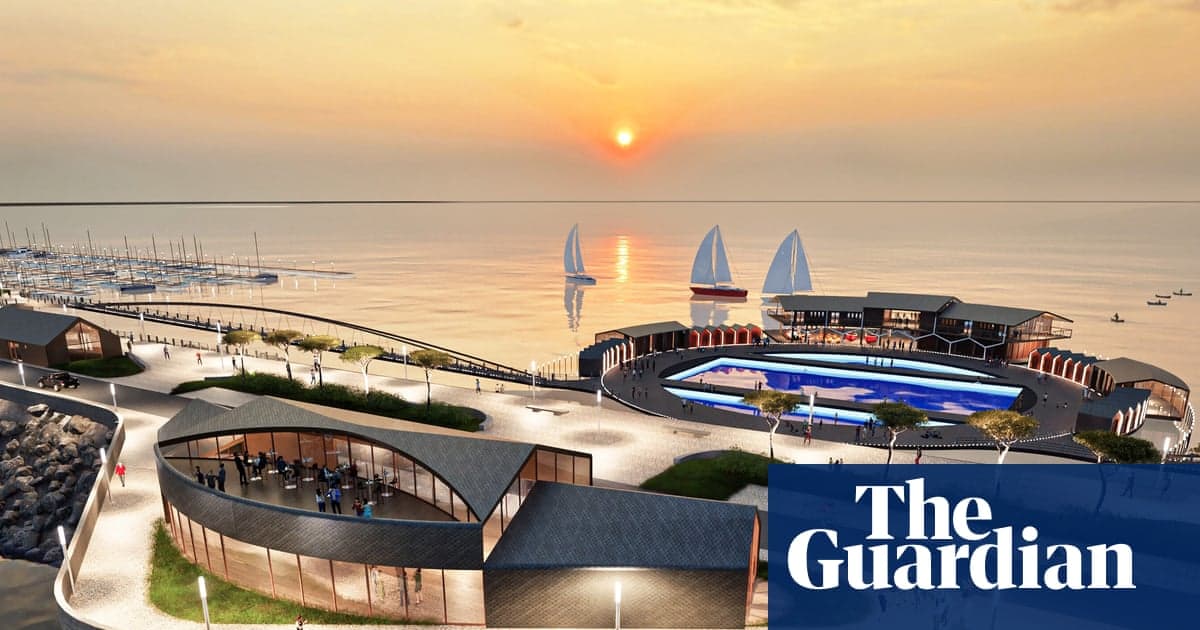
- •Includes cycle path, marina, lido, observation tower.
- •Aims to create jobs and revive West Somerset economy.
Pulse Analysis
The UK’s AI boom is reshaping its power landscape, with data‑centre electricity needs projected to triple by 2035. Traditional grids struggle to meet this surge, prompting policymakers to look for reliable, low‑carbon sources. Tidal energy, especially in the Bristol Channel where the tidal range ranks second worldwide, offers predictability that wind and solar cannot match. By harnessing this natural rhythm, the West Somerset Lagoon could become a cornerstone of Britain’s strategy to decouple AI growth from carbon emissions, supporting the government’s net‑zero target.
Barfield’s vision blends utility with leisure. A 14‑mile semi‑circular barrage would house 125 turbines generating up to 2.5 GW—comparable to Hinkley Point C—and feature a pedestrian‑cyclist promenade, water‑sports marina, lido and an observation tower. The design also earmarks space for data‑centre modules that would benefit from seawater cooling, reducing operational costs and carbon footprints. Complementary marine‑farming zones for oysters and mussels could diversify local income streams, while floating solar arrays add another renewable layer. The projected lifespan of 120 years promises long‑term, cost‑effective power, potentially undercutting nuclear generation costs.
Financing and regulatory approval remain the project’s biggest hurdles. While private investors show interest, they seek clear government backing and a stable policy framework for tidal tariffs. Past Severn estuary schemes faced environmental pushback, yet Barfield’s plan avoids major navigation channels and protected habitats, aiming to mitigate ecological concerns. If approved, construction could commence within the next decade, delivering thousands of skilled jobs and a new tourism hub for Minehead and surrounding towns. Success would not only demonstrate tidal power’s commercial viability but also provide a replicable model for coastal regions worldwide seeking to power the AI economy sustainably.
London Eye architect proposes 14-mile tidal power station off Somerset coast
0
Comments
Want to join the conversation?
Loading comments...