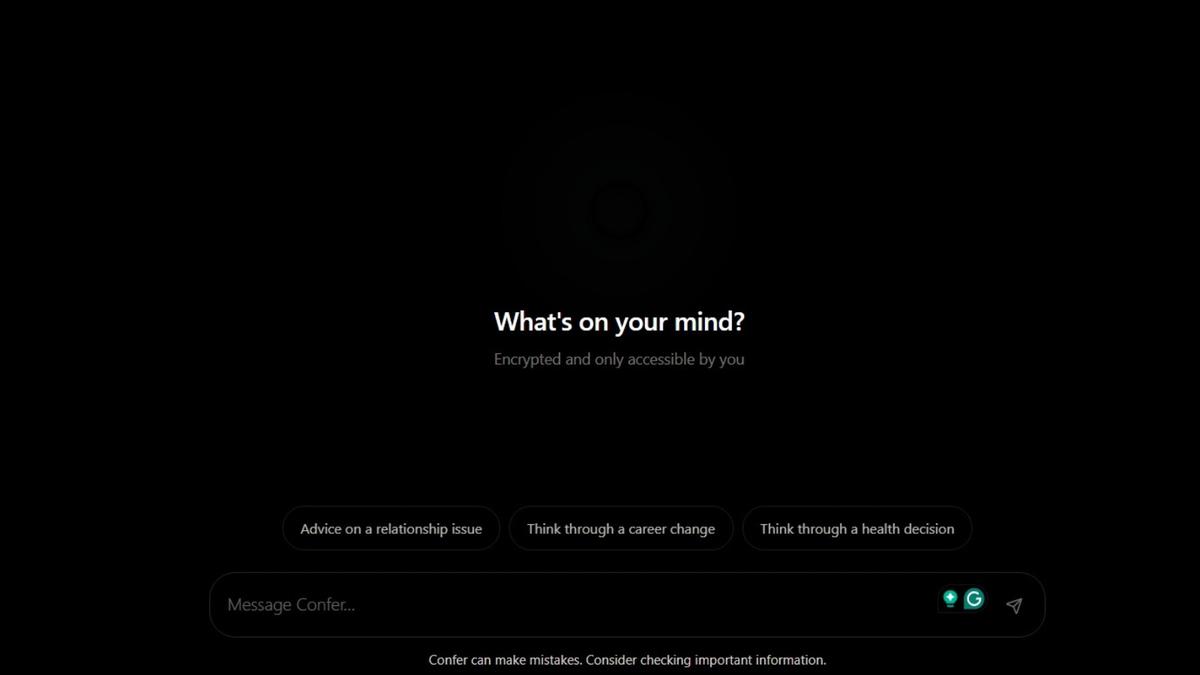
Meet Confer: Signal Founder’s Privacy-Focused, End-to-End Encrypted ChatGPT Alternative
•January 21, 2026
0
Companies Mentioned

Signal

World Economic Forum
Why It Matters
By guaranteeing that AI interactions remain private and untrained on user data, Confer challenges the prevailing model of data‑driven AI services and offers a viable option for privacy‑sensitive enterprises and individuals.
Key Takeaways
- •Confer offers end‑to‑end encrypted AI chats
- •No data training or third‑party sharing
- •Free tier limited to 20 messages daily
- •Premium access costs $35 per month
- •Uses passkeys, TEE, and remote attestation
Pulse Analysis
Privacy concerns have become a defining factor in the AI chatbot market, as users increasingly fear that their queries are harvested for model training. Confer arrives at a moment when high‑profile breaches and regulatory scrutiny have eroded confidence in conventional services. By leveraging the Signal founder’s reputation for secure messaging, the platform immediately signals credibility to users who demand confidentiality in their AI interactions.
Technically, Confer distinguishes itself through a layered security stack. Users are provisioned a cryptographic passkey rather than a password, and private keys reside on the device, enabling true end‑to‑end encryption. The backend operates inside a Trusted Execution Environment (TEE) with remote attestation, ensuring that only verified code processes requests. While the specific large language models remain undisclosed, premium subscribers gain access to more advanced models without having to select them, mirroring Signal’s approach of abstracting cryptographic choices.
From a market perspective, Confer’s $35‑per‑month premium price exceeds that of ChatGPT Plus or Gemini, but it targets a niche willing to pay for privacy guarantees. Its ability to import histories from existing AI platforms eases migration, and an upcoming iOS app hints at broader consumer reach. As enterprises grapple with data‑privacy regulations and the risk of AI‑induced leaks, solutions like Confer could reshape expectations for secure AI, prompting larger providers to reconsider their data‑handling policies.
Meet Confer: Signal founder’s privacy-focused, end-to-end encrypted ChatGPT alternative
0
Comments
Want to join the conversation?
Loading comments...