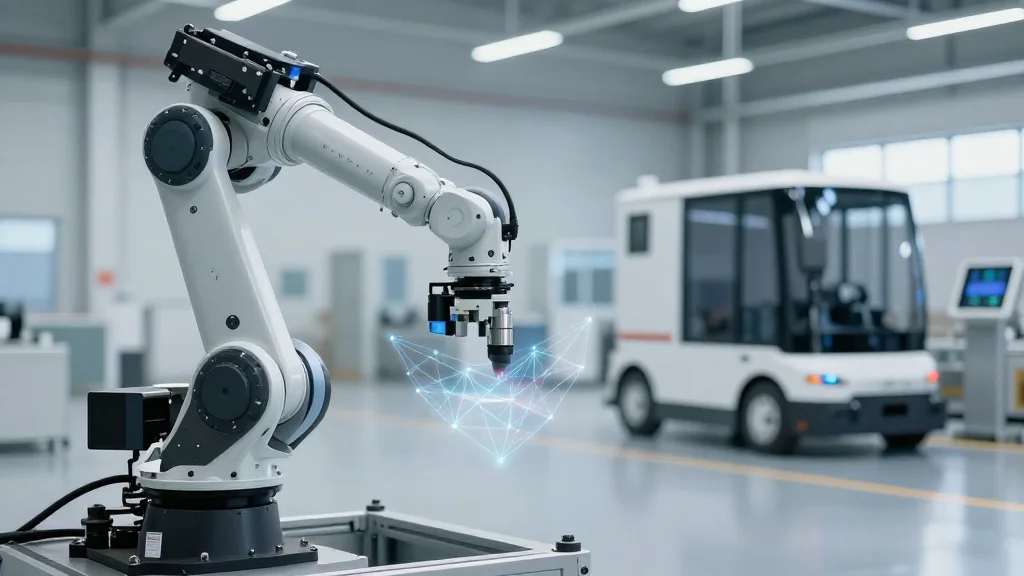
MES and the Physical AI Revolution
Companies Mentioned
Microsoft
MSFT

MarketsandMarkets
Why It Matters
MES transforms AI from a predictive tool into an execution engine, giving manufacturers a competitive edge through faster decision‑making, higher efficiency, and reduced waste. Its adoption is essential for companies seeking to capitalize on the physical AI wave and meet rising quality and compliance demands.
Key Takeaways
- •MES links ERP data to shop‑floor actions in real time.
- •Physical AI relies on MES for actionable, automated control.
- •Global MES market projected $23.4B by 2032, 7.4% CAGR.
- •Asia‑Pacific MES growth 11.2% driven by smart factories.
- •Integrated MES‑AI boosts efficiency, reduces waste, ensures compliance.
Pulse Analysis
The evolution of manufacturing execution systems mirrors the broader shift from isolated IT solutions to integrated, end‑to‑end operational platforms. Early MES implementations simply captured shop‑floor data, but today they serve as the nervous system of smart factories, synchronizing ERP, IoT sensors, and edge analytics. This convergence enables manufacturers to move beyond static reporting toward dynamic, closed‑loop control where every machine action is informed by real‑time insights. As Industry 4.0 matures, the ability to seamlessly blend data and execution becomes a decisive factor for operational resilience.
Physical AI represents the next frontier, where artificial intelligence extends its influence from predictive models to direct, autonomous actions on equipment and processes. MES is the indispensable conduit that translates AI‑generated recommendations into executable commands, ensuring safety, compliance, and optimal performance. By continuously feeding sensor data back into AI models, MES creates a virtuous feedback loop that refines algorithms and drives incremental improvements in yield, energy consumption, and downtime reduction. Companies that embed this loop can achieve measurable gains in throughput while maintaining stringent quality standards.
Market forecasts underscore the strategic urgency: the MES sector is set to grow to $23.39 billion by 2032, with the Asia‑Pacific region outpacing peers at an 11.2% annual increase. This growth is fueled by government‑backed smart factory initiatives and escalating demand for real‑time visibility. For manufacturers, investing in a scalable MES architecture that integrates AI, digital twins, and edge computing is no longer optional—it is a prerequisite for staying competitive in a landscape where physical AI will dictate the pace of innovation and cost efficiency. Early adopters stand to capture the highest returns on productivity and sustainability initiatives.
MES and the Physical AI Revolution
Comments
Want to join the conversation?
Loading comments...