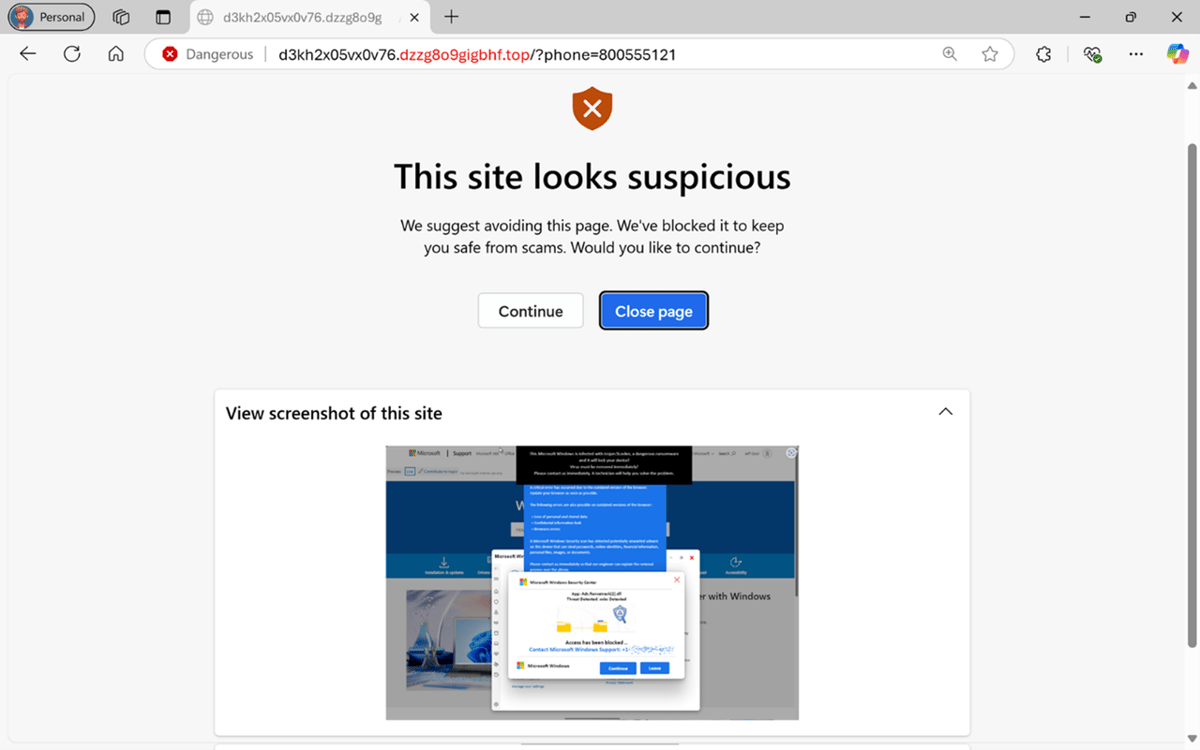
Microsoft Is Finally Clamping Down on Scam Attacks with New "Scareware" Sensor - Here's What You Need to Know

Why It Matters
The browser‑level block prevents tech‑support fraud before it reaches users, cutting financial loss for consumers and enterprises while accelerating the integration of real‑time threat intelligence across Microsoft’s security stack.
Summary
Microsoft is rolling out its Scareware blocker across Edge on Windows and macOS, enabled by default on devices with at least 2 GB RAM and four CPU cores. The AI‑driven, on‑device computer‑vision model detects deceptive full‑screen scam pages that mimic virus alerts and shuts them down before users can be lured into calling fake support numbers. Administrators can manage the feature via enterprise policies, and user reports feed into Defender SmartScreen, which in early tests prevented roughly 50 additional victims per report. Edge version 142 also introduces a new scareware sensor that sends anonymized signals to SmartScreen in real time, slated for default activation later.
Microsoft is finally clamping down on scam attacks with new "scareware" sensor - here's what you need to know
Comments
Want to join the conversation?
Loading comments...